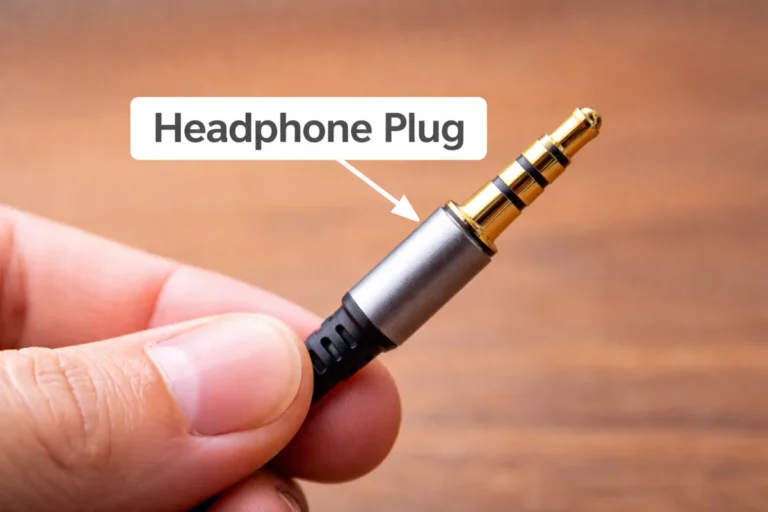
What is earphone: Best Guide
An earphone is a small personal audio device designed to sit inside or just outside the ear canal, converting an electrical audio signal into sound waves you can hear. Modern earphones range from simple wired buds to sophisticated true wireless systems with active noise cancellation, Bluetooth codecs, and onboard microphones. As of 2026, the global earphone market is dominated by true wireless stereo (TWS) models, though wired in-ear monitors remain a favorite for audiophiles and stage professionals.
The category matters because earphones are among the most intimate devices we own. Per the World Health Organization, over 1 billion young people worldwide are at risk of noise-induced hearing loss, much of it from personal audio devices. The good news is that understanding what an earphone actually is, and how the parts and specs translate into real-world use, is the first step to enjoying the technology without putting your ears at risk.
Let's start with the basics.
Quick Answer
An earphone is a compact, personal listening device worn in or on the ear. It uses a small driver to convert electrical signals into sound. Earphones come in wired, wireless, true wireless, and bone conduction styles.
The category also includes noise-isolating IEMs and noise-cancelling earbuds. Modern earphones often include a microphone, playback controls, and Bluetooth connectivity.
What an Earphone Actually Is (And What It Isn't)
In the simplest terms, an earphone is a miniature loudspeaker system designed to deliver audio directly into the ear. The driver, the small component inside the housing, vibrates a thin diaphragm in response to an electrical signal. Those vibrations move the air in your ear canal, and your eardrum interprets them as sound.
Everything else, the cable, the Bluetooth chip, the battery, the eartip, exists to get that audio signal to the driver as cleanly as possible.
What an earphone is not is a "tiny version of a speaker." Speakers fire sound into open air. Earphones fire sound into a sealed, tiny space right next to your eardrum. That difference is what allows earphones to sound loud and detailed at very low power, and it's also what makes the wrong listening habits so dangerous.
A 3 dB increase in volume doubles the sound energy hitting your eardrum. Crank an earphone to maximum in a quiet room, and you can hit 100+ dB, well above the 85 dB limit NIOSH considers safe for an 8-hour workday.
There are several distinct form factors the industry lumps under "earphones," and the differences matter:
- Earbuds (classic): Sit in the outer ear, no seal in the canal. Think of the original Apple EarPods. They leak bass and let in outside noise.
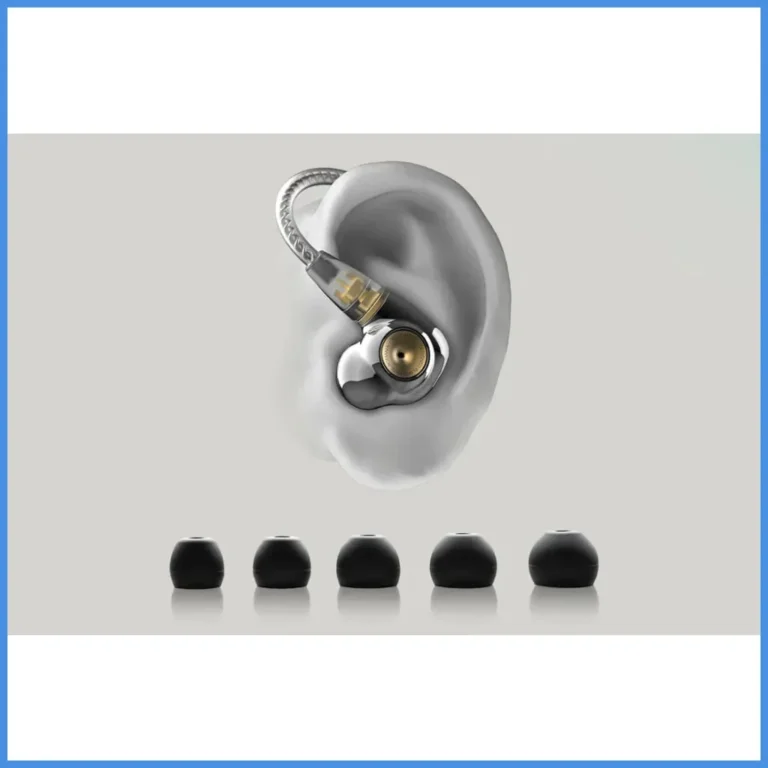
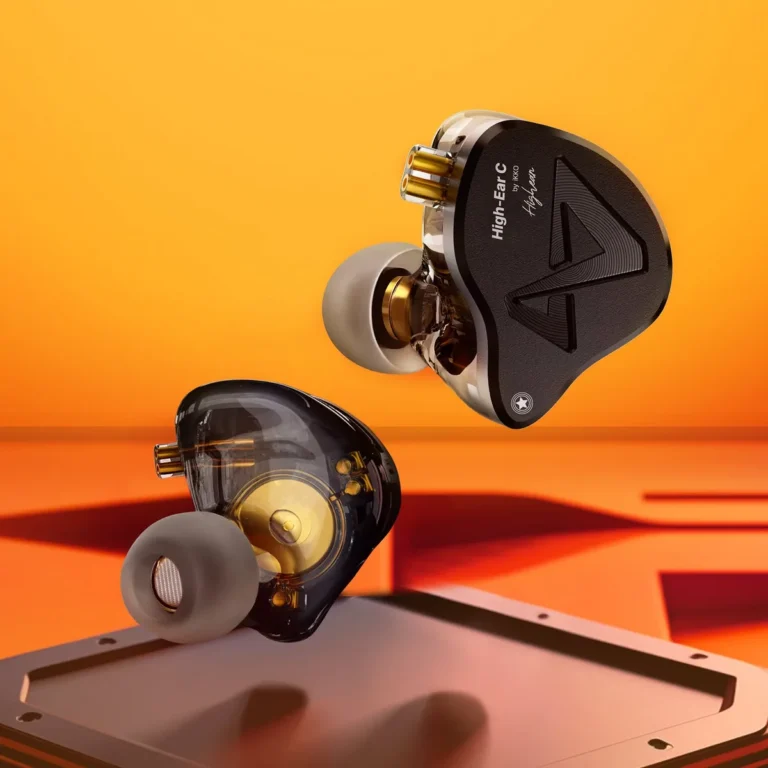
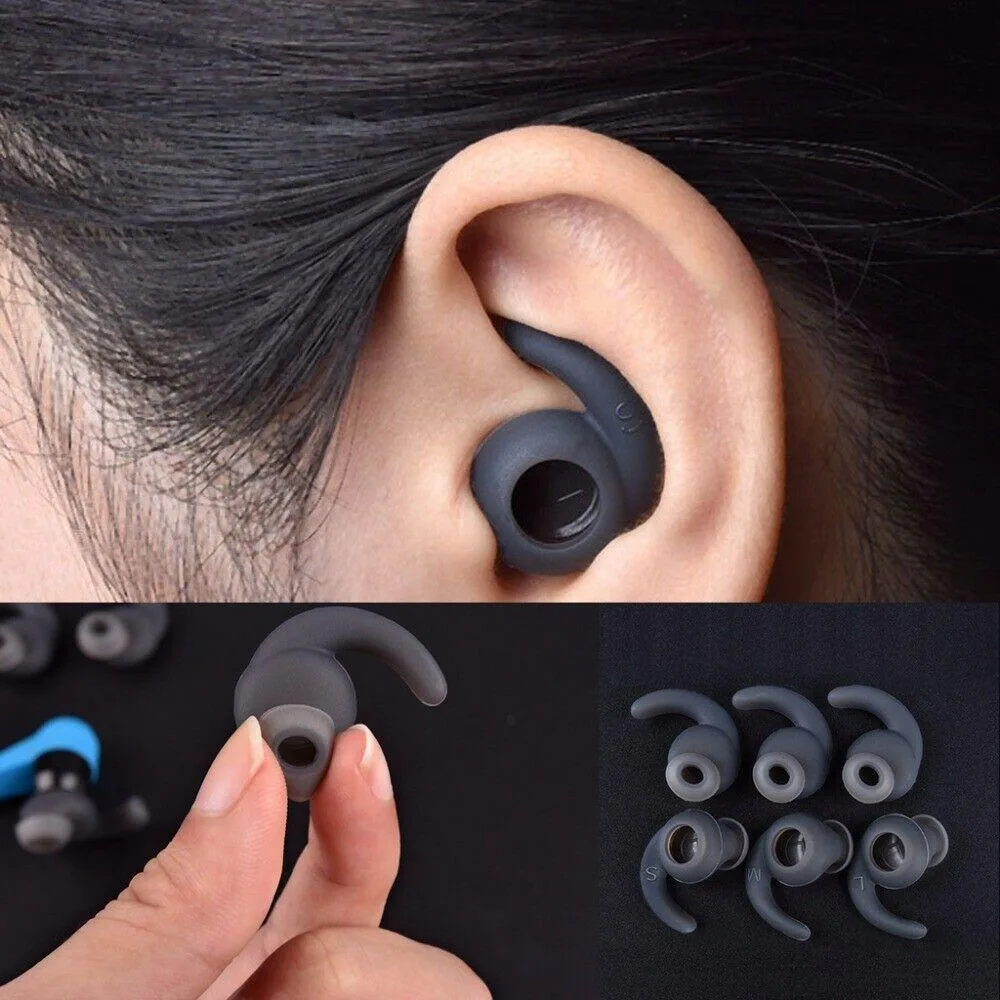
- In-ear monitors (IEMs): Insert into the ear canal and create a seal with silicone or foam tips. They block outside noise passively and deliver deeper bass.
- True wireless earbuds (TWS): Wire-free left and right earpieces, each with its own battery and Bluetooth radio. They live in a charging case.
- Neckband earphones: Wireless earpieces connected by a band that rests on your neck. Common for runners and commuters.
- Bone conduction earphones: Sit on your cheekbones and bypass the eardrum entirely. Popular for outdoor athletes who need to hear traffic.
The terminology is messy, and brands use "earbuds" and "earphones" interchangeably. In strict audio-industry usage, "earphone" usually means a canal-sealing IEM-style design, while "earbud" means the looser, outer-ear style. The two terms are often used as synonyms in everyday language, which is why the next section matters.
How Earphones Turn Electrical Signals Into Sound
Every earphone, no matter how fancy, follows the same basic chain. An audio source (your phone, a DAC, a Bluetooth chip) sends an electrical audio signal down a wire, through a Bluetooth radio, or out a Lightning or USB-C port. That signal reaches the driver.
The driver translates the electrical waveform into a mechanical one, moving a tiny diaphragm back and forth hundreds or thousands of times per second. The diaphragm pushes air, and that air movement becomes the sound you hear.
The driver is the heart of the earphone, and the most common types are:
- Dynamic (moving coil) drivers: A tiny voice coil attached to a diaphragm sits inside a magnetic field. The signal moves the coil, which moves the diaphragm. These handle bass well, cost less, and dominate the consumer market.
- Balanced armature drivers: A tiny reed suspended between magnets vibrates in response to the signal. They're tiny, efficient, and great at mid and high frequencies. You'll find them in most multi-driver IEMs and hearing aids.
- Planar magnetic drivers: A thin, flat diaphragm with embedded conductors sits between two magnet arrays. These deliver exceptional detail and low distortion but cost more and need more power. They're rarer in earphones than in over-ear headphones.
- Hybrid designs: Combine a dynamic driver for bass with balanced armatures (or sometimes a planar tweeter) for the mids and highs. Most audiophile IEMs in the $100 to $500 range use this approach.
- Bone conduction transducers: Vibrate against the temporal bone, sending sound to the inner ear while leaving the ear canal open. They're a special case and don't use air-coupled drivers at all.
The signal path matters, too. Wired earphones receive an analog signal directly from the source. Wireless earphones convert the digital audio to analog inside the earpiece, and the codec used (SBC, AAC, aptX, LDAC, LC3) determines how much detail survives the trip.
For most listeners, codec choice matters less than fit and isolation, but it explains why a $300 wireless pair can sound different from a $30 wired pair even with the same driver.
A useful mental model: think of the driver as a tiny motor and the ear canal as a tiny room. The seal between the eartip and your ear canal is the door. If that seal is poor, bass leaks out and outside noise leaks in, so you turn the volume up to compensate, which is bad for your hearing.
A proper seal is the single most important factor in both sound quality and listening safety.
The Main Parts of an Earphone: Driver, Housing, Cable, and Tip
Every earphone, even the most basic, is built from a small set of components. Understanding them helps you read specs, spot quality, and troubleshoot problems.
- Driver: The sound-producing element, as covered above. Driver size in dynamic earphones typically ranges from 6 mm to 14 mm. Larger isn't automatically better; tuning matters more than diameter.
- Housing/shell: The body that holds the driver. Materials range from cheap ABS plastic to aluminum, resin, and 3D-printed acrylic. Metal housings are durable but can resonate; resin is lighter and often smoother-sounding.
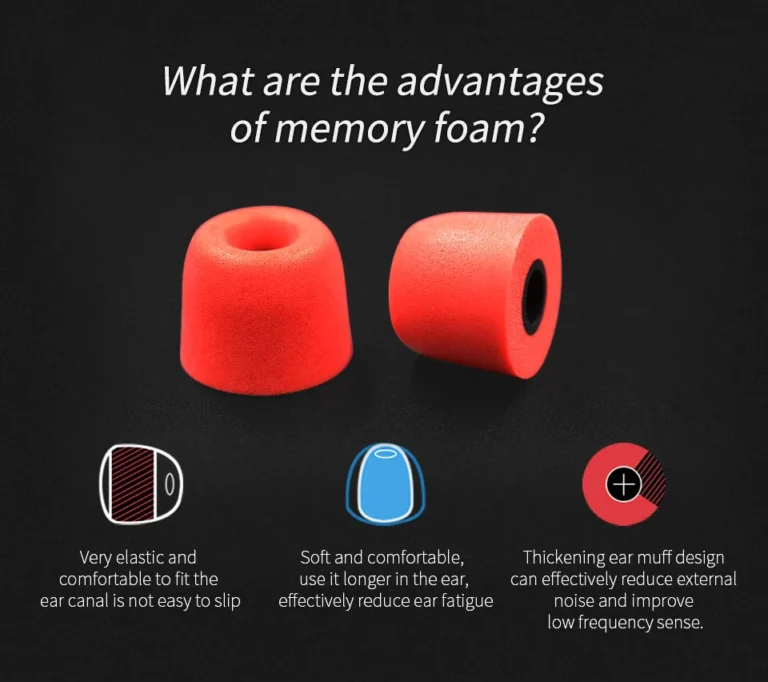
- Eartip: The silicone or foam piece that seals the earphone in your canal. Most earphones ship with small, medium, and large silicone tips, plus memory foam options from brands like Comply. Getting the right size is the difference between great bass and weak, tinny sound.
- Nozzle: The tube that channels sound from the driver into your ear. Some earphones have a wide-bore nozzle, others narrow. It affects treble energy and how deep the tip sits.
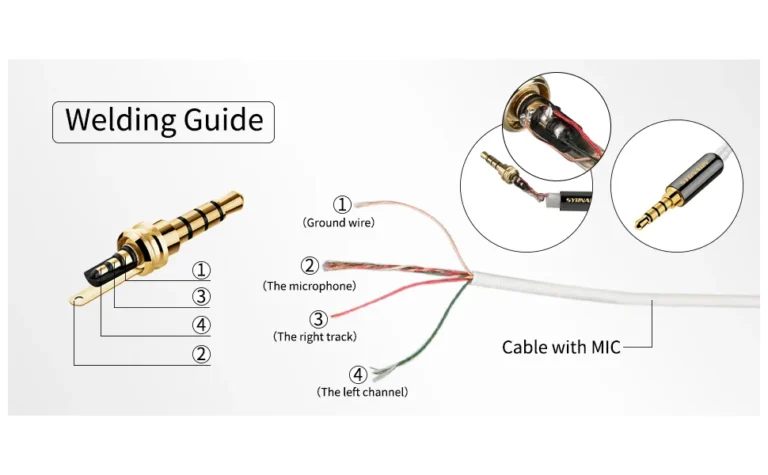
- Cable: For wired earphones, the cable carries the signal. Higher-end cables use oxygen-free copper or silver-plated copper and may be detachable via MMCX or 2-pin connectors. Wireless earphones replace the analog cable with a Bluetooth radio and a battery.
- Microphone: An increasing number of earphones include a mic for calls and voice assistants. MEMS (micro-electromechanical) mics are standard. Quality varies wildly.
- Controls: Inline remotes, touch panels, or physical buttons for play/pause, volume, and calls.
- Battery: Found in all wireless and true wireless earphones. Typical TWS battery life is 5 to 12 hours per charge, with 20 to 40 additional hours from the charging case. If you're topping up a TWS case on the road, a portable charger for the first time makes the routine easy.
- Charging case: A small clamshell that recharges and protects TWS earphones. Most modern cases use USB-C, and many support Qi wireless charging.
Here's a quick-reference table of the main components and what they actually do:
| Component | What it does | Why it matters |
|---|---|---|
| Driver | Converts electrical signal to sound | Defines sound signature and detail |
| Eartip | Seals the ear canal | Affects bass, isolation, and comfort |
| Housing | Holds the driver and electronics | Impacts durability and resonance |
| Cable / Bluetooth radio | Delivers the signal | Affects reliability and audio quality |
| Microphone | Captures your voice | Call quality and assistant use |
| Battery | Powers wireless features | Runtime and longevity |
Types of Earphones: Wired, Wireless, TWS, Neckband, and Bone Conduction
The category breaks into five main families, each with clear tradeoffs.
Wired Earphones
The classic form. A cable carries the analog signal from a 3.5mm jack, a 2.5mm or 4.4mm balanced jack, or a USB-C/Lightning port. Wired earphones don't need batteries, never have latency, and deliver consistent sound quality.
They also scale with the source: plug a high-impedance IEM into a powerful DAC/amp, and you get noticeably better sound.
The downside is the cable itself. It tangles, microphonics transfer noise to your ears, and modern smartphones are increasingly dropping the headphone jack. As of 2026, Apple's iPhone line and most flagship Android phones ship without a 3.5mm port, so a USB-C or Lightning adapter is often necessary.
Wireless (Bluetooth) Earphones
A Bluetooth receiver inside the earpiece decodes the digital signal and feeds the driver. Codec support varies: SBC is universal, AAC is favored by Apple, aptX and LDAC are common on Android. Latency has dropped substantially with Bluetooth 5.2 and 5.3, especially in gaming mode, where some earphones hit under 40 ms.
Bluetooth earphones need charging, can suffer from pairing glitches, and the codec bottleneck can lose detail compared to wired. For most people, the convenience outweighs the trade, especially when you know how long a power bank takes to charge and can plan ahead.
True Wireless Stereo (TWS) Earbuds
Two completely independent earpieces, each with its own battery, Bluetooth radio, and DAC. They pair to your phone and to each other. The charging case extends runtime and doubles as storage.
TWS dominates the market. Apple's AirPods, Sony's WF-1000XM series, Bose QuietComfort Ultra Earbuds, and Samsung Galaxy Buds all live here. The main complaints are battery degradation over time, fit issues, and the occasional connection drop.
Multipoint pairing, where one pair connects to two devices at once, is now common in mid- and high-end TWS.
Neckband Earphones
Two earpieces tethered by a flexible band that rests on your neck. The band holds the battery, Bluetooth radio, and often a vibration motor for call alerts. Neckbands are popular with runners because they stay put, don't fall on the ground if one bud pops out, and last 8 to 20 hours per charge.
Bone Conduction Earphones
These don't seal the ear canal at all. A transducer sits on your cheekbone in front of your ear and vibrates the bone, sending sound directly to the cochlea. Your ears stay open, so you can hear traffic, announcements, and conversations.
They're a niche product favored by cyclists, outdoor runners, and people with certain types of hearing loss. The tradeoff is weaker bass and sound leakage at high volumes.
| Type | Power source | Latency | Best for |
|---|---|---|---|
| Wired | None (passive) | None | Audiophile listening, studio, gaming |
| Bluetooth | Built-in battery | ~60-200 ms | Commuting, calls, general use |
| TWS | Built-in + case | ~40-100 ms | Daily carry, gym, travel |
| Neckband | Built-in battery | ~60-150 ms | Running, long calls, all-day use |
| Bone conduction | Built-in battery | ~60-200 ms | Outdoor sport, hearing accessibility |
Picking the right type comes down to how and where you listen. The next section clears up the most common terminology confusion, earphones versus earbuds, before we dig into the safety side.
Earphones vs. Earbuds vs. Headphones: Clearing Up the Confusion
The audio industry has done a remarkably poor job of agreeing on terms, which is why shoppers get confused. Here's how the categories actually break down in practice, and how each term is most commonly used.
Earphones typically refer to in-ear designs that seal the ear canal. They're small, portable, and isolate you from outside noise by physically blocking your ear. Audiophiles, musicians, and stage performers use "earphone" or "in-ear monitor (IEM)" almost exclusively.
Earbuds traditionally refer to designs that sit in the outer ear (the concha) without sealing the canal. Apple's original EarPods are the textbook example. They don't isolate well, leak bass, and let in ambient sound.
In casual speech, though, "earbuds" is now used for any small ear-worn device, including modern IEMs and TWS models. Apple's AirPods Pro, despite the name, are actually in-ear earphones, not classic earbuds.
Headphones are larger, over-ear or on-ear designs that cup or rest on the outer ear. They have larger drivers, often 30 mm to 50 mm, and don't need a tight seal to deliver strong bass. Open-back headphones leak sound in and out; closed-back headphones isolate better.
Studio professionals, DJs, and home listeners usually prefer headphones.
A quick comparison:
| Category | Where it sits | Seal type | Typical use |
|---|---|---|---|
| Earphones / IEMs | Inside the ear canal | Sealed (silicone/foam) | Audiophile, stage, commute, gym |
| Earbuds (classic) | Outer ear | Unsealed | Casual listening, awareness |
| Headphones | Over or on the ear | Cushion-based | Studio, home, gaming, DJ |
The terminology matters less than the fit and seal. A well-sealed in-ear earphone at moderate volume is safer and sounds better than a loose earbud cranked to maximum, because proper isolation means you don't need as much volume to hear details clearly.
Noise Isolation vs. Active Noise Cancellation: What's Protecting Your Ears
This is the single most misunderstood part of the category, and the one that matters most for hearing safety. Two very different mechanisms do very different jobs.
Passive noise isolation is purely physical. The earphone physically blocks your ear canal with silicone, foam, or a custom-molded shell. Sounds from outside have to get past that barrier to reach your eardrum.
A well-fitted IEM can block 20 to 30 dB of outside noise across most frequencies. Foam tips generally isolate better than silicone because they conform to the unique shape of your canal.
Active noise cancellation (ANC) uses microphones to sample outside sound, then generates an anti-phase signal through the driver to cancel it. Modern ANC is most effective on low-frequency rumble (airplane engines, HVAC, traffic) where it can knock down 20 to 35 dB. It's less effective on higher frequencies and sudden noises like voices or clattering dishes.
As of 2026, leading TWS models from Sony, Bose, Apple, and Sennheiser quote noise reduction in the 25 to 45 dB range at low frequencies.
Why does this matter for your ears? Because the whole point of isolation and ANC is to let you listen at lower volumes in noisy environments. In a quiet room, an earphone at 30% volume is fine.
On a subway, the same earphone at 30% gets drowned out, so you crank it to 70%, and now you're exposing yourself to 95+ dB for an hour. Good isolation or effective ANC lets you keep the volume low because the earphone no longer has to fight the outside world. The National Institute for Occupational Safety and Health notes that every 3 dB increase halves your safe exposure time, which is why a quiet listening environment is as protective as a volume limit.
A related feature is transparency mode (sometimes called ambient or pass-through mode). It uses the same microphones as ANC, but in reverse, piping outside sound into your ears so you can hear announcements, traffic, or a conversation without removing the earphones. Useful for commuting safely and for short conversations at a desk.
One warning: ANC creates a small pressure sensation some people describe as "eardrum suck." It's not harmful, but it's uncomfortable for sensitive users. Most earphones let you disable ANC, switch to transparency, or use a milder ANC level.
Driver Types Explained: Dynamic, Balanced Armature, Planar Magnetic, and Hybrid
We've already introduced the main driver types, so let's look at how they actually behave in real earphones, and where each one makes sense.
Dynamic drivers are the workhorses of the earphone world. They handle the full frequency range, produce satisfying bass, cost less to manufacture, and tolerate rough use. Most consumer earphones from $20 to $300 use a single dynamic driver.
They're forgiving of source quality and easy to drive from a phone.
Balanced armature drivers are tiny, efficient, and surgically precise in the mid and high frequencies. They don't move as much air, so they can't deliver deep bass alone. That's why they're usually paired with a dynamic driver in hybrid designs.
Pure-BA earphones (multiple balanced armatures per side, each handling a different frequency band) are common in stage IEMs and hearing aids.
Planar magnetic drivers in earphones are a recent development. They offer exceptional detail retrieval, fast transient response, and very low distortion. The tradeoffs are size, weight, and power requirements.
Planar IEMs need a good source, often a dedicated DAC/amp, to shine. They remain a premium niche.
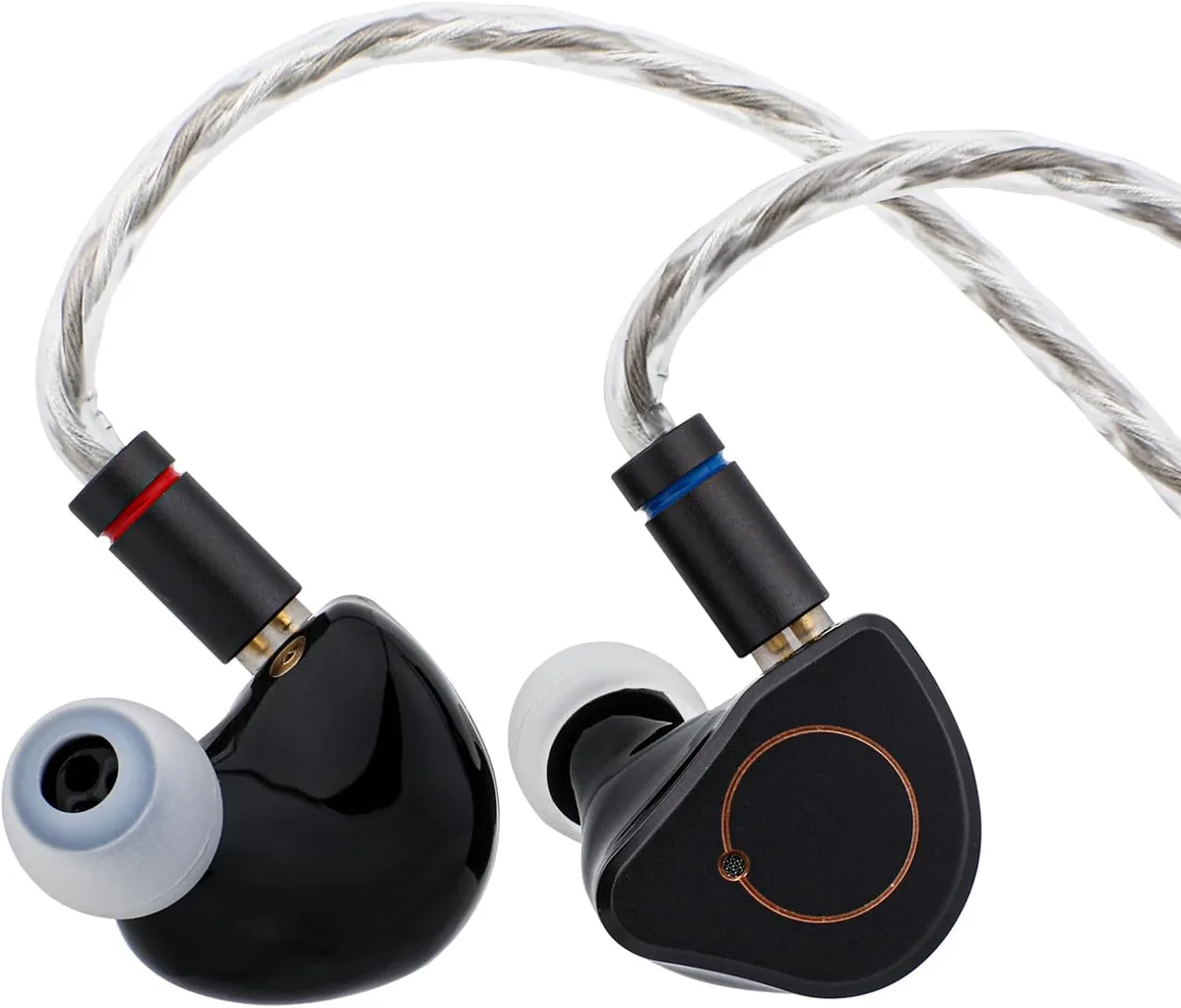
Hybrid designs combine a dynamic driver for bass with balanced armatures (or a planar tweeter) for mids and highs. This is the dominant topology in mid- and high-end IEMs. A 1 dynamic + 3 balanced armature hybrid is a common configuration, as is 1 DD + 2 BA + 1 planar tweeter in flagship models.
Bone conduction drivers don't produce sound waves in air at all. They vibrate the temporal bone, sending sound to the cochlea through the skull. This leaves the ear canal open and is the safest option for situational awareness during outdoor exercise.
A practical way to choose:
- Just want good sound without fuss? Single dynamic driver, well-tuned. Most users don't need more.
- Want studio-grade detail for mixing or critical listening? Multi-BA or hybrid IEM, ideally with a removable cable.
- Exercise outdoors and need to hear traffic? Bone conduction.
- Commute on planes and trains? ANC-enabled TWS with hybrid or high-quality dynamic drivers.
The Specs That Actually Matter: Impedance, Sensitivity, and Frequency Response
Specs on the back of the box can be a minefield. Three numbers actually predict how an earphone will behave in real use.
Impedance is measured in ohms (Ω) and tells you how much the driver resists the electrical signal. Low-impedance earphones (16 to 32 Ω) are designed for mobile devices and play loud easily from a phone. High-impedance earphones (64 to 300 Ω or more) need a dedicated amplifier to reach full volume and dynamic range.
Most consumer IEMs sit in the 16 to 32 Ω range. If your phone struggles to drive a pair, you either need a DAC/amp or a more efficient pair.
Sensitivity is measured in decibels per milliwatt (dB/mW) or dB SPL. It tells you how loud the earphone plays for a given amount of power. A sensitivity of 100 dB/mW is moderately efficient; 110 dB/mW is loud; under 95 dB/mW means the earphone needs more power.
Combined with impedance, sensitivity predicts how loud the earphone will go from your source.
Frequency response is the range of frequencies the earphone can reproduce, usually quoted as 20 Hz to 20 kHz. The human ear can nominally hear from 20 Hz to 20 kHz, and most adults lose sensitivity at the top end with age. The headline number matters less than how the response is shaped within that range, which is why two earphones with identical frequency response can sound very different.
A few specs that get quoted a lot but matter less than people think:
- THD (total harmonic distortion): Below 1% is inaudible for most listeners.
- Driver size: A well-tuned 6 mm dynamic can outperform a poorly tuned 12 mm.
- Bitrate or codec support: Important for wireless, but a poorly tuned LDAC earphone can sound worse than a well-tuned SBC one.
| Spec | What it tells you | Practical impact |
|---|---|---|
| Impedance (Ω) | How much power is needed | High-Ω pairs need an amp |
| Sensitivity (dB/mW) | How loud it plays per watt | Low sensitivity needs more volume |
| Frequency response (Hz) | Range of reproduced frequencies | Less important than tuning |
| THD (%) | Distortion level | Below 1% is inaudible |
If you're picking earphones for a phone or laptop, stick to 16 to 32 Ω and 100+ dB/mW sensitivity. Anything outside that range is for specialized use. The spec sheet tells you what's possible.
Your ears, your fit, and your source determine what you actually hear.
How to Get a Proper Seal and Fit (The Step Most People Skip)
Most bad earphone experiences trace back to fit. A loose seal kills bass, lets in outside noise, and forces you to raise the volume. The fix takes a minute, not a purchase.
Start with the right tip size. Try small first, then medium, then large in each ear, because ear canals are rarely symmetrical. The correct size slides in easily, feels snug without pressure, and stays sealed when you turn your head or chew.
If bass sounds weak or outside noise is loud, the seal is broken.
Pull your ear up and back to straighten the canal, twist the earphone in gently, and let go. A quarter-turn after insertion often locks the seal. Foam tips compress before insertion and expand inside the canal, which is why they isolate better than silicone for most listeners.
Are Earphones Bad for Your Ears? The Real Hearing Risks
Short answer: earphones themselves aren't bad, but unsafe listening habits are. The damage comes from sustained high sound pressure levels (SPL) over time, not from the device category.
NIOSH sets the recommended exposure limit (REL) at 85 dBA averaged over an 8-hour workday. For every 3 dB increase above that, the safe exposure time halves. So 88 dBA is safe for 4 hours, 91 dBA for 2 hours, 100 dBA for about 15 minutes.
A typical earphone at maximum volume from a phone can hit 100 to 110 dB at the eardrum, depending on the seal and the source.
The World Health Organization estimates that over 1 billion young people (ages 12 to 35) are at risk of noise-induced hearing loss from recreational listening. The two most common patterns are:
- Chronic exposure: Listening at moderate-high volumes (80 to 90 dB) for many hours a day, every day. Damage accumulates over years.
- Acute exposure: A single loud event (a concert, a gunshot, a max-volume earphone blast) that causes immediate and sometimes permanent threshold shift.
Symptoms to watch for:
- Ringing, buzzing, or hissing in the ears after listening (tinnitus)
- Muffled hearing that clears after a few hours
- A feeling of fullness or pressure in the ears
- Needing to turn the volume up to hear what you used to hear at a lower level
If you experience any of these, stop listening and give your ears 16 to 24 hours of rest. If symptoms persist, see an audiologist. The National Institute on Deafness and Other Communication Disorders provides guidance on when to seek a hearing evaluation.
Two other risks worth knowing:
- Otitis externa (swimmer's ear): Prolonged use of sealed in-ear earphones, especially in hot or humid environments, can trap moisture and create a breeding ground for bacteria. Clean your eartips regularly and let your ears breathe.
- Earwax compaction: Pushing earphones deep into the canal can pack wax against the eardrum. If you notice a sudden drop in volume or muffled sound, get your ears checked before assuming the earphone is broken.
Safe Listening Practices: The 60/60 Rule and Volume Limits
The good news is that hearing damage is almost entirely preventable. The bad news is that it's also permanent, so prevention is the only real strategy.
A few simple habits cover most of the risk:
- The 60/60 rule: Listen at no more than 60% of your device's maximum volume for no more than 60 minutes at a stretch. Take a 5 to 10 minute break between sessions. This keeps most earphones well below the 85 dB threshold.
- Use the built-in volume limit: Both iOS and Android have hearing health features. iOS shows a headphone audio level notification and lets you set a dB cap under Settings > Sounds & Haptics > Headphone Safety. Android has a similar dashboard under Sound & Vibration > Volume > Headphone Safety.
- Use isolation and ANC wisely: In noisy environments, switch on ANC or swap to foam tips. You'll listen at lower volumes because the outside world isn't competing with your music.
- Match output to environment: Quiet room = low volume. Subway, plane, gym = use isolation/ANC, not raw volume.
- Take listening breaks: Your ears recover from short exposures. A 10-minute break every hour reduces cumulative dose significantly.
- Get a baseline hearing test: A quick audiogram at 20-something gives you a reference point. Compare it to a test every 5 years. Early detection of threshold shifts is the only way to catch damage before it's permanent.
| Habit | Why it helps | Effort level |
|---|---|---|
| 60/60 rule | Keeps exposure below 85 dB | Low |
| Volume limit on phone | Hard cap on maximum output | Low |
| Use ANC in noise | Lower volume needed | Low |
| Foam eartips | Better passive isolation | Medium |
| Annual hearing check | Catches early damage | Medium |
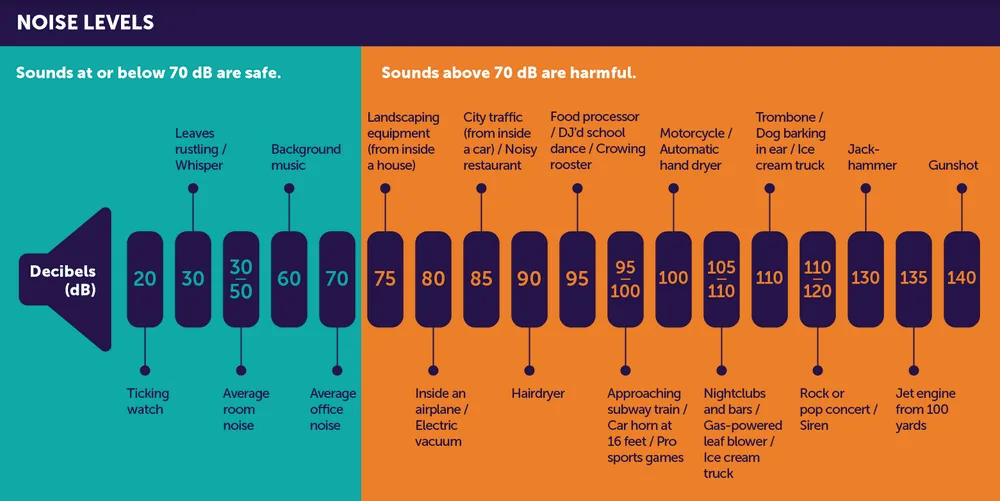
The lower the volume, the longer you can listen safely. The rest of the setup, charging, codecs, and fit, matters far less than that single habit.
How to Choose the Right Earphone for Your Use Case
The "best" earphone is the one that fits your ears, suits your environment, and stays within your budget. Here's a quick decision guide by use case.
- Daily commute (train, bus, subway): TWS with strong ANC, IPX4 splash resistance, and at least 6 hours of battery per charge. Foam tips help if you want even more isolation.
- Office and remote work: Wireless earphones with a good microphone (multi-mic array with noise reduction), multipoint pairing to switch between laptop and phone, and a comfortable fit for long wear.
- Gym and running: Secure fit (ear hooks or fins), IPX5 or higher water resistance, and either TWS with stability features or a neckband. Bone conduction if you run outdoors and need full situational awareness.
- Travel and flights: TWS with class-leading ANC, long battery life (8+ hours with ANC on), and a compact charging case. Comfort matters more than sound quality for long sessions.
- Sleeping / ASMR: Small, low-profile earphones that don't protrude. Soft foam tips reduce pressure. Low leakage is critical so you don't disturb a partner.
- Gaming: Low-latency wireless (under 60 ms, ideally under 40 ms in gaming mode) or wired. A separate boom microphone helps for competitive play.
- Studio and music production: Wired in-ear monitors with a flat, accurate frequency response. Detachable cable and replaceable tips for long-term use.
- Audiophile listening: Multi-driver hybrid IEMs, ideally paired with a dedicated DAC/amp. Wired is still the standard for critical listening.
If you're on a tighter budget, the smart move is to spend on fit and isolation first, then on driver quality. A well-sealed $50 IEM outperforms a poorly fitting $300 pair for most listeners.
Common Earphone Mistakes That Can Damage Your Hearing or the Device
Most earphone problems are avoidable. The most common mistakes our research turns up:
- Skipping eartip sizing: Using the default medium tips without trying small and large. A poor seal tanks the sound and pushes you to turn up the volume.
- Listening at maximum volume in noise: Compensating for poor isolation with raw volume. Use ANC or foam tips instead.
- Wearing earphones for hours without breaks: Even at moderate volume, sustained exposure adds up.
- Sharing earphones without cleaning tips: Earwax, skin cells, and bacteria transfer. Wipe silicone tips with a slightly damp cloth and let them dry. Foam tips should be replaced rather than shared.
- Pulling the cable, not the plug: Yanking earphones out by the cable strains the internal wiring and the connector. Always grip the plug.
- Exposing TWS to sweat and rain without checking the IP rating: Sweat-resistant (IPX4) is not the same as waterproof. Check the spec.
- Leaving TWS in a hot car: Heat degrades lithium batteries. The case and buds will lose capacity faster.
- Believing "burn-in" is mandatory: A few hours of use may smooth out driver stiffness, but most modern earphones sound very close to their final tuning out of the box. Don't burn in for days expecting miracles.
- Storing TWS without charging the case: Letting the case sit at 0% for weeks can damage the battery. Top it up every few weeks.
- Assuming noise-cancelling = hearing-safe at any volume: ANC blocks outside noise, but the music still plays at whatever volume you set. Lower the volume and let the isolation do the work.
Keeping a TWS case topped up alongside a phone is easier once you know how to charge a portable charger power bank for the trip.
Cleaning, Maintenance, and When to Replace Eartips or Earphones
A few minutes of care every week keeps earphones hygienic, sounding good, and lasting longer.
Wipe silicone tips with a slightly damp cloth weekly, and let them air-dry fully. Foam tips should be replaced rather than washed. Use a soft, dry brush to clear debris from the nozzle mesh, and avoid sharp objects that can puncture the driver.
For TWS, wipe the charging contacts on both the buds and the case with a dry cotton swab once a month. Check the case cradle for debris. Heat degrades lithium batteries, so don't leave the case in a hot car or direct sun.
Replace eartips when they're yellowed, hardened, or torn. Replace foam tips every 1 to 3 months depending on use. Replace the earphones themselves when one side goes silent, the cable is frayed, the TWS battery holds less than 60% of its original runtime, or the shell or mesh is damaged.
Hygiene matters more than people think. Otitis externa and fungal infections are linked to dirty earphones in warm or humid conditions. A quick wipe-down after sweaty workouts and a weekly clean of the eartips reduces the risk significantly.
When to See a Specialist: Hearing Changes, Pain, or Tinnitus After Use
Some symptoms need a professional evaluation, not a self-fix. See an audiologist or ENT if you experience sudden hearing loss in one or both ears, which is a medical emergency where treatment within 72 hours gives the best chance of recovery.
Persistent tinnitus that doesn't fade within 24 hours, ear pain, discharge, or odor, and any noticeable hearing change that lasts more than a day all warrant a baseline audiogram. Vertigo, imbalance, or a feeling of fullness in the ear can indicate inner-ear issues unrelated to earphones but still deserve a check.
Don't wait until hearing loss is obvious. By the time you notice it in daily conversation, the damage is usually significant. The CDC's hearing loss page explains when to seek an evaluation and how to find a provider near you.
Frequently Asked Questions
What is the difference between earphones and earbuds?
Earphones (in-ear monitors) sit inside the ear canal and seal it with silicone or foam tips. Classic earbuds sit in the outer ear without a seal. In casual modern usage, the two terms are used interchangeably, especially for true wireless products.
Are earphones bad for your hearing?
Not inherently. They become harmful at high volumes for long periods. The risk comes from sustained exposure above 85 dB, not from the device category.
Safe listening habits prevent almost all noise-induced hearing loss.
What is the 60/60 rule?
Listen at no more than 60% of your device's maximum volume for no more than 60 minutes at a stretch, then take a short break. This keeps most earphones well within safe exposure limits and reduces cumulative hearing risk over time.
What is active noise cancellation?
ANC uses built-in microphones to sample outside sound and generate an inverse signal that cancels it, mostly at low frequencies. It works alongside passive isolation from the eartip seal to reduce ambient noise and let you listen at lower, safer volumes.
How long should earphones last?
With reasonable care, wired earphones last 3 to 5 years or more. TWS earphones typically last 2 to 4 years before battery degradation becomes noticeable. Replace eartips every few months and clean the grilles regularly to extend driver life.
Do earphones cause ear infections?
They can contribute if used without cleaning, especially in hot or humid conditions. The seal traps moisture and warmth, which encourages bacterial and fungal growth. Regular cleaning of eartips and letting your ears breathe between sessions reduces the risk.
What's the safest volume to listen at on a phone?
Set your phone's volume limit to around 75 to 80 dB, or use the 60% rule as a starting point. Both iOS and Android have built-in tools that show your current headphone output in dB and let you cap it.