What Does Mah Mean For Power Bank: The Full Guide 2026
mAh on a power bank measures its battery capacity, telling you how much charge it can store and deliver to your devices.
If you've ever stood in an electronics store staring at rows of power banks, wondering why one says 5,000mAh and another says 20,000mAh, you're not alone. The truth is, that little "mAh" number holds the key to understanding exactly what you're buying. After years of testing chargers for travel, work, and outdoor adventures, I can tell you that knowing what mAh means for a power bank will save you from dead phones, wasted money, and frustrating surprises. Let me walk you through everything I've learned so you can pick the perfect portable charger with confidence.

What Exactly Does mAh Mean for a Power Bank?
mAh stands for milliampere-hour, and it's the universal way to measure how much electrical energy a battery can hold. Think of it like the size of a water tank. The bigger the tank, the more water it can store and the longer it can keep things running. In power bank terms, the higher the mAh rating, the more times you can charge your phone, tablet, or other gadgets before the power bank itself needs recharging.
When you see a power bank labeled 10,000mAh, it means that battery can deliver 10,000 milliamps for one hour, or 1,000 milliamps for ten hours, and so on. This simple number is your best friend when comparing different models because it cuts through the marketing fluff and tells you the real story about capacity.
I remember my first power bank purchase years ago. I bought the cheapest one I could find, grabbed my phone, and was shocked when it only gave me about half a charge. That experience taught me that not all mAh ratings are created equal, and understanding the details makes all the difference.
How mAh Translates to Real-World Charging
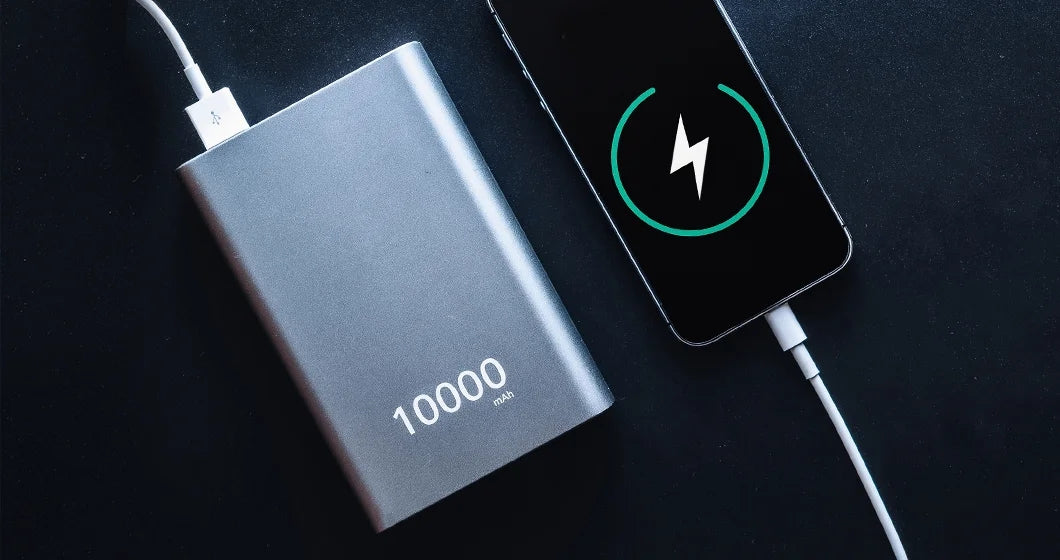
Here's where things get interesting. The mAh number on the box is the internal battery capacity, but you won't actually get that full amount transferred to your phone. Why? Because of energy loss during the conversion process. Power banks use lithium-ion or lithium-polymer cells that output at 3.7 volts, but your phone charges at 5 volts. That voltage boost creates heat and energy loss, typically around 10 to 30 percent.
So a 10,000mAh power bank realistically delivers about 7,000 to 9,000mAh of usable charge to your device. Let me give you some real-world numbers to make this practical:
- A 5,000mAh power bank usually provides one full charge for most modern smartphones.
- A 10,000mAh power bank typically gives two to three phone charges.
- A 20,000mAh power bank can charge a phone four to six times or fully charge a tablet.
- A 30,000mAh or higher power bank is ideal for laptops, long trips, or charging multiple devices.
From my own testing, I've found that a good 20,000mAh power bank easily got me through a four-day camping trip with my phone, Bluetooth speaker, and smartwatch all needing juice. That kind of reliability is priceless when you're off the grid.

mAh vs Other Battery Metrics You Should Know
While mAh gets all the attention, it doesn't tell the whole story on its own. To truly understand what mAh means for a power bank, you need to consider a few related metrics that work together.
Voltage and Watt-Hours
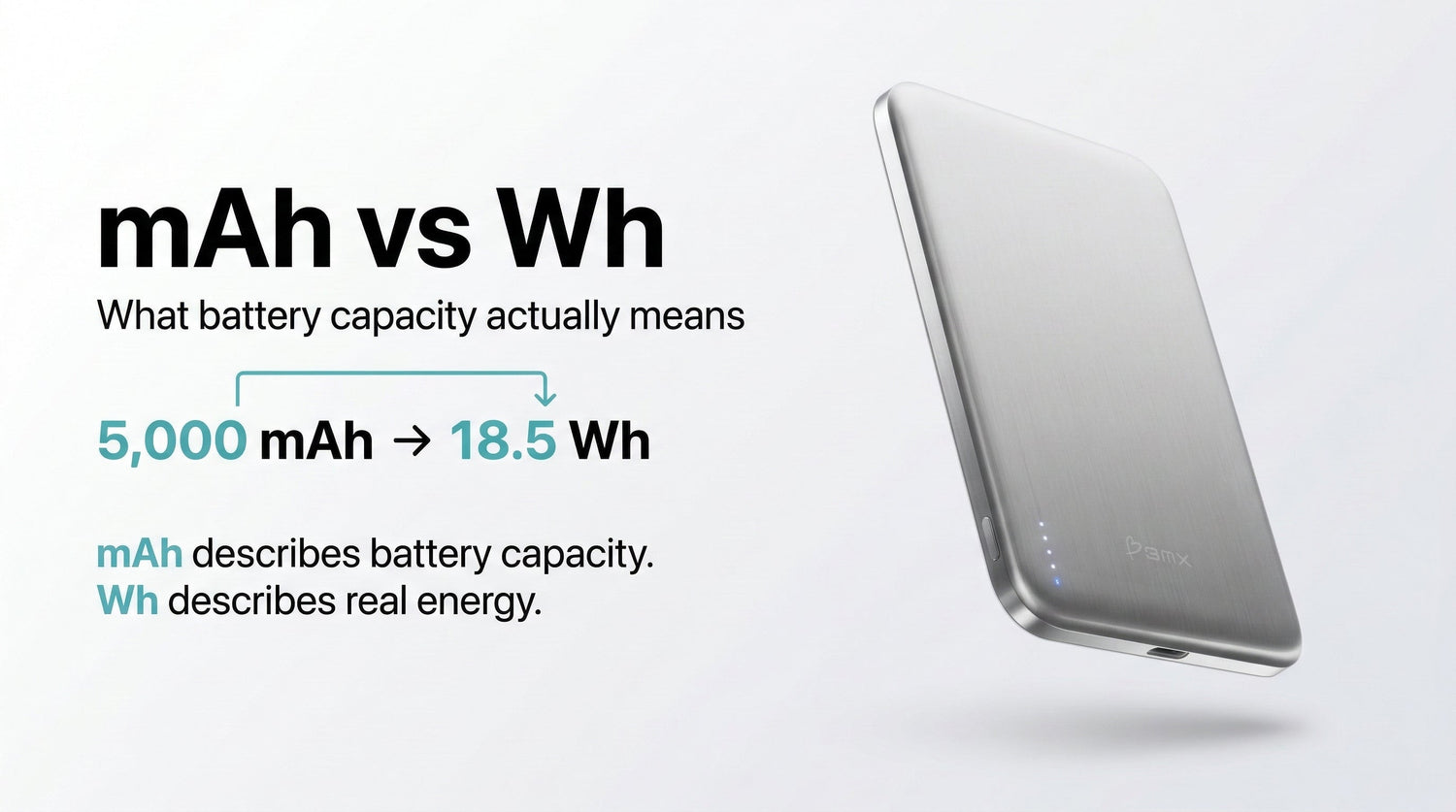
Battery capacity is sometimes also expressed in watt-hours (Wh), which factors in voltage to give a more complete picture of energy. You can convert mAh to Wh by multiplying mAh by voltage and dividing by 1,000. For a 10,000mAh power bank at 3.7V, that's 37Wh. This matters especially for air travel, because airlines cap power banks at 100Wh without airline approval.
Charge Speed and Output Amperage
mAh tells you capacity, but the output amperage tells you how fast that energy gets delivered. A power bank might have 10,000mAh of capacity, but if it only outputs 1 amp, it'll charge your phone painfully slowly. Look for power banks with at least 2.1 amps or, even better, those that support fast charging protocols like Power Delivery (PD) or Quick Charge (QC).
Battery Cell Quality
Not all lithium-ion cells are built the same. Premium power banks use cells from reputable manufacturers that maintain their capacity over hundreds of charge cycles. Cheaper units may advertise high mAh but degrade quickly, losing real capacity within months. I learned this the hard way when a budget power bank I bought dropped to half its original capacity in less than a year.
How to Choose the Right mAh for Your Needs
Picking the perfect power bank capacity depends entirely on how you plan to use it. Let me break down the most common scenarios so you can match the right mAh rating to your lifestyle.
For Daily Commuters and Light Users
If you just need a little extra juice to get through a busy day, a 5,000mAh to 10,000mAh power bank is plenty. These are compact, lightweight, and slip easily into a pocket or small bag. They typically weigh under 200 grams and won't weigh you down.
For Travelers and Outdoor Enthusiasts
Anyone heading on a trip, camping adventure, or long flight should look at 20,000mAh or higher. These larger power banks can keep multiple devices running for days. Just keep in mind that anything over 27,000mAh (100Wh) may require special handling at airports and could be restricted on some flights.
For Power Users with Multiple Devices
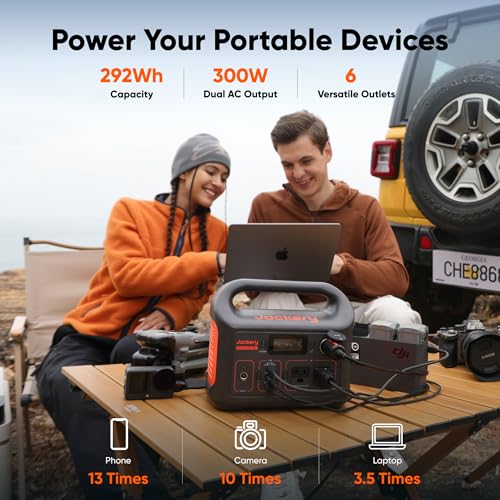
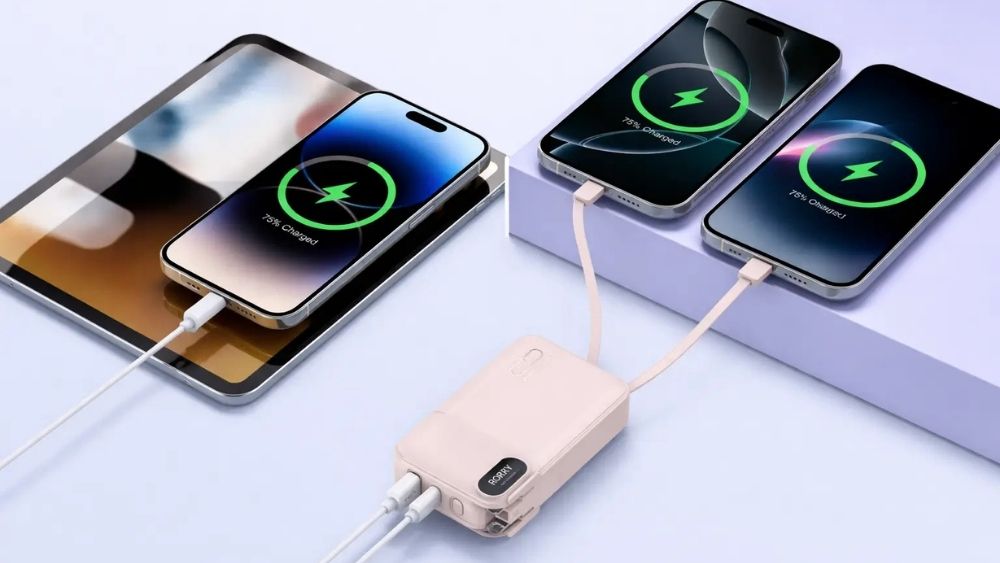
If you're juggling a phone, tablet, smartwatch, wireless earbuds, and maybe even a laptop, go big with 30,000mAh or more. These heavy-duty power banks often include multiple USB ports and AC outlets, essentially functioning as portable wall sockets.
For Emergency Preparedness
A reliable 20,000mAh power bank is a smart addition to any emergency kit. It can keep your phone alive for communication during power outages, natural disasters, or roadside emergencies. I keep one in my car's glove box, and it has saved me more than once when my phone died during a long drive through areas with no cell service.

Common Mistakes People Make When Buying Power Banks
After helping friends and family pick out power banks over the years, I've noticed some recurring mistakes that lead to disappointment. Let me save you from making the same errors.
Chasing the Highest mAh Number
Bigger isn't always better. A massive 50,000mAh power bank sounds impressive, but if it's heavy, slow, and overkill for your needs, you'll leave it at home. Match the capacity to your actual usage, not the marketing hype.
Ignoring Build Quality and Safety Features
Cheap power banks can be dangerous. Look for units with overcharge protection, short circuit prevention, and temperature control. Reputable brands invest in safety certifications, and that extra cost is worth your peace of mind.
Forgetting About Recharge Time
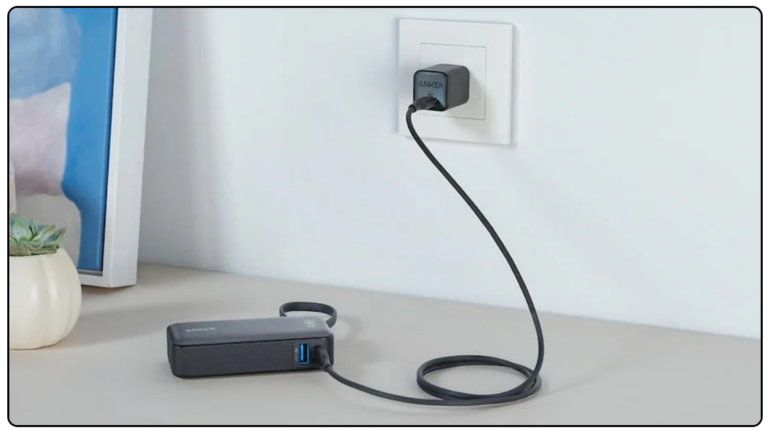
A 30,000mAh power bank might take 10+ hours to fully recharge with a standard charger. If you need quick turnaround, look for models that support fast input charging via USB-C Power Delivery.
Overlooking Port Types and Compatibility
Make sure the power bank has the right ports for your devices. USB-C has become the standard, but older devices might need USB-A. Some power banks even include wireless charging pads for added convenience.
Tips to Maximize Your Power Bank's Lifespan
Once you've invested in a good power bank, you'll want it to last as long as possible. Here are some practical tips I've picked up from years of daily use.
- Avoid letting it fully drain to zero before recharging. Partial top-ups are better for lithium-ion health.
- Keep it at room temperature when possible. Extreme heat and cold damage battery cells over time.
- Use the right cable. Poor-quality cables waste energy and slow down charging speeds.
- Recharge it every few months even if you don't use it. Batteries slowly lose charge, and deep discharge can harm them.
- Store it at about 50 percent charge if you won't use it for a long time. This is the sweet spot for battery longevity.
The Difference Between mAh and Other Charging Standards
Modern charging has evolved beyond simple mAh ratings. Technologies like USB Power Delivery, Qualcomm Quick Charge, and even proprietary standards from phone makers now play a huge role in how fast and efficiently your devices charge. A power bank with 20,000mAh and PD support will charge a modern phone much faster than an older 20,000mAh unit with only basic 5V/2A output.
If your phone supports fast charging, investing in a power bank that matches that standard will dramatically improve your experience. Instead of waiting three hours for a full charge, you might get 50 percent in just 30 minutes. That kind of speed is a game-changer when you're rushing between meetings or catching a flight.

How mAh Affects Price and Value
Generally speaking, higher mAh ratings mean higher prices, but the relationship isn't perfectly linear. A 20,000mAh power bank doesn't cost twice as much as a 10,000mAh one, and the per-mAh cost usually drops as capacity increases. However, premium features like fast charging, multiple ports, durable construction, and brand reputation all add to the price tag.
The best value comes from finding a power bank that matches your capacity needs while including the features you'll actually use. There's no point paying extra for laptop charging capability if you only need to charge your phone on the go.
Understanding What mAh Means for Your Specific Devices
Different devices have different battery sizes, and matching your power bank to your gadgets ensures you always have enough juice.
Smartphones
Most modern phones have batteries between 3,000mAh and 5,000mAh. A 10,000mAh power bank will comfortably charge most phones two to three times, making it the sweet spot for most people.
Tablets
Tablets typically have batteries ranging from 7,000mAh to 11,000mAh. To fully charge a tablet at least once, look for a power bank with 15,000mAh or more.
Laptops
Laptop batteries are much larger, often 40,000mAh to 70,000mAh equivalent. Charging a laptop requires a power bank with USB-C PD output of 45W to 100W, plus a capacity of at least 20,000mAh (and realistically more for a full charge).
Wearables and Accessories
Smaller devices like smartwatches, wireless earbuds, and fitness trackers have tiny batteries. Any power bank will handle these easily, but compact 5,000mAh models are perfect for keeping in a gym bag.
Frequently Asked Questions About mAh for Power Banks
Is a higher mAh power bank always better?
Not necessarily. Higher mAh means more capacity, but it also means more weight, more cost, and longer recharge times. The best power bank is the one that matches your specific needs without being overkill. For daily phone top-ups, 10,000mAh is usually plenty. For extended travel, you'll want 20,000mAh or more.
Why doesn't my power bank fully charge my phone as many times as the mAh suggests?
Energy loss during voltage conversion and heat generation means you typically get 60 to 80 percent of the rated capacity transferred to your device. A 10,000mAh power bank will deliver roughly 7,000 to 8,000mAh of usable charge, which is still enough for one and a half to two phone charges on average.
Can I bring a high mAh power bank on a plane?
Airlines generally allow power banks under 100Wh (watt-hours) in carry-on luggage. That's roughly 27,000mAh at 3.7V. Power banks between 100Wh and 160Wh require airline approval, and anything over 160Wh is prohibited. Always check your specific airline's rules before flying.
How long does it take to charge a power bank?
Charge time depends on the power bank's capacity and the charger's output. A 10,000mAh power bank takes about 3 to 5 hours with a standard 2A charger, while a 20,000mAh unit can take 6 to 10 hours. Fast-charging power banks with PD support can cut these times significantly.
Do power banks lose capacity over time?
Yes, all lithium-ion batteries gradually lose capacity with use and age. A well-maintained power bank typically retains 80 percent of its original capacity after 300 to 500 charge cycles. After two to three years of regular use, you may notice it doesn't hold as much charge as it used to.
How do I know if a power bank's mAh rating is accurate?
Look for power banks from reputable brands that provide honest specifications. Be wary of extremely cheap units advertising massive capacities, as these often overstate their actual performance. Reading user reviews and checking for safety certifications can help you spot trustworthy products.
Final Thoughts on What mAh Means for Your Power Bank
Understanding what mAh means for a power bank transforms you from a confused shopper into an informed buyer. That simple number is your roadmap to finding a portable charger that truly fits your life, whether you're a casual user needing a quick top-up or an adventurer preparing for off-grid expeditions.
The best advice I can give is to start with your real needs. Think about how many devices you carry, how often you're away from outlets, and how much weight you're willing to pack. Then match those needs to a power bank with the right mAh capacity, supported by good build quality, proper safety features, and the charging speeds your devices deserve.
Take a moment to check the power bank in your bag right now. Does its mAh rating actually match how you use it? If not, you now have everything you need to make a smarter choice next time. Drop a comment below sharing your go-to power bank capacity or any questions you still have about choosing the perfect one for your lifestyle.