What To Look For In Power Bank: 2026 Buying Guide
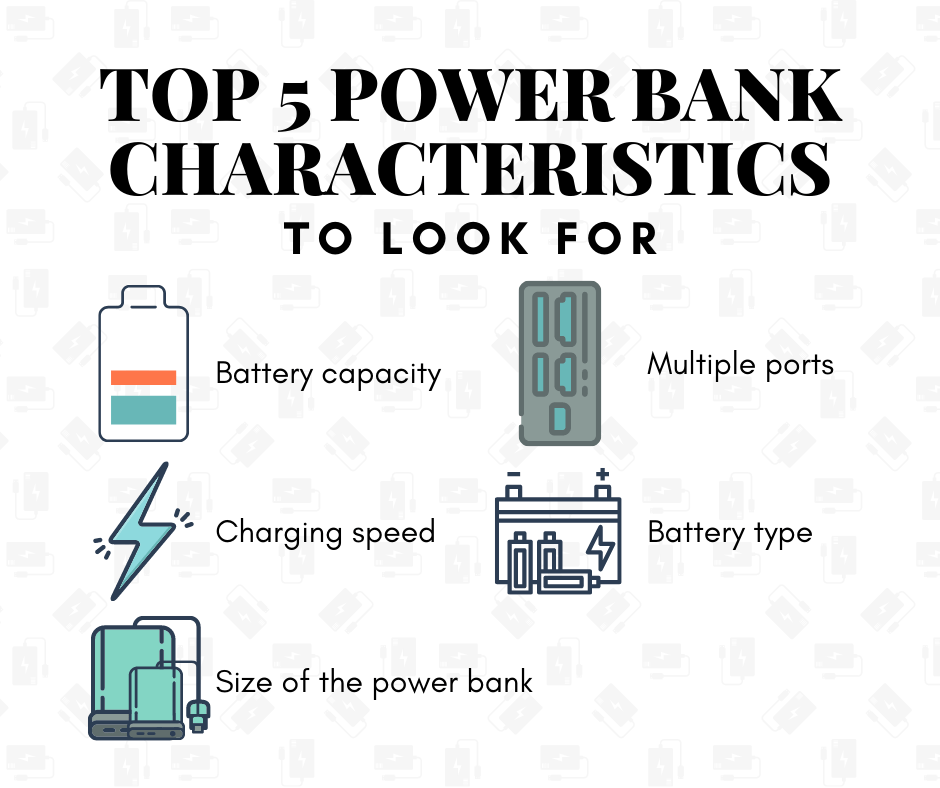
Choose a power bank with at least 10,000mAh capacity, fast charging, multiple ports, and solid safety features to keep your devices powered on the go.
Ever been stuck with a dead phone at the worst possible moment? I have, and it's the moment you realize your power bank is either too weak, too slow, or just not built for the job. After testing dozens of them over the years, I can tell you that picking the right one isn't about grabbing the cheapest option off the shelf. It's about knowing exactly what to look for in a power bank so it fits your life, your devices, and your daily routine. In this guide, I'll walk you through everything that actually matters from capacity and charging speed to portability, safety, and those little features that make one power bank a joy to own and another one a waste of money.

Capacity and Battery Size
The first thing most people look at is the milliampere-hour rating, but understanding what that number really means is what separates a smart buyer from a frustrated one. Capacity determines how many times you can charge your devices before the power bank itself needs recharging.
For most people, a 10,000mAh power bank hits the sweet spot. It can charge a typical smartphone two to three times, which is enough for a full day of heavy use or a weekend trip. If you're traveling internationally or carrying a tablet and laptop alongside your phone, stepping up to 20,000mAh or even 30,000mAh makes sense. These larger units are heavier, but they give you the freedom to charge multiple devices multiple times without hunting for a wall outlet.
One thing I always remind people is that the real usable capacity is about 60 to 70 percent of the advertised number. The rest is lost to voltage conversion and heat. So if a power bank claims 20,000mAh, you're realistically getting around 13,000 to 14,000mAh of actual charging power. Keep that in mind when comparing options.
I learned this the hard way on a cross-country flight. I bought a 10,000mAh power bank thinking it would get me through the whole trip, but after one full phone charge and a partial top-up, it was dead. I ended up borrowing a friend's 20,000mAh model and never looked back. If your lifestyle involves long commutes, camping, or international travel, always size up rather than down.
Charging Speed and Output Power
Speed is everything when your battery is flashing red and you have 15 minutes before a meeting. A power bank's output, measured in watts, tells you how fast it can push energy into your device. Older or budget power banks often top out at 5W, which feels painfully slow by today's standards. Modern power banks support 18W, 30W, 45W, or even 100W output, which can charge a laptop as quickly as a wall charger.
Look for power banks that support fast charging protocols like USB Power Delivery (PD) or Qualcomm Quick Charge. If you own an iPhone, a USB-C PD power bank can take your phone from zero to 50 percent in about 30 minutes. Android users with Snapdragon-powered devices benefit similarly from Quick Charge compatibility.
Another detail that often gets overlooked is the difference between input and output speeds. Output is how fast the power bank charges your phone. Input is how fast the power bank itself recharges. A power bank with a 5V/2A input can take an entire day to refill, but one with 18W PD input can go from empty to full in under three hours. This matters more than people think, especially if you travel frequently and don't have time to leave a power bank plugged in overnight.
Number and Type of Ports
Ports are the unsung heroes of a good power bank. A single USB-A port was fine five years ago, but today, most of us carry multiple devices that all need charging. A solid power bank should have at least two output ports, and ideally a mix of USB-A and USB-C.
USB-C is becoming the universal standard. Most new phones, tablets, earbuds, and even some laptops charge via USB-C. If your power bank has a USB-C port that supports both input and output, you can use the same cable to charge the power bank and your devices, which simplifies your travel kit enormously.
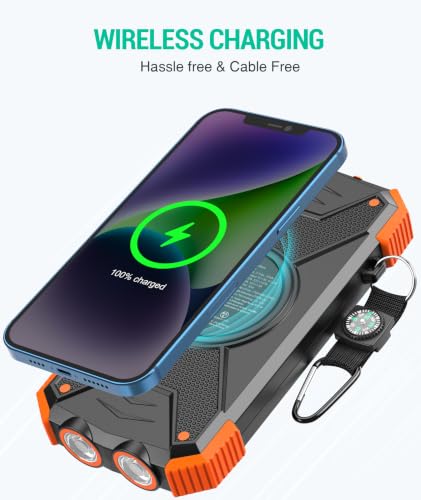
Some power banks also include AC outlets or wireless charging pads. These are great for specific situations, like charging a camera battery or juicing up your wireless earbuds without a cable. Just remember that extra features often come with extra weight and a higher price tag, so make sure you actually need them before paying for them.
I made the mistake once of buying a power bank with three USB-A ports but no USB-C. Within six months, every device I owned had moved to USB-C, and that power bank became a glorified paperweight. Learn from my error and future-proof your purchase.
Size, Weight, and Portability
A power bank can have all the capacity and speed in the world, but if it weighs as much as a brick, you won't want to carry it. Portability is a personal decision that depends on how and where you plan to use it.
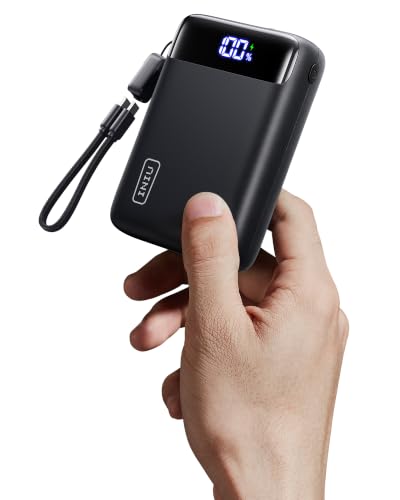
If you're slipping it into a pocket or a small purse, a 5,000mAh slim model is ideal. These are about the size of a credit card or a tube of lipstick, and they add maybe half a charge to your phone. They're perfect for nights out, short commutes, or as a backup you forget you're carrying.
For everyday carry in a backpack or messenger bag, 10,000mAh to 15,000mAh models offer the best balance. They weigh roughly 6 to 10 ounces and easily handle a full day of heavy phone use.
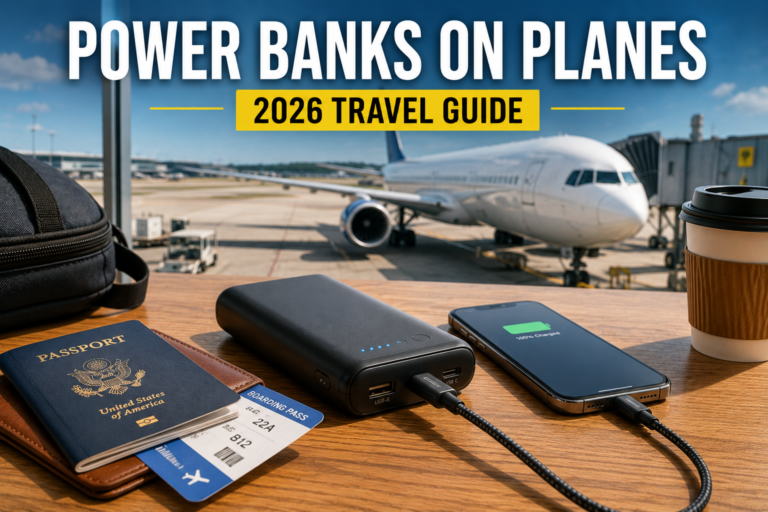
If you're going off-grid, flying internationally, or powering a laptop, you'll want a 20,000mAh or larger unit. These can weigh over a pound and feel substantial, but they replace multiple chargers and keep everything running. Just check airline restrictions if you plan to fly, since most carriers cap portable batteries at 100Wh for carry-on luggage.
Build Quality and Durability
A power bank is something you toss in bags, drop on floors, and use in less-than-ideal conditions. Build quality isn't a luxury; it's a necessity. Look for a sturdy outer shell made of high-grade plastic or aluminum. Avoid models that feel hollow or creak when you squeeze them.
Many power banks now come with rubberized edges or textured surfaces that improve grip and absorb minor impacts. Some are even rated for water and dust resistance, though that's still rare. If you spend time outdoors or work in rugged environments, a shockproof and water-resistant model is worth the investment.
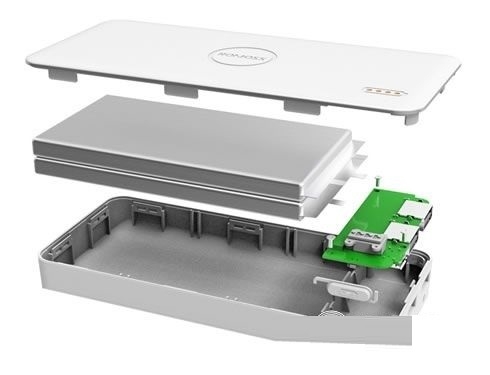
Beyond the physical build, internal quality matters just as much. Reputable brands use high-quality lithium-polymer or lithium-ion cells that hold their charge longer and degrade more slowly. Cheaper cells lose capacity quickly, meaning your power bank might hold 20,000mAh on day one but only 12,000mAh after six months. I always recommend sticking with established brands that offer at least a one-year warranty, because that warranty is a signal the company stands behind its cells.
Safety Features and Certifications
This is the area where cutting corners can actually be dangerous. Power banks store a lot of energy in a small space, and without proper safety features, they can overheat, swell, or in rare cases, catch fire.
Look for power banks that include the following protections:
- Overcharge protection that stops energy flow once your device hits 100 percent
- Short circuit protection that instantly cuts power if a cable or port malfunctions
- Temperature control that prevents the unit from overheating during heavy use
- Overcurrent and overvoltage protection that shields sensitive electronics
Certifications matter too. A power bank with UL, FCC, CE, or RoHS certification has been independently tested for safety and environmental standards. Unbranded or suspiciously cheap power banks often skip these certifications, and that's a red flag I never ignore. The small savings aren't worth the risk of damaging a $1,000 phone or worse.
I once tested an off-brand power bank for a friend that arrived with a faint chemical smell and no markings on the casing. It charged the phone fine the first few times, but within two weeks, the casing started to bulge slightly. I told her to stop using it immediately and toss it at a proper recycling center. She was lucky it didn't rupture. A certified power bank from a known brand would never have done that.
Extra Features Worth Considering
Modern power banks come with a handful of convenience features that can make a real difference in daily use.
- A built-in LED flashlight is surprisingly useful for camping, power outages, or finding keys in a dark bag.
- Digital capacity displays are far more accurate than the row of four LED dots most budget models use.
- Pass-through charging lets you charge the power bank and a connected device at the same time, which is great for hotel rooms with limited outlets.
- Solar panels sound appealing but are mostly marketing gimmicks. A small solar panel takes days to meaningfully recharge a power bank, so don't pay extra for one.
- Built-in cables eliminate the need to carry extras, though they limit flexibility if you own devices with different connector types.
My personal favorite is a digital display. After years of guessing how much charge was left based on blinking lights, seeing an exact percentage is a small luxury I now refuse to give up.
Brand Reputation and Warranty
The power bank market is flooded with look-alike products, many of which come from anonymous factories with no accountability. Buying from a brand with a solid reputation gives you better cells, better safety features, and actual customer support if something goes wrong.
Established brands like Anker, RAVPower, Aukey, Belkin, and Mophie have been in this space for years and consistently receive strong reviews. They invest in research, use quality components, and back their products with 18-month or 24-month warranties. That warranty is your safety net, and it tells you a lot about how much the company trusts its own product.
Reading user reviews on multiple platforms also helps. Look for consistent praise or complaints about specific issues. If dozens of users mention the same flaw, like a loose port or rapid capacity loss, believe them. No product is perfect, but patterns in reviews reveal the truth faster than any spec sheet.
Price and Value for Money
Price is always a factor, but the cheapest power bank is almost never the best deal. A rock-bottom model might save you $10 upfront but cost you a phone, a battery replacement, or a trip to the doctor if it fails dangerously.
The sweet spot for most people is between $25 and $60. In that range, you get reliable capacity, decent speed, proper safety features, and a brand that stands behind its product. Spending more than $80 usually gets you higher capacity, faster charging, or premium build materials, which is worth it for power users or frequent travelers.
Avoid anything priced unrealistically low, especially from sellers you've never heard of. And don't assume the most expensive option is automatically the best. Match the power bank to your actual needs and pay for the features you'll genuinely use.
Frequently Asked Questions
How many mAh do I need in a power bank?
For a single phone user, 10,000mAh is enough for two to three full charges. If you carry multiple devices or travel often, 20,000mAh gives you more freedom without too much extra weight.
Are power banks allowed on planes?
Yes, but most airlines limit them to 100Wh for carry-on bags. A 20,000mAh power bank at 3.7V produces about 74Wh, which is well within limits. Anything above 100Wh needs airline approval.
How long does a power bank last?
A good power bank should last 300 to 500 full charge cycles before its capacity drops noticeably. With regular use, that means two to three years before you might notice a difference. Higher-quality cells can last even longer.
Is fast charging bad for my phone battery?
Modern phones manage incoming power intelligently, so using a fast-charging power bank is safe. The phone pulls only what it can handle, and built-in protections prevent overheating or overcharging.
Can I charge my laptop with a power bank?
Only if the power bank supports USB Power Delivery at 30W or higher, depending on your laptop. Look for a USB-C PD port with at least 45W output for most ultrabooks and 60W to 100W for larger laptops.
Conclusion
Picking the right power bank comes down to matching the device to your daily habits and being honest about how you use your tech. Focus on real capacity, fast charging support, the right ports, solid safety certifications, and a brand you trust. A little research upfront saves you from dead phones, wasted money, and in the worst case, a genuinely dangerous product. Whether you need a slim daily backup or a high-capacity travel companion, the perfect power bank is out there. Now that you know exactly what to look for in a power bank, you're ready to make a confident choice and never get caught with a dead battery again. Drop a comment below with your favorite power bank model or any questions you still have. I'm always happy to help!