What Size Power Banks Are Allowed On Planes: 2026 Travel Guide
Traveling with a power bank feels simple until you hit the security checkpoint and an agent flags your battery. Most airlines allow power banks up to 100Wh in carry-on bags, with airline approval required for 100–160Wh, and anything above 160Wh banned. In this guide, I'll walk you through the exact rules, what those watt-hour numbers really mean, and how to avoid the most common mistakes travelers make when flying with portable chargers. By the end, you'll know exactly what size power bank you can bring, how to pack it, and what to expect at the gate.
Understanding Power Bank Sizes and Watt-Hours
Before we get into airline rules, let's clear up one of the most confusing parts: what "size" actually means when it comes to power banks. Most travelers look at the mAh number printed on the side of their charger and assume that's the only thing that matters. In reality, airlines and aviation regulators care about watt-hours (Wh), not milliamp-hours (mAh). This is a really important distinction, and it's where a lot of confusion begins.
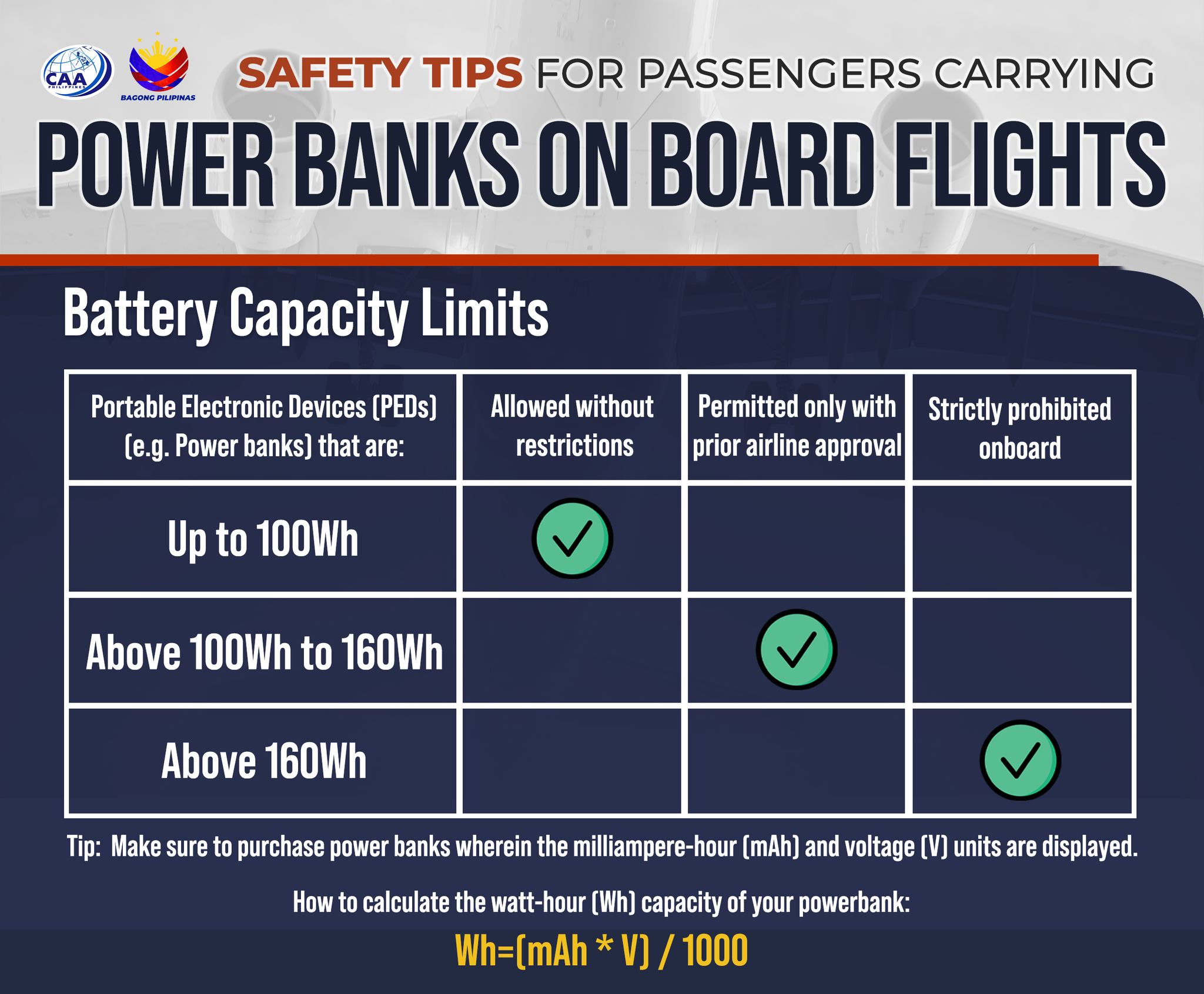
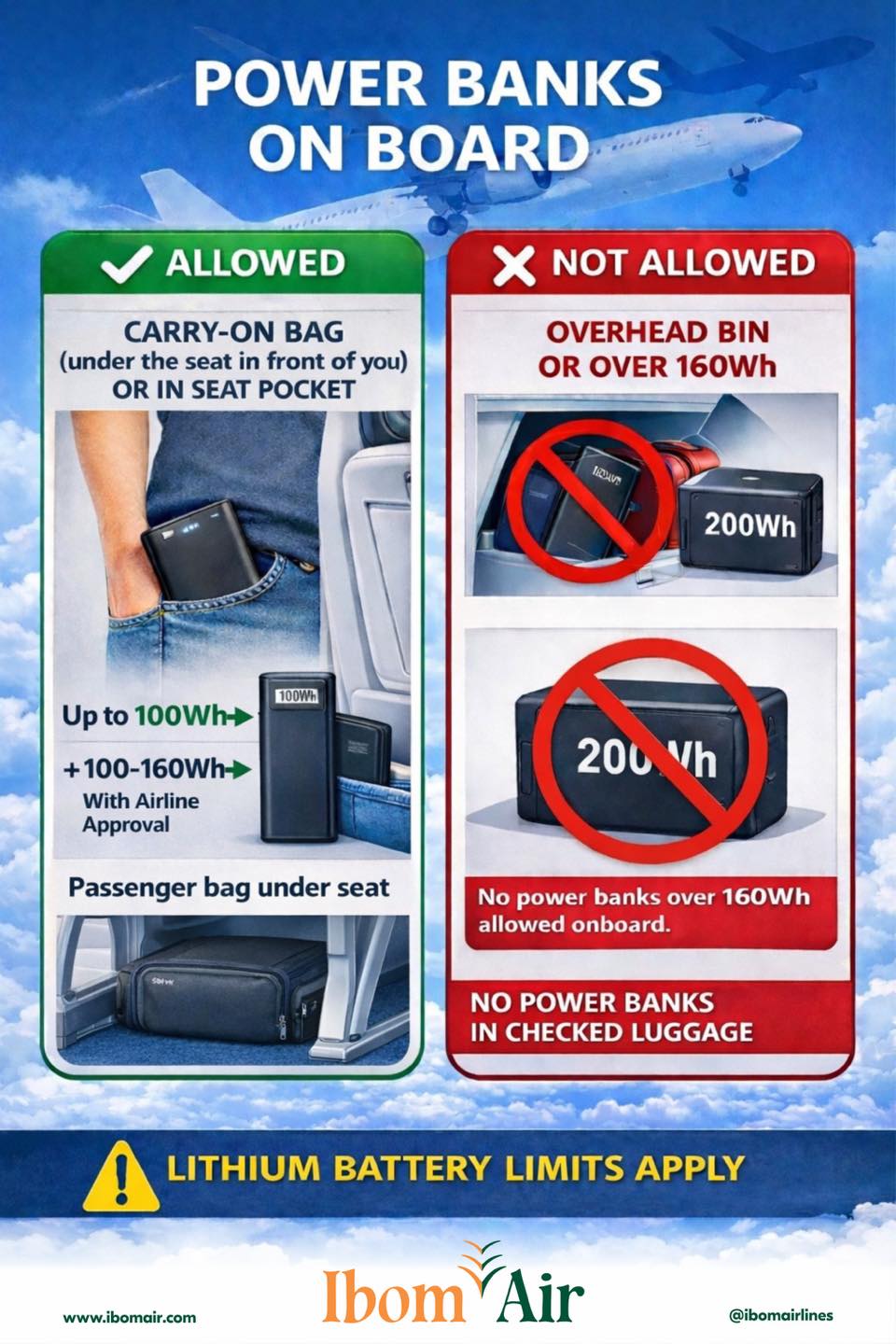
A power bank's watt-hour rating tells you how much energy it can store. You can usually find it printed in small text on the device itself, often near the capacity label. If your power bank only lists mAh, you can convert it using a simple formula: Wh equals mAh multiplied by voltage, divided by 1000. Most lithium-ion power banks run on 3.7V, so a 20,000 mAh power bank works out to about 74 Wh. A 27,000 mAh power bank is roughly 100 Wh. A 30,000 mAh or higher power bank usually crosses into restricted territory.
Here's a quick breakdown of how airlines, the FAA, and ICAO classify power banks by size:
- Under 100 Wh: Allowed in carry-on bags without airline approval. This covers most everyday power banks.
- 100 Wh to 160 Wh: Allowed only with airline approval. Some carriers say no outright.
- Over 160 Wh: Not allowed on any commercial flight, either carry-on or checked.
In short, the "size" that matters is watt-hours, not the marketing number on the box. Always check the Wh rating before you fly.

Airline and Aviation Authority Rules for Power Banks
The rules around power banks on planes are not just made up by individual airlines. They come from international aviation safety standards, and most carriers follow them closely. The two biggest governing bodies are the International Civil Aviation Organization (ICAO) and the Federal Aviation Administration (FAA) in the United States. Both have clear guidance on lithium batteries, including portable chargers.
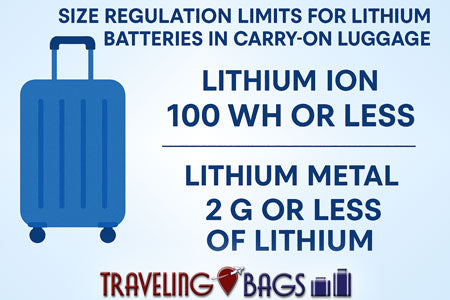
ICAO's dangerous goods panel classifies lithium-ion power banks as "spare batteries," which means they can pose a fire risk if they short-circuit or overheat. Because of that, they are restricted to carry-on luggage only. Checked bags are off-limits for any power bank, regardless of size. The reasoning is simple: if a battery overheats in the cabin, the flight crew can respond immediately. If it overheats in the cargo hold, it's much harder to manage.
The FAA, which oversees U.S. airlines, mirrors ICAO's approach. Power banks under 100 Wh are fine in carry-on bags. Between 100 Wh and 160 Wh, you need airline approval. Anything over 160 Wh is banned entirely. Individual airlines can set stricter rules if they want, but they cannot be more lenient than these baseline standards.
Here are the most common airline policies you'll run into:
- FAA (United States): Under 100 Wh allowed, 100–160 Wh with approval, over 160 Wh banned.
- IATA guidelines (international standard): Same as FAA, with most global carriers following suit.
- Budget carriers and regional airlines: Some apply stricter rules, especially on short-haul flights, so always check before you fly.
One personal lesson I've learned the hard way: always check your airline's specific rules 24 to 48 hours before departure. I once had a 27,000 mAh power bank that I assumed was fine because it was under 100 Wh, but the airline's website had a stricter policy for international routes. I had to repack at the gate, and it was stressful. Don't make the same mistake.
How to Calculate Your Power Bank's Watt-Hours
This is the part most travelers skip, and it's also the part that causes the most problems at security. Calculating your power bank's watt-hours takes about 30 seconds, and it can save you a lot of hassle. Here's how to do it step by step:
- Find the mAh rating on your power bank. It's usually printed on the side, bottom, or back of the device.
- Find the voltage. Most lithium-ion power banks use 3.7V, but check the label to be sure.
- Multiply mAh by voltage.
- Divide that number by 1000 to get watt-hours.
For example, a 20,000 mAh power bank at 3.7V works out to 74 Wh. That puts it comfortably in the "allowed without approval" zone. A 26,800 mAh power bank at 3.7V comes out to about 99 Wh, which is still under the 100 Wh limit. But a 30,000 mAh power bank at 3.7V hits 111 Wh, which means you need airline approval before you fly.
If your power bank has a USB-C Power Delivery port, the voltage might be higher under load, but the stored watt-hours stay the same. The Wh rating printed on the device is what matters, not the output wattage.
Pro tip: if your power bank has a digital display or app, check the settings menu. Some models from Anker, RAVPower, and Xiaomi show watt-hours directly. If yours doesn't, a quick calculation is all you need.
What Happens If You Bring the Wrong Size Power Bank
So what actually happens if you show up at the airport with a power bank that's too big? The answer depends on the airline, the country, and how strict security is that day. In most cases, you'll be asked to either leave the power bank behind or check it. Since checked baggage rules ban power banks entirely, leaving it behind is usually the only option.
In some airports, security will let you surrender the device and dispose of it properly. In others, they'll ask you to take it back to your car or a friend at the curb. I've seen travelers lose expensive high-capacity power banks this way, and it's never fun to watch.
Here are a few real-world scenarios that come up often:
- A 30,000 mAh power bank (around 111 Wh) in carry-on: Most airlines will require approval. Without it, the power bank gets pulled.
- A 50,000 mAh power bank (around 185 Wh): Banned outright. Security will ask you to leave it or dispose of it.
- A damaged or swollen power bank: Always refused. Airlines treat damaged lithium batteries as a serious fire risk.
- Power bank in checked luggage: Pulled at the gate or during baggage screening. You'll have to go back and move it to carry-on, or lose it.
If you have a power bank that's over 100 Wh, your safest bet is to call your airline before you fly and ask for written approval. Some carriers issue a special form or add a note to your booking. Others simply say no. Either way, you'll know where you stand before you get to the airport.

Tips for Flying with Power Banks Safely
After years of flying with portable chargers for work and personal travel, I've picked up a few habits that make the whole process smoother. These aren't just about following rules. They're about keeping you, your devices, and everyone else on the plane safe.
Here are my top tips:
- Always carry power banks in your carry-on bag. Never check them.
- Keep power banks in their original case or a protective pouch to prevent short circuits.
- Cover the USB ports with tape or a small plastic cap if you're worried about accidental contact.
- Label your power bank with your name and contact info in case it gets lost or left behind.
- Charge your power bank before you fly. Security sometimes asks you to turn it on to prove it works.
- Check the watt-hour rating before you pack. If it's over 100 Wh, call your airline.
- If your power bank is damaged, swollen, or smells off, leave it at home. Damaged lithium batteries are a serious fire risk.
- Bring only what you need. If you can get by with a 10,000 mAh power bank, there's no reason to bring a 50,000 mAh one.
I learned the "bring only what you need" lesson on a trip through Southeast Asia. I packed a massive 40,000 mAh power bank for a three-day layover, and security flagged it at three different airports. Eventually, I left it at a hotel and bought a smaller one at my destination. Less really is more when you're flying.
Common Power Bank Capacities and Their Wh Ratings
To make things even easier, here's a quick reference table showing common power bank capacities and their approximate watt-hour ratings. Use this as a starting point, but always check the label on your specific device.
- 5,000 mAh: about 18.5 Wh
- 10,000 mAh: about 37 Wh
- 20,000 mAh: about 74 Wh
- 26,800 mAh: about 99 Wh
- 27,000 mAh: about 100 Wh
- 30,000 mAh: about 111 Wh
- 40,000 mAh: about 148 Wh
- 50,000 mAh: about 185 Wh
Anything 27,000 mAh or under at 3.7V is usually safe without airline approval. Anything above that requires a call to your airline. Anything over 160 Wh (roughly 43,000 mAh at 3.7V) is banned outright.
Keep in mind that some power banks use higher voltages or have multiple cells, so the actual Wh rating might differ slightly. Always trust the printed number on the device, not the mAh on the box.

Power Banks vs. Laptop Batteries: What's the Difference?
This is a question I get a lot, and it's worth addressing because the rules are different. Laptop batteries are installed in the device, and they're allowed in both carry-on and checked bags under most circumstances. Power banks, on the other hand, are classified as "spare batteries" because they can be removed and used independently. That's why they face stricter rules.
A 70 Wh laptop battery is perfectly fine in a checked bag. A 70 Wh power bank is only allowed in carry-on, never checked. The logic comes down to packaging and protection. A laptop battery is enclosed in a hard shell with built-in safety circuits. A power bank, especially a cheap one, might not have the same level of protection, which is why regulators treat them more cautiously.
If you're flying with a laptop and a power bank, keep the power bank in your carry-on and the laptop wherever you prefer. Just don't put the power bank in your checked bag, even if it's small.
International Travel and Power Bank Rules
If you're flying internationally, the rules can vary by country, but most follow ICAO guidelines. That said, a few regions have their own quirks. China, for example, used to ban power banks over 100 Wh on domestic flights, but rules have relaxed in recent years. The European Union follows EASA guidelines, which align with ICAO. Australia, Canada, and the UK all follow similar standards.
The biggest variation comes from individual airlines, not countries. Some Middle Eastern carriers, for example, are stricter about power banks over 100 Wh on short-haul flights. Some Asian carriers allow up to 160 Wh without prior approval. Always check the specific airline's website before you book, especially if you're carrying a high-capacity power bank.
I once flew from Tokyo to Sydney with a 30,000 mAh power bank after getting written approval from the airline. The process took about 10 minutes over email, and security didn't ask a single question at the gate. The key was having the approval in writing, on my phone, ready to show if needed.
What to Do If Your Power Bank Is Too Big
If you've already bought a power bank and it turns out to be over the airline's limit, you have a few options:
- Call the airline and request approval. Some carriers will say yes for power banks between 100 Wh and 160 Wh.
- Ship the power bank to your destination instead of flying with it.
- Leave it at home and buy a smaller one at your destination.
- Use it at the airport before you board, then leave it in a friend's car or a luggage locker.
- Never check it. Checked baggage rules for lithium batteries are strict, and you could face fines or have your bag pulled.
If you travel often, investing in a 20,000 mAh or 26,800 mAh power bank is the sweet spot. It gives you enough capacity to charge a phone multiple times or a laptop once, and it stays comfortably under the 100 Wh limit.
Frequently Asked Questions
Can I bring a 20,000 mAh power bank on a plane?
Yes. A 20,000 mAh power bank at 3.7V is about 74 Wh, which is under the 100 Wh limit. It can go in your carry-on bag without airline approval.
Are power banks allowed in checked luggage?
No. Power banks are classified as spare lithium batteries and must go in carry-on bags only. Checked luggage rules ban them entirely due to fire risk.
What is the largest power bank allowed on planes?
Most airlines allow power banks up to 100 Wh without approval. Between 100 Wh and 160 Wh, you need airline approval. Anything over 160 Wh is banned.
Do I need to remove my power bank at airport security?
In some airports, security asks you to take power banks out of your bag, similar to laptops. Keep yours easily accessible to speed up screening.
Can I charge my phone on the plane with a power bank?
Yes, once you're in the air. Some airlines restrict the use of power banks during takeoff and landing, so wait until the seatbelt sign is off.
Final Thoughts on Flying with Power Banks
Power bank rules on planes exist for a good reason. Lithium batteries are powerful, and when they fail, they fail in a dramatic way. Understanding watt-hours, knowing your airline's policy, and packing smart can save you time, money, and stress at the airport. Stick to power banks under 100 Wh whenever possible, keep them in your carry-on, and never check them. If you have a higher-capacity model, call your airline before you fly and get approval in writing. Travel light, stay charged, and enjoy your trip with one less thing to worry about.