What Is A Power Bank: The Complete 2026 Guide
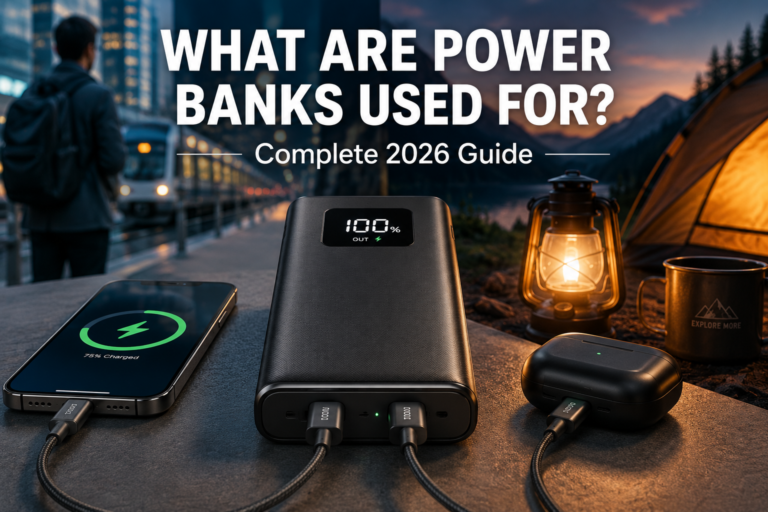
A power bank is a portable battery that charges your devices on the go, and understanding how it works can save you from dead-phone panic more times than you can count.
I still remember the first time a power bank saved my day. I was stuck at an airport with a 5% battery, an important email to send, and no outlet in sight. That little brick in my backpack was a lifesaver. Since then, I've never traveled without one. And if you're reading this, chances are you're either curious about what a power bank really is, or you're thinking about buying one. Either way, I've got you covered. Let's break it all down in plain, simple language.
What Is a Power Bank and How Does It Work
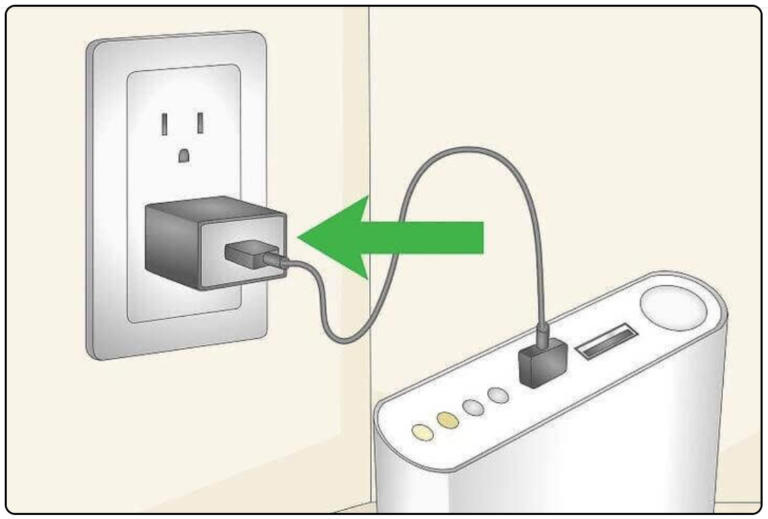
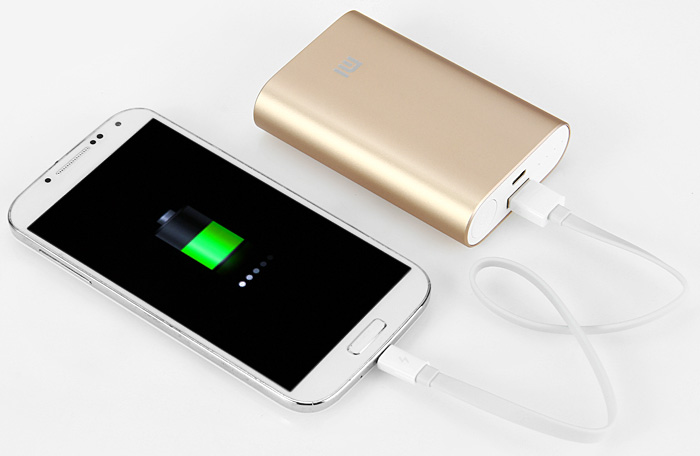
A power bank is a portable charger that stores electrical energy in its built-in battery. You charge it up beforehand, usually through a wall outlet, and then use it later to charge your phone, tablet, earbuds, or even your laptop. Think of it like a backup water tank. Your home gets water from the main supply, but when the supply cuts off, the tank keeps things running. A power bank does the same thing for your devices.
Inside every power bank, there's a lithium-ion or lithium-polymer battery. These batteries hold energy, and when you plug in a device, that energy flows out through a USB or USB-C port. The process is simple. Energy in, energy stored, energy out.
A few key things to know:
- Power banks come in different sizes, from small ones that fit in your pocket to large ones that can charge a laptop multiple times.
- They are measured in mAh (milliamp hours), which tells you how much energy they can store.
- Most modern power banks include smart chips that protect your device from overheating, overcharging, and short circuits.
I've used dozens of power banks over the years, and the best ones always feel solid, charge fast, and last for years without losing capacity.

Types of Power Banks
Not all power banks are the same. If you've ever browsed online, you know there are hundreds of options. Here's how I break them down:
Standard Power Banks
These are the most common. They come in sizes ranging from 5,000 mAh to 30,000 mAh. A 10,000 mAh power bank can usually charge a phone two to three times, depending on the phone's battery size.
High-Capacity Power Banks
These are the beasts. We're talking 40,000 mAh and above. They're heavier, but they can charge laptops, cameras, and even small appliances. Great for camping trips or long flights.
Solar Power Banks
These have small solar panels that let you charge them using sunlight. Honestly, solar charging is slow and not super reliable, but it's a nice backup if you're outdoors a lot. I took one on a hiking trip once, and while it didn't replace my main charger, it gave me a small boost when I needed it.
Wireless Power Banks
These let you charge your phone without a cable. Just place your phone on top, and it starts charging. Super convenient, but usually a bit slower than wired charging.
Built-in Cable Power Banks
Some power banks come with built-in USB-C, Lightning, or Micro-USB cables. This saves you from carrying extra cords. I love these for travel. Less clutter, less stress.

Key Features to Look for in a Power Bank
Buying a power bank can feel overwhelming with so many specs. Let me walk you through what actually matters, based on real use.
Battery Capacity
This is the big one. Higher mAh means more charges. But remember, no power bank is 100% efficient. You usually get about 60–70% of the rated capacity due to energy loss during conversion. So a 20,000 mAh power bank will give you roughly 12,000–14,000 mAh of usable power.
Output Ports and Charging Speed
Look for power banks with at least 2 USB ports, so you can charge two devices at once. Also, check the output rating. A 2.4A port charges faster than a 1A port. If your phone supports fast charging, make sure the power bank supports the same standard, like Quick Charge or Power Delivery.
Build Quality and Safety
A good power bank should have safety features like overcharge protection, temperature control, and short-circuit prevention. Cheap power banks without these features can be dangerous. I learned this the hard way when a no-name brand power bank started swelling after a few months. Never again.
Size and Weight
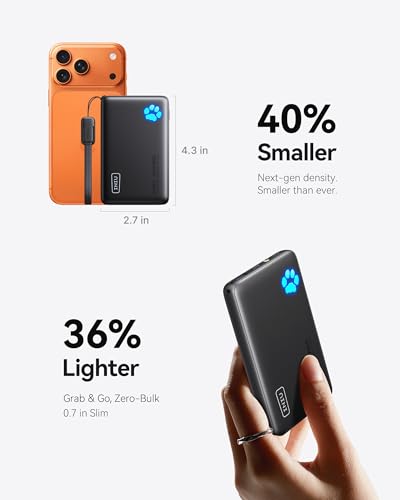
If you're carrying it in your pocket, go for something slim and light. If it's for travel, a heavier high-capacity one makes more sense.
Pass-Through Charging
This lets you charge the power bank and your phone at the same time. Super useful when you only have one outlet.

Common Uses of a Power Bank
Power banks aren't just for travelers. Here are some real-life ways people use them every day:
- Commuting: Charge your phone on the train or bus.
- Travel: Keep your phone, tablet, and earbuds charged on long flights.
- Camping: Stay connected even when you're off the grid.
- Emergencies: Power banks are essential during power outages.
- Work: If you're a photographer, videographer, or delivery driver, a power bank is a must.
- Events: Festivals, concerts, and outdoor events rarely have charging stations.

Benefits of Using a Power Bank
Let me be real. A good power bank is one of the most useful gadgets you can own. Here's why:
- Portability: You can take it anywhere. No need to hunt for outlets.
- Peace of mind: You never have to worry about your phone dying at the wrong time.
- Multi-device charging: Charge your phone, watch, and earbuds all at once.
- Emergency backup: During blackouts or natural disasters, a charged power bank can be a lifesaver.
- Cost-effective: Instead of buying a new phone when your battery dies, just keep it topped up with a power bank.

Limitations and Things to Watch Out For
Power banks are great, but they have some downsides too. Here's the honest truth:
- Weight: High-capacity power banks can be heavy. That 30,000 mAh brick won't fit in your pocket.
- Charging time: Larger power banks take a long time to recharge. Some need 8–10 hours.
- Battery degradation: Over time, all power banks lose capacity. After 2–3 years, you might notice they don't hold as much charge.
- Airline restrictions: Some airlines limit power banks to 100Wh (around 27,000 mAh). Always check before flying.
- Fake capacity: Some cheap brands lie about their mAh. A "20,000 mAh" power bank for $10 is probably not what it claims to be.

Tips for Getting the Most Out of Your Power Bank
After years of using power banks daily, here are my best tips:
- Don't let it fully drain to 0%. Charge it when it hits 20–30%.
- Avoid extreme heat. Don't leave it in a hot car.
- Use the right cable. A bad cable can slow down charging or even damage the power bank.
- Charge it before you need it. A power bank with no charge is just dead weight.
- Buy from trusted brands. It's worth spending a little more for safety and reliability.

How to Choose the Right Power Bank for You
Here's a quick guide to help you decide:
- For everyday use: 10,000 mAh, slim design, 1–2 ports.
- For travel: 20,000 mAh, fast charging, multiple ports.
- For outdoor adventures: Solar power bank or high-capacity with rugged build.
- For iPhone users: Look for a power bank with a Lightning input or USB-C PD.
- For Android users: USB-C PD is usually the best bet.
Frequently Asked Questions
How long does a power bank last?
A good power bank can last 2–3 years or even longer with proper care. The battery will slowly lose capacity over time, but if you avoid overcharging and heat, it'll serve you well.
Can a power bank charge a laptop?
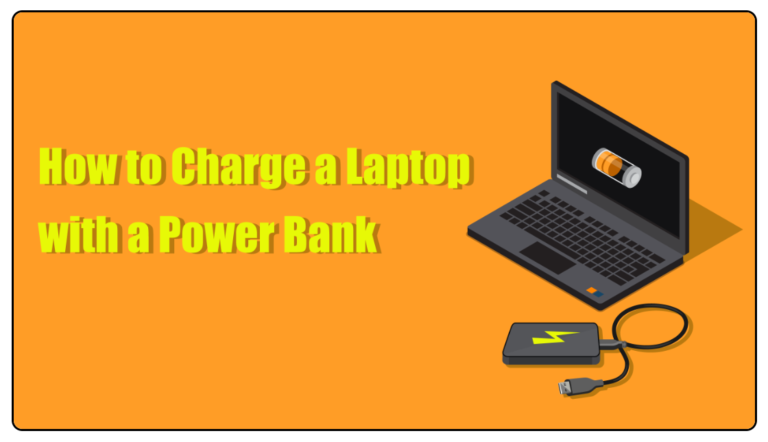
Yes, but only if it's a high-capacity power bank with USB-C Power Delivery and enough wattage. Look for at least 45W output for laptops.
Is it safe to use a power bank while charging it?
Most modern power banks support pass-through charging, but it's not always recommended. It can generate extra heat and wear out the battery faster.
How many times can a power bank charge my phone?
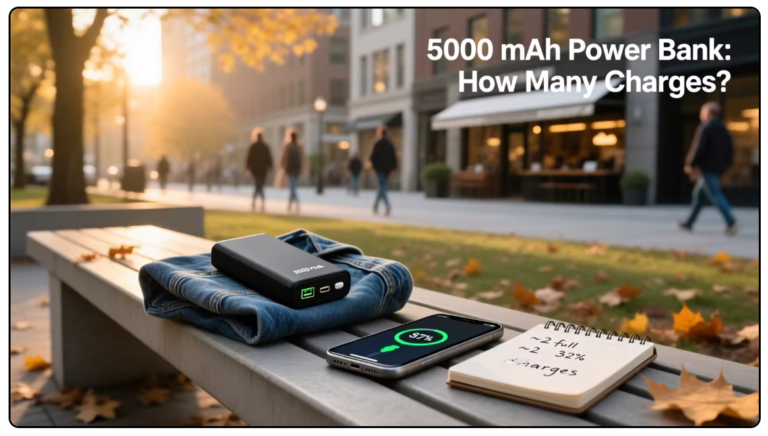
That depends on the capacity. A 10,000 mAh power bank can charge most phones 2–3 times. A 20,000 mAh one can do 4–6 times.
Are solar power banks worth it?
They're okay for emergencies, but solar charging is slow. Don't rely on them as your main charger. They're more of a backup option.
Conclusion
A power bank is one of those things you don't think you need until you really need it. Whether you're traveling, working, or just going about your day, having a reliable power bank in your bag can save you from a lot of stress. The key is to choose the right capacity, look for safety features, and take care of it so it lasts. Think of it as an investment in peace of mind. Your future self will thank you when your phone hits 1% and you've still got a full charge ready to go. If you found this guide helpful, feel free to share it with a friend or drop a comment below with your favorite power bank. I'd love to hear what works for you.