How To Pick A Power Bank: Best Guide For 2026
Choosing the right power bank comes down to matching capacity, output speed, and size to your real charging habits, not just picking the one with the highest mAh number. After testing dozens of portable chargers over the years, I've learned that the most expensive or highest-capacity option isn't always the best pick. The trick is finding the sweet spot between portability, charging speed, and battery life that fits your daily routine.
Whether you're a frequent traveler, a student on campus, or someone who just wants peace of mind during long days, knowing how to pick a power bank can save you from carrying dead weight in your bag or, worse, running out of juice at the worst possible moment. Let's walk through everything you need to know to make a smart, confident choice.

Understand Your Charging Needs First
Before you even look at specs, take a moment to think about how you'll actually use a power bank. This is the single most important step, and it's where most people get it wrong.
Ask yourself a few simple questions. How many devices do you charge daily? Do you only need to top off your phone, or do you also need to power a tablet, laptop, or wireless earbuds? Are you mostly using it for emergencies, or do you rely on it during long commutes, flights, or outdoor adventures?
I made the mistake early on of buying a massive 26,800 mAh brick thinking "bigger is better." Sure, it could charge my phone six times, but it was heavy, slow to recharge itself, and honestly overkill for my everyday use. A smaller, faster 10,000 mAh model ended up being a much better match for my lifestyle.
If you're a casual user who just needs a safety net for your phone, something in the 5,000 to 10,000 mAh range is plenty. If you're a traveler or power user juggling multiple devices, you'll want 20,000 mAh or more. The key is honesty about your habits, not aspiration.
__25F0909Fhp.jpg)
Capacity Isn't Everything: Look Beyond the mAh Number
The mAh rating tells you how much energy a power bank can store, but it doesn't tell you how much of that energy actually reaches your phone. Real-world efficiency is usually between 60% and 80%, depending on the battery quality, circuit design, and heat management.
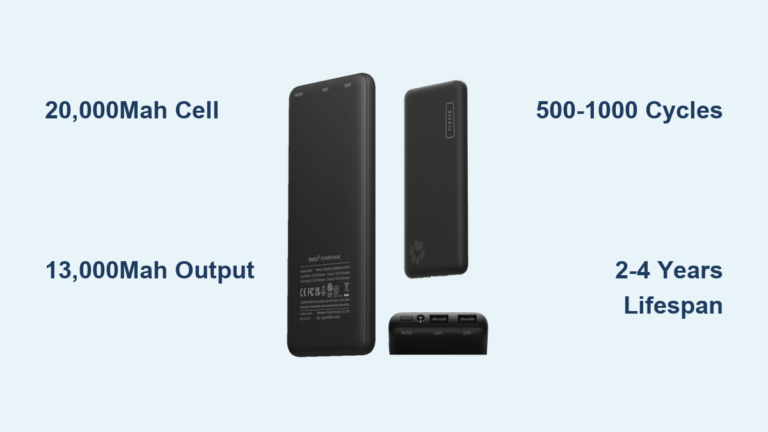
A power bank rated at 20,000 mAh won't deliver a full 20,000 mAh to your device. After accounting for voltage conversion and energy loss, you can expect around 12,000 to 16,000 mAh of usable charge. This is normal and true across the industry, so don't feel cheated when your 20,000 mAh pack only charges your 4,000 mAh phone battery about three to four times.
Another thing to watch for is the difference between rated capacity and actual capacity. Some budget brands advertise inflated numbers that don't hold up in testing. Stick with reputable brands that publish honest specs and third-party lab results.
Also, consider the battery cell type. Lithium-polymer (Li-Po) batteries are lighter, slimmer, and safer than older lithium-ion (Li-ion) cells. They're a bit more expensive, but the trade-off in portability and safety is worth it for most people.

Check the Output Speed: Wattage and Fast Charging Standards
Charging speed is where many people get tripped up. A power bank with a huge capacity but slow output will feel like watching paint dry when you're trying to top off your phone before heading out the door.
Look at the wattage output, not just the amp rating. Modern smartphones support fast charging standards like USB Power Delivery (PD), Quick Charge (QC), and proprietary tech like Samsung's Super Fast Charging or OnePlus's Warp Charge. To get the fastest speeds, your power bank must support the same standard as your device.
For iPhones, you'll want a power bank with at least 20W USB-PD output to take advantage of fast charging. For Android flagships, 25W to 45W is ideal, especially if you have a Samsung Galaxy S series, Google Pixel, or similar device. If you plan to charge a laptop, look for 60W or higher with USB-PD support.
Don't overlook the number and type of ports. A power bank with one USB-C PD port and one USB-A port gives you flexibility for older and newer cables. If you travel with multiple devices, dual USB-C ports are a lifesaver.

Size, Weight, and Portability Matter More Than You Think
A power bank that stays in your bag is one you'll actually use. If it's too heavy or bulky, you'll leave it behind, and then what's the point?
For everyday carry, aim for something under 10 ounces and slim enough to slip into a jacket pocket or small purse. A 5,000 mAh pack is about the size of a lipstick tube. A 10,000 mAh pack is roughly the size of a deck of cards. Anything over 20,000 mAh starts getting chunky, often weighing close to a pound.
Think about your daily carry setup. If you already lug around a laptop, notebook, and water bottle, a heavy power bank will feel like a burden. If you carry a small sling bag, a compact 10,000 mAh model is your best friend.
I learned this the hard way on a trip to Tokyo. I brought a beefy 26,800 mAh brick thinking I'd need it for long sightseeing days. By day two, I was leaving it at the hotel because it was too heavy to carry around. A slimmer 10,000 mAh pack in my crossbody bag would have been used every single day.

Safety Features You Should Never Skip
A power bank is essentially a portable lithium battery, and like any battery, it can be dangerous if poorly made. This is one area where you absolutely should not cut corners to save a few bucks.
Look for built-in safety features like overcharge protection, short circuit prevention, temperature control, and surge protection. Reputable brands include multiple layers of protection and often list safety certifications like UL, CE, FCC, or RoHS on their product pages.
Avoid no-name brands from random online marketplaces, especially if the price seems too good to be true. Cheap power banks have been known to overheat, swell, or even catch fire. It's not worth the risk to save $20 when you're carrying something flammable in your bag next to your body.
Also, check the warranty. A solid power bank should come with at least a 12-month warranty, and better brands offer 18 to 24 months. This is a good signal that the manufacturer stands behind their product.

Extra Features That Add Real Value
Once you've covered the basics, a few extra features can make a great power bank into your perfect one.
- Pass-through charging lets you charge the power bank and your phone at the same time, which is handy when there's only one outlet available.
- Built-in cables remove the hassle of forgetting or losing cords, though they can limit flexibility.
- Digital display showing exact percentage remaining is far more useful than a few blinking LED dots.
- Solar charging sounds cool but is generally too slow to be useful, so don't pay extra for it.
- Wireless charging built into the power bank is convenient if you have a Qi-compatible phone or earbuds.
- Airline compliance matters if you fly often. Most airlines limit power banks to 100Wh (about 27,000 mAh at 3.7V) in carry-on luggage.
I personally love a good digital display. After years of guessing based on four LED dots, seeing an exact percentage is a small but meaningful quality-of-life upgrade.

Match the Power Bank to Your Device
Different devices have different power needs, and matching the power bank to your primary device is key to getting the best experience.
- iPhones need at least 20W USB-PD for fast charging. A 5,000 to 10,000 mAh pack is enough for one to two full charges.
- Android phones vary widely. Mid-range phones charge fine at 18W, while flagships like the Samsung Galaxy S24 Ultra or OnePlus 12 benefit from 45W or higher.
- iPads and tablets need 30W or more for optimal charging speeds.
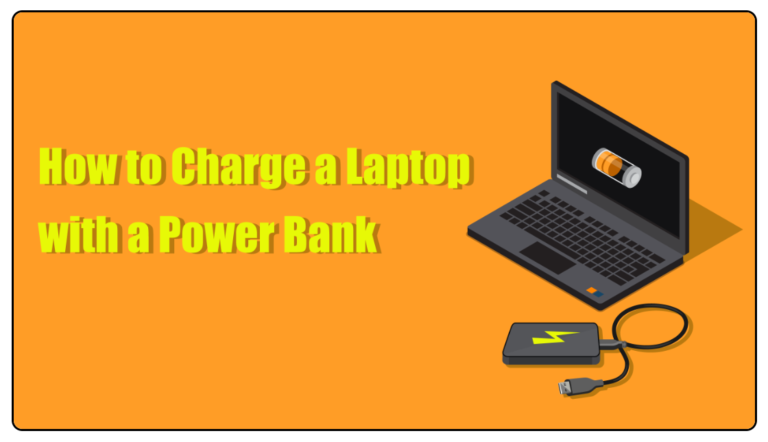
- MacBooks and USB-C laptops need 60W to 100W USB-PD output. Look for a high-capacity pack specifically rated for laptops.
- Wireless earbuds and smartwatches can charge off any low-output USB-A port, so they don't need a fancy power bank.
If you own a mix of devices, prioritize the one you charge most often and make sure the power bank supports its maximum charging speed. There's no point in buying a 100W laptop charger if you only ever charge your phone and earbuds.

Brand Reputation and Long-Term Reliability
The portable charger market is flooded with options, and not all of them are created equal. Sticking with well-known brands is the easiest way to avoid duds and dangerous products.
Brands like Anker, RAVPower, Aukey, Mophie, Belkin, and Nimble have built solid reputations over years of consistent quality and customer support. They invest in proper testing, use quality battery cells, and offer real warranties. You pay a little more, but you get peace of mind.
Budget brands can be hit or miss. Some offer excellent value, while others cut corners on safety and battery quality. If you go the budget route, read verified buyer reviews, check the certification labels, and avoid anything with vague specs or no warranty information.
From my experience, investing in a mid-range power bank from a reputable brand almost always pays off in the long run. They last longer, charge faster, and rarely give you trouble.
-Reviewer-Photo-SOURCE-Simon-Hill.jpg)
Budget: How Much Should You Spend?
You don't need to spend a fortune, but you also shouldn't expect premium performance from a $10 power bank.
- $15 to $25 gets you a basic 5,000 to 10,000 mAh pack from a decent brand. Good for occasional use or as a backup.
- $25 to $50 is the sweet spot for most people. You get solid capacity (10,000 to 20,000 mAh), fast charging, and reliable safety features.
- $50 to $100 buys you premium materials, high-wattage USB-PD, laptop charging, and extra features like wireless charging.
- $100+ is for specialized use cases like massive capacity, rugged outdoor designs, or multi-device laptop charging stations.
I generally recommend spending around $30 to $50 for an everyday power bank. That's where you get the best balance of quality, capacity, and features without overpaying for gimmicks.
Caring for Your Power Bank to Make It Last
A good power bank should last you two to four years with proper care. A few simple habits can extend its life significantly.
- Avoid letting it drop to 0% regularly. Partial discharges are healthier for lithium batteries.
- Don't leave it in hot cars or direct sunlight. Heat is the number one killer of lithium batteries.
- Charge it at least once every three months even if you don't use it. Batteries slowly self-discharge and can be damaged if left at 0% for too long.
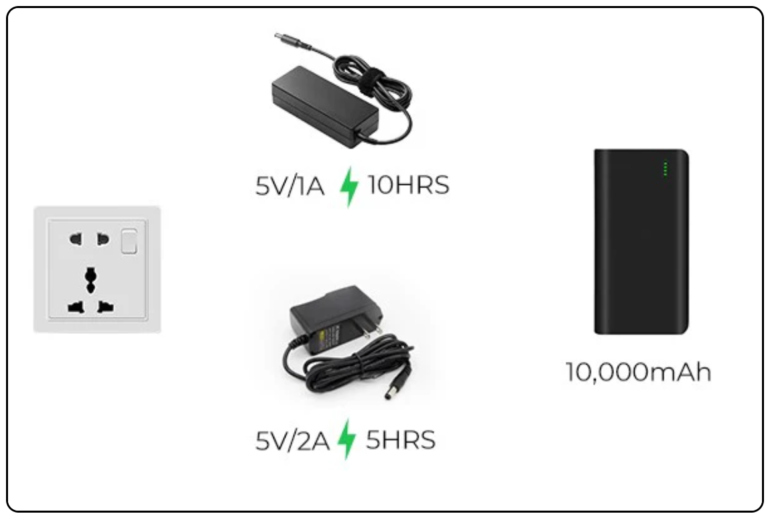
- Use the right cable and charger to recharge the power bank itself. A slow 5W charger will take forever and isn't great for the battery long-term.
- Store it at around 50% charge if you plan to leave it unused for weeks.
These small habits can easily double the lifespan of your power bank and keep it performing like new for years.
Frequently Asked Questions
What size power bank do I need for my phone?
For most smartphones, a 10,000 mAh power bank is the sweet spot. It can charge a typical phone two to three times, fits easily in a pocket or small bag, and weighs under 8 ounces. If you only need a single emergency charge, a 5,000 mAh pack is enough and even more portable.
Can a power bank damage my phone's battery?
No, a quality power bank with proper voltage regulation and safety features will not damage your phone. Modern power banks and phones communicate through charging protocols to deliver the optimal amount of power. Just make sure you buy from a reputable brand and avoid counterfeit or ultra-cheap models.
Is it safe to bring a power bank on a plane?
Yes, but with limits. Most airlines allow power banks under 100Wh in carry-on luggage. A 100Wh power bank is roughly 27,000 mAh at 3.7V. Power banks are not allowed in checked baggage due to fire risk. Always check your airline's specific rules before flying.
How long does it take to recharge a power bank?
It depends on the capacity and the charger you use. A 10,000 mAh power bank takes about 3 to 4 hours with an 18W charger. A 20,000 mAh pack takes 5 to 7 hours with the same charger. Using a higher-wattage USB-PD charger can cut these times significantly.
Are expensive power banks worth the money?
Not always, but mid-range and premium power banks from reputable brands usually offer better build quality, faster charging, longer lifespan, and stronger safety features. If you use your power bank daily, the extra cost is worth it. If you only need it occasionally, a solid mid-range option is plenty.
Final Thoughts on Choosing the Perfect Power Bank
Picking the right power bank doesn't have to be complicated. Once you understand your real charging needs, the rest falls into place. Focus on capacity that matches your habits, output speed that supports your devices, and a size you'll actually carry every day. Don't forget about safety features, brand reputation, and proper care to make your investment last.
The best power bank is the one you have with you when you need it, not the one with the biggest number on the box. Start with your daily routine, be honest about how you use your devices, and choose a model that fits comfortably into your life. A little research now saves you from buyer's remorse later.
Take a moment to check out our other guides on portable tech and travel accessories, and feel free to share your own power bank tips or questions in the comments below. Your next perfect charge is just a smart choice away.