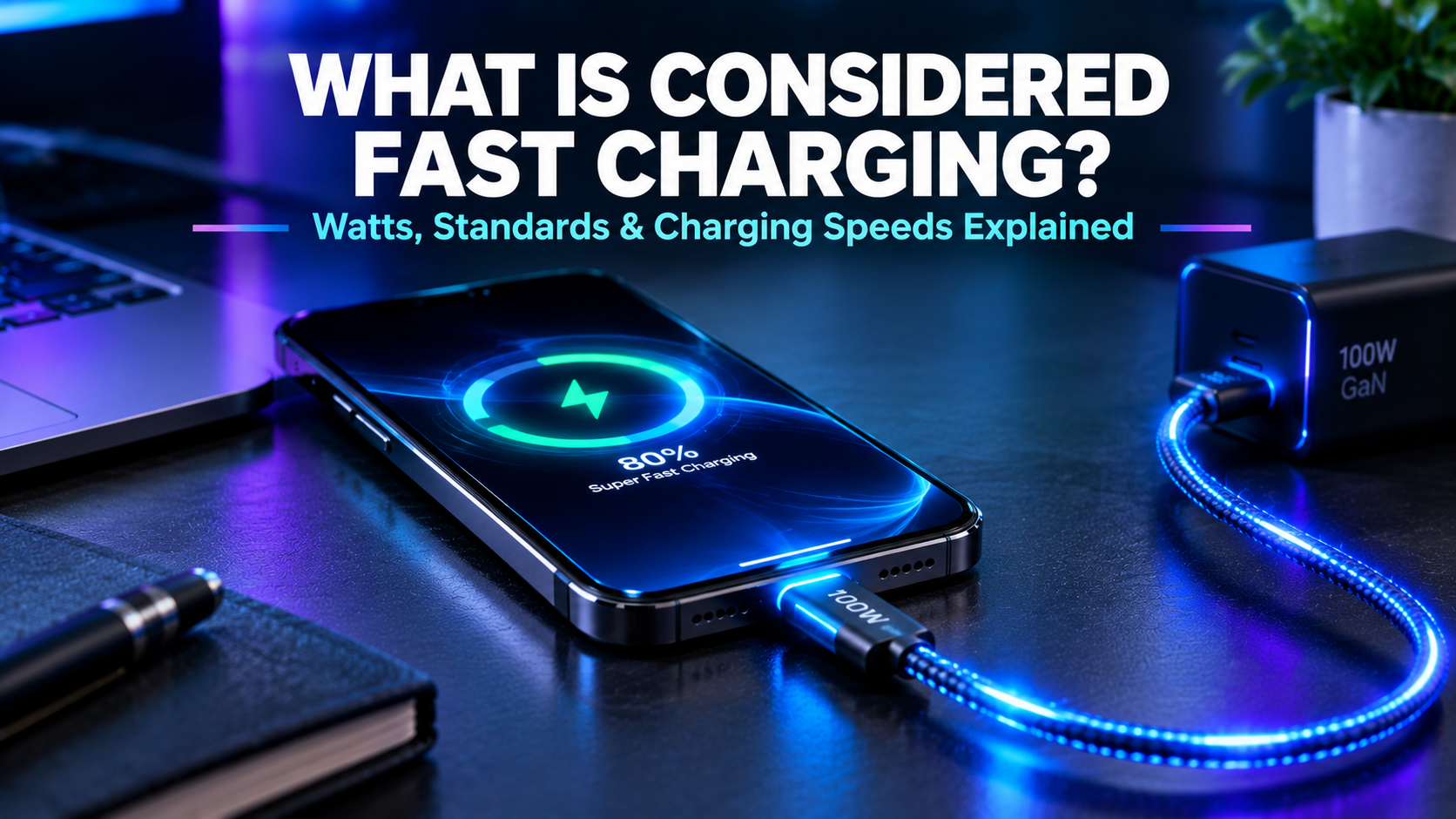
What Is Considered Fast Charging? A Complete Guide to Charging Speed, Watts, and Battery Health
If you search for what is considered fast charging, the answer can look confusing because there is no single wattage that applies to every device. A phone, laptop, tablet, and electric vehicle use very different batteries and charging systems. A charging speed that is fast for one device may be normal for another.
For everyday U.S. consumers, the most useful way to judge charging speed is to look at three things: power in watts, the charging standard, and the actual time needed to add useful battery life. A 65W charger does not always mean a phone will charge at 65W. The phone must support that level, and the charger and cable must also support the needed standard.
In practical use, the biggest benefit of fast charging is not simply reaching 100 percent sooner. It is getting a meaningful amount of battery life during a short break. A quick 10- or 20-minute charge can be far more useful than a high number printed on a charger box.
What Is Considered Fast Charging?
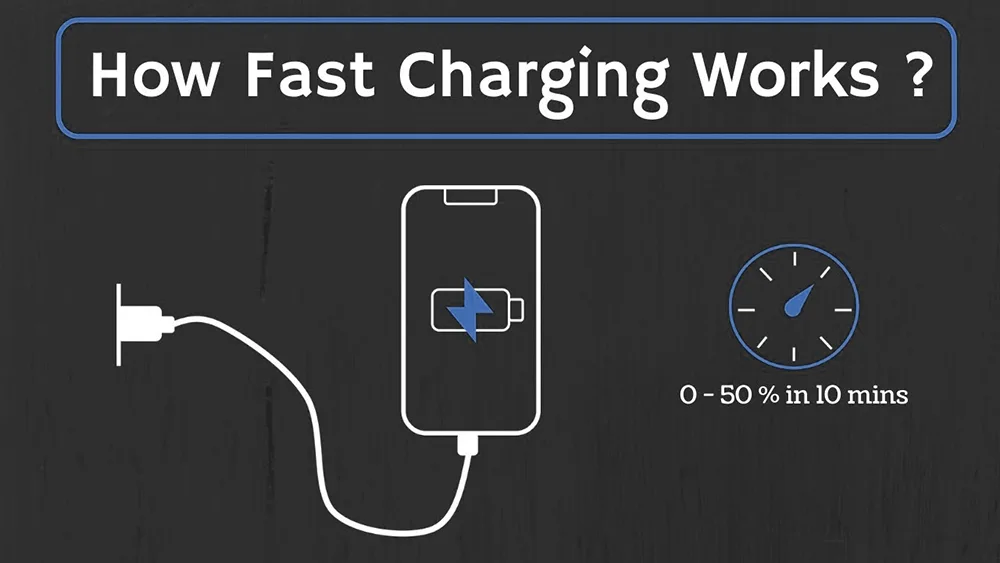
So, what is considered fast charging in simple terms? It is charging that can add battery power much faster than the basic charging method normally supplied with a device. The exact point where charging becomes fast depends on the device and its charging system.
For smartphones, 18W has long been a common starting point for fast charging. Today, many modern phones support much higher rates, such as 25W, 30W, 45W, 65W, or more. Some models can accept more than 100W under specific conditions.
For laptops, fast charging usually involves USB-C Power Delivery with enough power to meet the computer’s needs. For electric vehicles, the term normally refers to high-power DC charging rather than the lower-power AC charging used at home.
This means there is no universal answer to what is considered fast charging. The right answer depends on what you are charging and what its manufacturer designed it to accept.

- ✦ Smartphones
Around 18W is a common entry point for fast charging, while 30W to 100W or more can be considered very fast on compatible phones.
- ✦ Tablets
Fast charging often falls in the roughly 20W to 45W range, though some larger tablets support higher input power.
- ✦ Laptops
USB-C charging at 60W or more can be fast for many thin laptops, while performance laptops may need 100W, 140W, or more.
- ✦ Electric vehicles
DC fast charging commonly starts around 50 kW, with modern public chargers often offering 100 kW or substantially more.
Why There Is No Single Fast-Charging Number
Battery size changes the meaning of charging power. A 20W charger can make a big difference on a small phone battery, but it is not enough to charge a large electric vehicle quickly.
The charging system also matters. A device can limit incoming power even when the charger can provide much more. This protects the battery and helps control heat.
- ✦ Device limit
The device decides how much power it can safely accept.
- ✦ Charger limit
The charger must be able to supply the required power and charging protocol.
- ✦ Cable limit
The cable must support the required current and power level.
How Charging Speed Is Measured in Watts
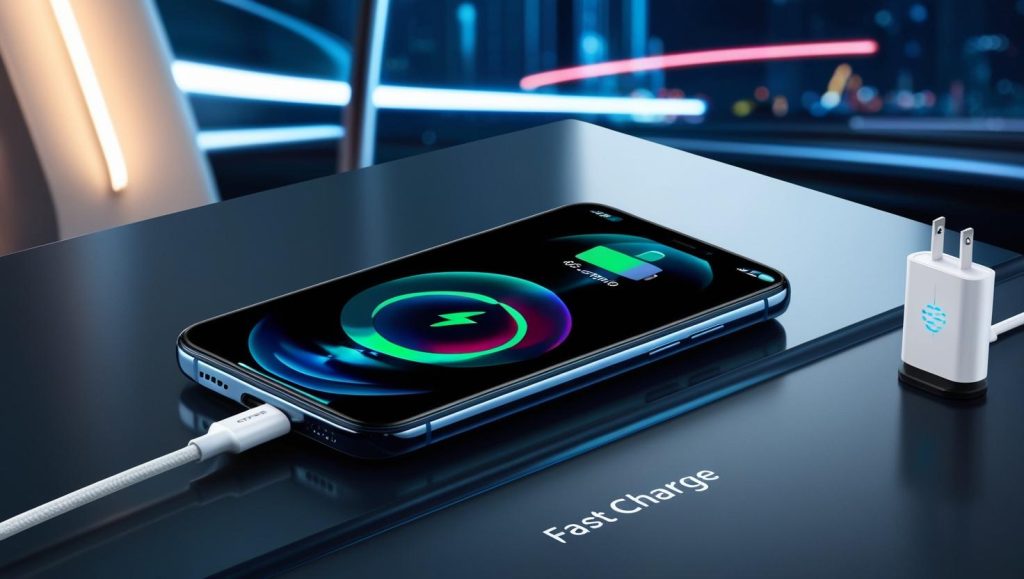
Watts are one of the easiest ways to compare charging power. In simple terms, watts measure how much electrical power is being delivered. A higher watt rating can allow faster charging, but only when the device can use that power.
Voltage and current work together to create charging power. The basic relationship is simple: watts equal volts multiplied by amps. For example, a 20V supply at 3A can provide 60W of power.
This is why a charger marked 65W is not automatically faster than every 45W charger. The phone or laptop may only accept a lower level. The charging protocol must also allow the charger and device to agree on a suitable power level.
- ✦ Watt
Measures electrical power. Higher supported wattage can allow faster charging.
- ✦ Volt
Measures electrical potential. Modern fast-charging systems can use higher voltage to deliver more power efficiently.
- ✦ Amp
Measures electrical current. More current can increase power, but cables and hardware must be designed for it.
- ✦ Battery capacity
Measured in units such as watt-hours or milliamp-hours. A larger battery generally needs more energy to reach full charge.
Why Charger Wattage Does Not Equal Actual Charging Speed
A charger rating is a maximum capability, not a promise that the device will draw that amount all the time. The device may take high power only during part of the charging cycle.
Charging usually slows as the battery gets closer to full. This helps manage heat and battery stress. As a result, a phone that supports 65W charging may not draw 65W from 0 to 100 percent.
- ✦ Peak power
The highest power level a device may reach under suitable conditions.
- ✦ Average power
The average power used across a larger part of the charging session.
- ✦ Charging time
The final result that matters most to a user because it shows how quickly the battery actually gains charge.
What Is Considered Fast Charging for a Phone?
For smartphones, what is considered fast charging has changed over time. Older phones often charged at single-digit watt levels, so an 18W system could feel extremely fast. Modern phones can support much higher power, making 18W more of an entry-level fast-charging rate in many cases.
A useful way to think about phone charging is by ranges rather than one strict number. Around 18W to 25W can be fast, 30W to 65W is fast to very fast for many phones, and 80W or more is very high power when the phone is designed for it.
The actual experience can vary a lot. A phone with a large battery may take longer to reach full charge than a smaller phone even if both support the same wattage.
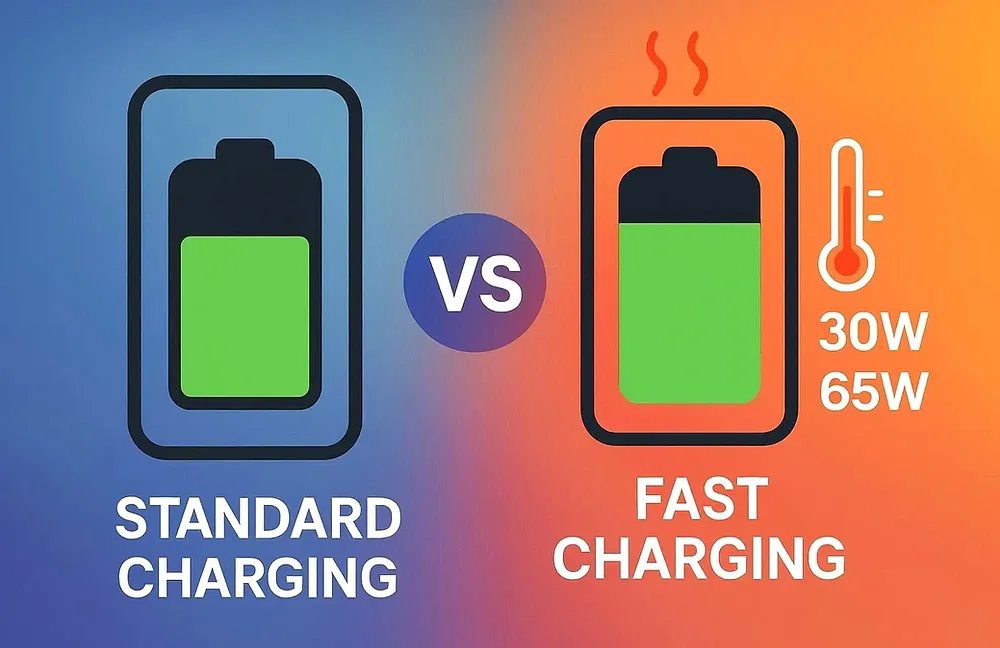
- ✦ About 5W to 10W
Generally considered basic or slow charging for modern smartphones.
- ✦ About 15W to 25W
Often considered fast charging, depending on the phone and its charging standard.
- ✦ About 30W to 65W
Fast to very fast charging for many current smartphones.
- ✦ About 80W to 120W or higher
Very high smartphone charging power available on some compatible models.
USB-C, USB Power Delivery, and Proprietary Charging
USB-C describes the connector shape, not the charging speed. A USB-C port can support different power levels and different charging standards, so two USB-C chargers may perform very differently.
USB Power Delivery, often called USB PD, is a widely used standard for negotiating power between compatible devices and chargers. Some phone makers also use proprietary charging systems that can reach higher speeds with approved chargers and cables.
- ✦ USB-C
A connector standard. It does not by itself tell you how fast a device will charge.
- ✦ USB Power Delivery
A power negotiation standard used across many phones, tablets, laptops, and other devices.
- ✦ Proprietary systems
Brand-specific systems can offer high charging speeds but may require compatible chargers, cables, or devices.
What Is Considered Fast Charging for a Laptop?
Laptop charging needs are much higher than phone charging needs. A small laptop may charge well from a 45W or 60W USB-C charger, while a more powerful laptop may need 100W, 140W, or more.
For many modern laptops, USB-C Power Delivery is the key standard to check. The laptop, charger, and cable must all support the required power level. If one part falls short, charging may be slower or the laptop may not charge while under heavy use.
What is considered fast charging for a laptop also depends on how the computer is being used. A laptop that is sleeping may gain battery quickly, while a powerful processor and graphics system can consume much of the incoming power during demanding work.
- ✦ 45W to 65W
Often suitable for many thin and light laptops, especially during light use.
- ✦ 90W to 100W
A common high-power range for many USB-C laptops and larger portable computers.
- ✦ 140W or more
Used by some newer high-performance laptops and requires suitable charging hardware and cables.
The Cable Matters More Than Many People Think
A high-power charger cannot deliver its full capability if the cable does not support the required power level. Some USB-C cables are built for lower power, while electronically marked cables can support higher power levels when paired with compatible equipment.
When buying a high-power USB-C charger, check the cable rating as well as the charger rating. This is especially important for laptops that need 100W or more.
- ✦ Check the cable rating
Make sure the cable supports the power level your charger and device require.
- ✦ Check the laptop specification
Use the manufacturer’s stated charging requirement rather than guessing from the port shape.
What Is Considered Fast Charging for an Electric Vehicle?
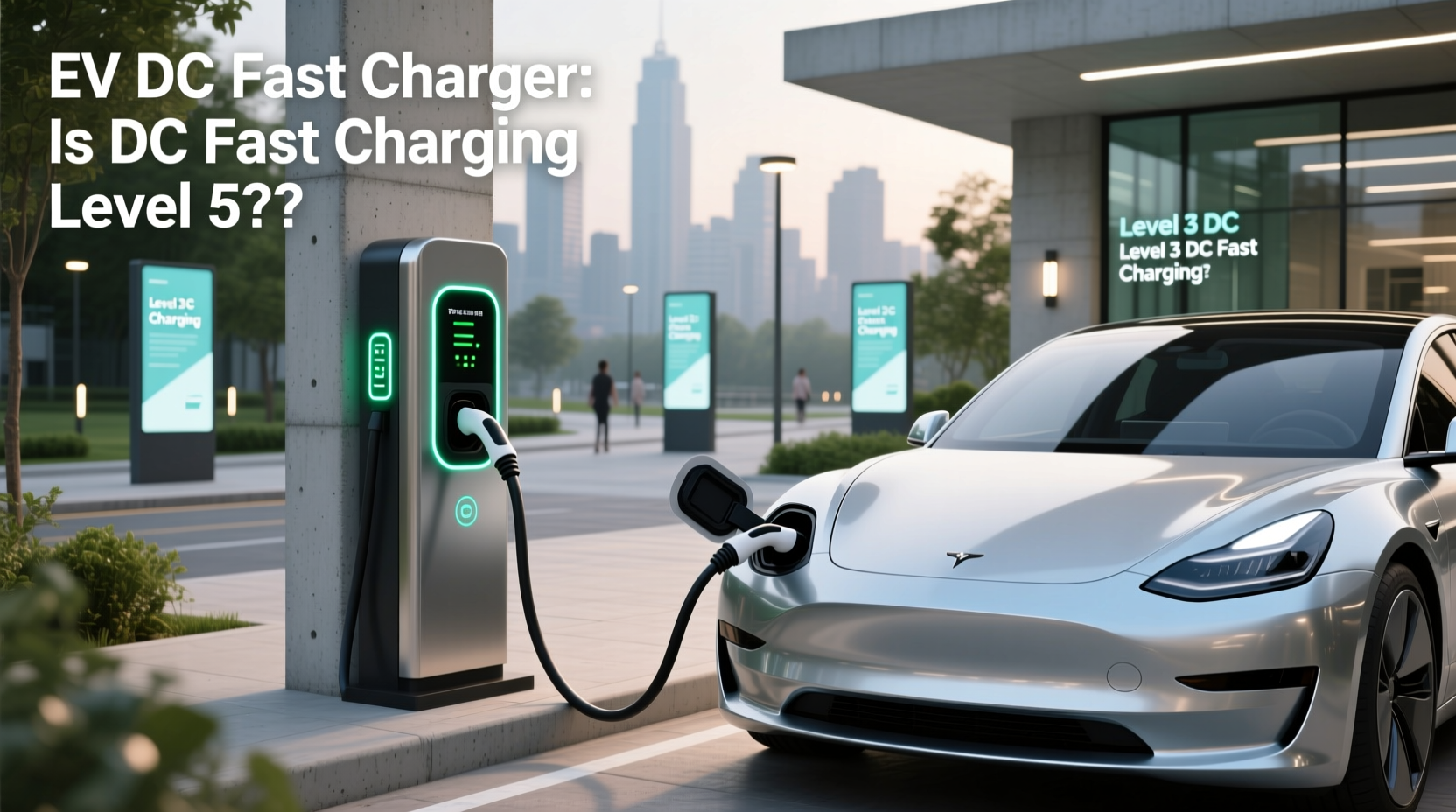
For electric vehicles, what is considered fast charging uses a very different scale. Home Level 1 charging is slow because it uses a standard household outlet. Level 2 charging is much faster and is common for home and workplace charging, but DC fast charging is designed for much quicker public charging stops.
DC fast chargers commonly operate at power levels such as 50 kW, 100 kW, 150 kW, 250 kW, and beyond. The exact charging rate depends on the vehicle, battery temperature, state of charge, charger capability, and other limits.
For an American driver on a road trip, the useful measure is often how many miles of range the vehicle can gain during a short stop. A charger with a high peak kW rating may not deliver that peak for the entire session.
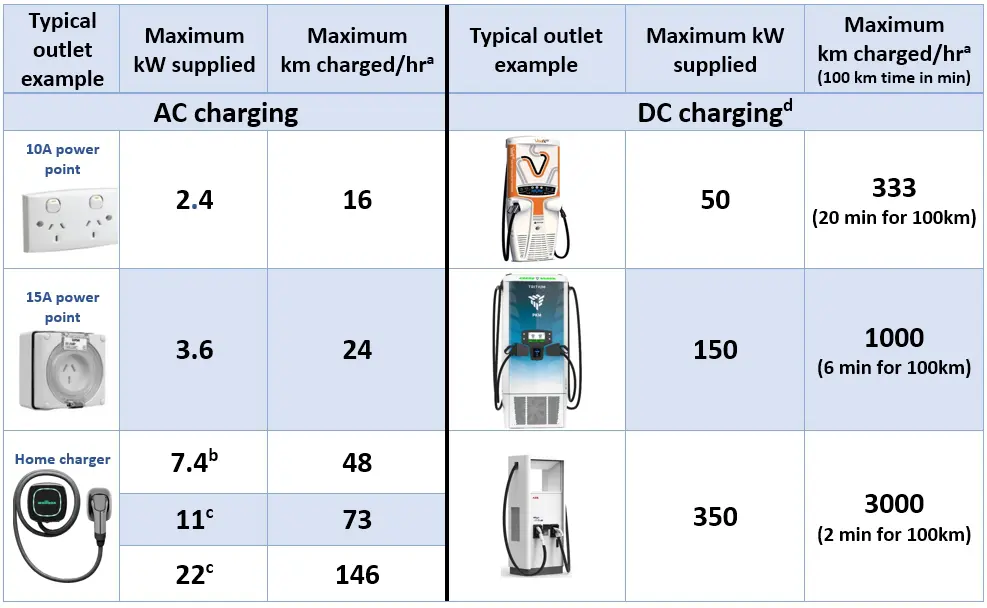
- ✦ Level 1
Uses a standard household outlet and is generally the slowest EV charging option.
- ✦ Level 2
Uses higher-power AC charging and is common at homes, workplaces, and public charging sites.
- ✦ DC fast charging
Sends DC power to the vehicle’s battery system and can provide much higher charging power than typical AC charging.
- ✦ High-power DC charging
Some newer public chargers can deliver 150 kW, 250 kW, 350 kW, or more when the vehicle supports it.
Why EV Fast Charging Slows Near Full
An EV battery does not usually accept its maximum charging power from empty to full. The vehicle may draw high power during the middle part of a charging session and then reduce power as the battery approaches a high state of charge.
This is why an EV can sometimes gain a large amount of range during a short stop but take much longer to move from roughly 80 percent to 100 percent. The charging system reduces power to manage heat and battery conditions.
- ✦ Battery temperature
Very cold or very hot batteries may charge more slowly.
- ✦ State of charge
Charging often slows as the battery becomes more full.
- ✦ Vehicle limits
The vehicle may have a lower maximum charging rate than the station.
What Makes Fast Charging Work?
Fast charging is not simply about sending more electricity into a battery. The charger and device must communicate and select a safe power level. Modern systems use charging protocols to manage voltage, current, temperature, and battery conditions.
Inside a phone, laptop, or EV, a charging circuit controls how power reaches the battery. The system can reduce power when the battery becomes warm or when it reaches a higher state of charge.
This controlled process explains why a high-watt charger can be safe when the device supports it. The charger does not simply force its maximum power into the battery.

- ✦ Power negotiation
The charger and device communicate to select a supported power level.
- ✦ Thermal control
The system monitors heat and can reduce charging power when temperatures rise.
- ✦ Battery management
A battery management system controls charging to help maintain safe operating conditions.
- ✦ Charging curve
Power can rise, remain high, and then fall as the battery fills.
The Charging Curve Matters
A charging curve shows how power changes during a charging session. Looking only at the maximum wattage can give a misleading picture of real-world performance.
For this reason, a charger advertised at 100W does not mean a device will receive 100W for the entire session. The average power and time to reach a useful charge level are often more meaningful.
- ✦ Peak phase
The device may draw its highest supported power when conditions are favorable.
- ✦ Taper phase
Power usually falls as the battery approaches a high state of charge.
- ✦ Final phase
Charging can become much slower near full capacity.
Does Fast Charging Damage Your Battery?
Fast charging can create more heat than slower charging, and heat is one factor that can speed up battery aging. However, a modern device with a well-designed charging system can manage power and temperature to reduce unnecessary stress.
That does not mean faster is always better for long-term battery health. Frequent high-power charging in hot conditions can add more thermal stress than slower charging in cooler conditions. Device makers use charging controls, power limits, and charging curves to balance speed and battery care.
For everyday use, there is usually no need to avoid fast charging simply because it is fast. If you need a quick boost before leaving home or heading to work, fast charging can be very useful. When time is not a concern, slower charging may produce less heat.
.jpg "Fast charging versus super fast charging for an EV")
- ✦ Heat
Higher charging power can create more heat, and excessive heat can contribute to battery aging.
- ✦ Battery level
Charging often slows at higher battery levels, which helps manage stress near full charge.
- ✦ Environment
A hot car, direct sunlight, or other high-temperature conditions can affect charging speed and battery stress.
- ✦ Device design
Charging controls built into the device are important for safe and controlled high-power charging.
How to Use Fast Charging Wisely
Use a charger and cable that meet the device maker’s requirements. Avoid damaged cables and poorly made chargers, especially when using high-power charging.
If your device becomes unusually hot during charging, move it to a cooler place and remove anything that traps heat. You can also use slower charging when you do not need a quick battery boost.
- ✦ Use compatible hardware
Match the charger and cable to the device’s supported charging standard.
- ✦ Manage heat
Keep the device away from extreme heat while charging.
- ✦ Charge for your needs
Use fast charging when speed matters and slower charging when it does not.
How to Tell If Your Charger Is Actually Fast
If you want to know what is considered fast charging for your own device, start with the device specification. Look for its maximum supported charging power and the charging standard it uses.
Next, check the charger. A 100W charger can be useful for a laptop, but it will not make a phone charge at 100W unless the phone supports that power level. The cable must also support the required power.
Finally, look at real charging time. If your phone gains a large amount of battery in a short period, the system is delivering useful fast charging even if the advertised peak number is lower than another phone.
- ✦ Step 1: Check the device
Find the maximum charging power and supported charging standards in the official specifications.
- ✦ Step 2: Check the charger
Look at its watt rating and supported protocols.
- ✦ Step 3: Check the cable
Confirm that the cable can carry the required power.
- ✦ Step 4: Check the charging time
Compare how much battery you gain during a real charging session rather than relying only on the peak watt number.
Common Fast-Charging Mistakes
One common mistake is assuming that every USB-C charger has the same performance. Another is buying the highest-watt charger available without checking whether the device can use that power.
People also often compare peak charging numbers without considering battery size. A smaller battery can reach a high percentage faster even when its charger has a lower watt rating.
- ✦ Mistake: Looking only at watts
Charging protocols, battery size, temperature, and device limits also affect real charging speed.
- ✦ Mistake: Ignoring the cable
A cable may limit the power available to a high-power device.
- ✦ Mistake: Expecting peak power all session
Most devices reduce charging power as the battery fills.