How Many Amps Is Fast Charging? A Complete Guide for Phones, EVs, and Chargers
If you search for how many amps is fast charging, the answer may look simple at first. It is not. Amps measure electrical current, but charging speed also depends on voltage, watts, the device, the battery, the cable, and the charging system.
For a U.S. consumer, the key point is simple: do not judge a charger by amps alone. A 3-amp charger at one voltage can deliver less power than a 3-amp charger at a higher voltage. The same idea applies to phones, laptops, electric vehicles, and other rechargeable devices.
A useful way to think about how many amps is fast charging is to ask how much power the device can safely accept. Power is measured in watts, and the basic relationship is watts = volts × amps. That small formula explains much of the confusion around fast charging.
What Does Amperage Mean in Fast Charging?
Amperage tells you how much electric current flows to a device. It is measured in amps, or amperes. Think of amps as the amount of electrical flow moving through the charging system at a given time.
When people ask how many amps is fast charging, they often assume that more amps always means faster charging. That is not always true. Charging speed depends on both current and voltage, along with the limits set by the device and charger.
The basic formula is simple: watts = volts × amps. For example, 5 volts at 3 amps gives 15 watts. A system that uses 9 volts at 3 amps gives 27 watts. Both use 3 amps, but the second system delivers much more power.

- ✦ Amps
Amps measure electrical current. They show how much current flows through the charging system.
- ✦ Volts
Volts measure electrical pressure. Higher voltage can allow more charging power without raising current by the same amount.
- ✦ Watts
Watts measure electrical power. They are often the clearest number for comparing charging speed.
- ✦ Charging speed
Real charging speed also depends on the battery, device limits, temperature, cable, charger design, and charging stage.
Why Amps Alone Do Not Tell the Whole Story
Suppose one charger supplies 5 volts at 3 amps. That equals 15 watts. Another supplies 9 volts at 3 amps. That equals 27 watts. The amp rating is identical, but the power output is very different.
This is why the better answer to how many amps is fast charging is not a single number. Check the charger’s watt rating and the device’s supported charging power as well.
- ✦ Simple example
5 V × 3 A = 15 W, while 9 V × 3 A = 27 W.
- ✦ Practical lesson
Look at watts, volts, and amps together instead of using amps as the only measure of charging speed.
How Many Amps Is Fast Charging for a Phone?
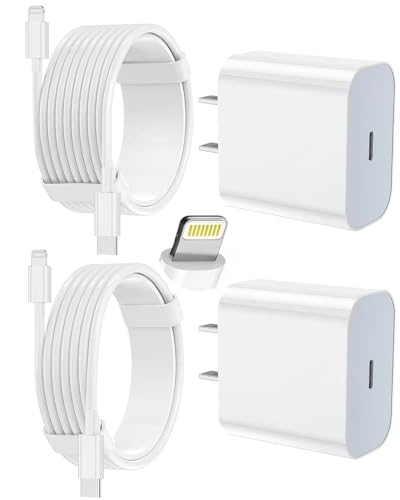
For smartphones, fast charging can use a wide range of current levels. Many common USB charging systems operate around 2 to 3 amps, while some USB-C and proprietary systems can reach 5 amps or more under the right conditions.
So, how many amps is fast charging for a phone? There is no universal threshold. A phone may qualify as fast charging at a lower current if the charger uses a higher voltage, while another phone may need a different power level or charging protocol.
Modern fast-charging systems often manage voltage and current together. The phone and charger communicate so the charger can provide a power level the phone is designed to accept. This helps improve speed while controlling heat and battery stress.

- ✦ Around 2 amps
This can provide useful charging power, but whether it is fast depends on voltage and the phone.
- ✦ Around 3 amps
This is common in many USB charging setups and can support fast charging when paired with suitable voltage and charging standards.
- ✦ Around 5 amps
Higher-current USB-C charging can reach 5 amps when the charger, cable, and device support the required standard.
- ✦ Higher current systems
Some proprietary phone charging systems can use higher current, but these numbers cannot be compared directly with ordinary USB chargers.
Why a 3-Amp Charger Can Still Be Fast
A 3-amp charger is not automatically slow. For example, 9 volts at 3 amps provides 27 watts. That can be a fast-charging level for many phones, depending on the model and charging standard.
This is one reason the question how many amps is fast charging can be misleading when used without voltage. Always check the total watt output and the phone maker’s supported charging power.
- ✦ Check watts
A charger rated at 27 W can be faster than a lower-watt charger even if both have the same amp rating.
- ✦ Check compatibility
The phone must support the charger’s charging standard and power level.
How Many Amps Is Fast Charging for USB-C?
USB-C describes the connector shape, not one fixed charging speed. A USB-C port can support low-power charging or much higher power, depending on the USB standard, charger, cable, and device.
When asking how many amps is fast charging over USB-C, 3 amps and 5 amps are useful reference points. Some USB-C Power Delivery setups can use up to 5 amps with a suitable electronically marked cable, while lower-power setups may use less current.
USB Power Delivery can also raise voltage to deliver more power without relying only on higher current. For example, 20 volts at 5 amps equals 100 watts. The actual supported power depends on the equipment and charging profile.

- ✦ 3 amps
A common current level for USB-C charging. The actual charging power depends on the voltage.
- ✦ 5 amps
A higher USB-C current level that requires compatible equipment and an appropriate cable for supported power levels.
- ✦ USB Power Delivery
USB PD can adjust voltage and current within supported limits to provide the power requested by the device.
- ✦ Cable rating
A USB-C cable must support the required current and power. The connector alone does not guarantee fast charging.
Is a 5-Amp USB-C Charger Always Faster?
No. A 5-amp rating only tells you the maximum current the system can support under its conditions. The device may request much less power.
A phone designed to accept 25 watts will not suddenly charge at 100 watts because you connect a 100-watt USB-C charger. The phone controls how much power it accepts within the limits of the charging system.
- ✦ Device limit
The phone, laptop, or other device sets its own maximum supported charging power.
- ✦ Charger limit
The charger must provide a compatible power profile.
- ✦ Cable limit
The cable must support the required current and power for the charging mode.
How Many Amps Is Fast Charging for an EV?
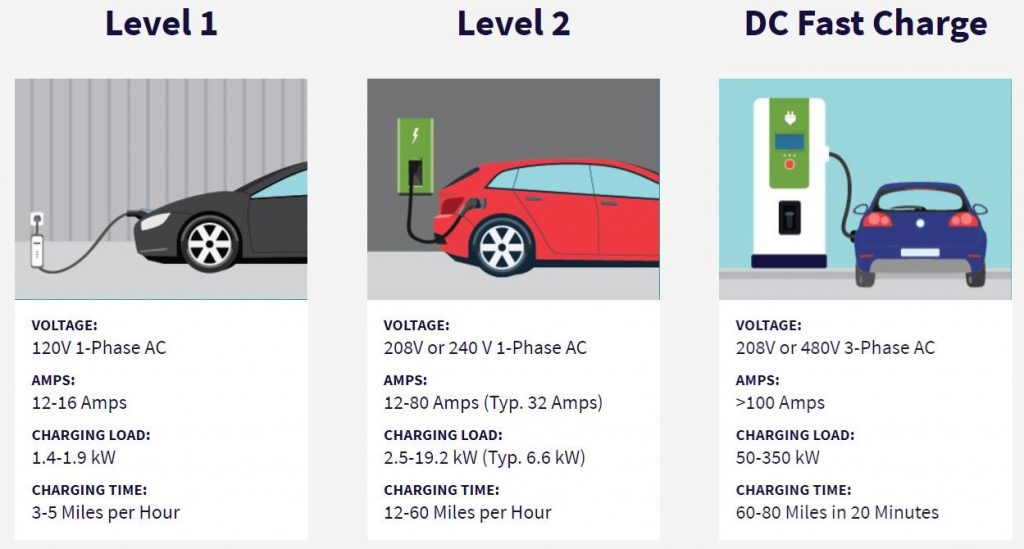
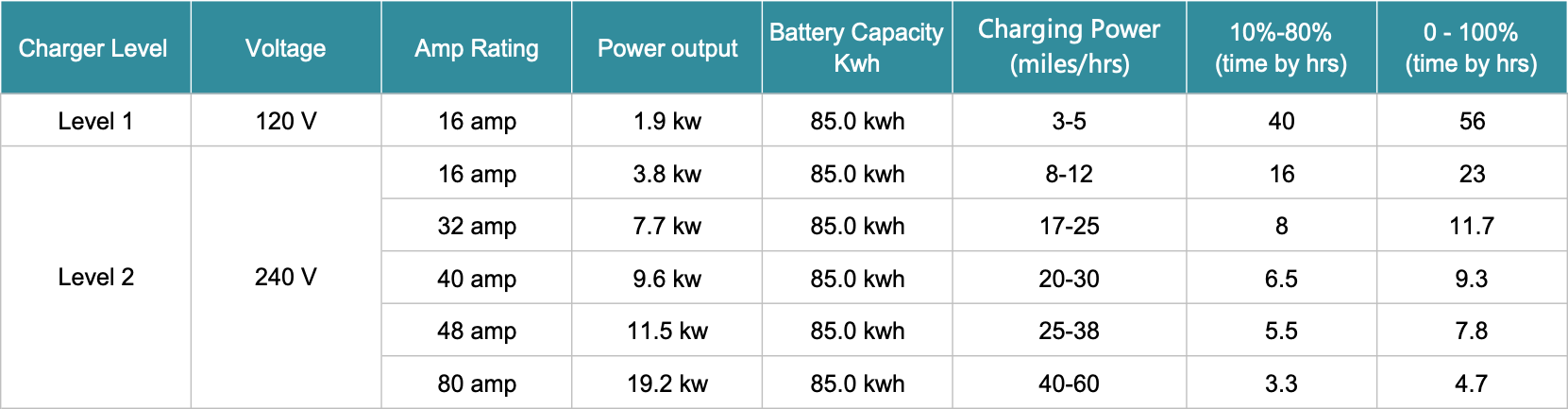
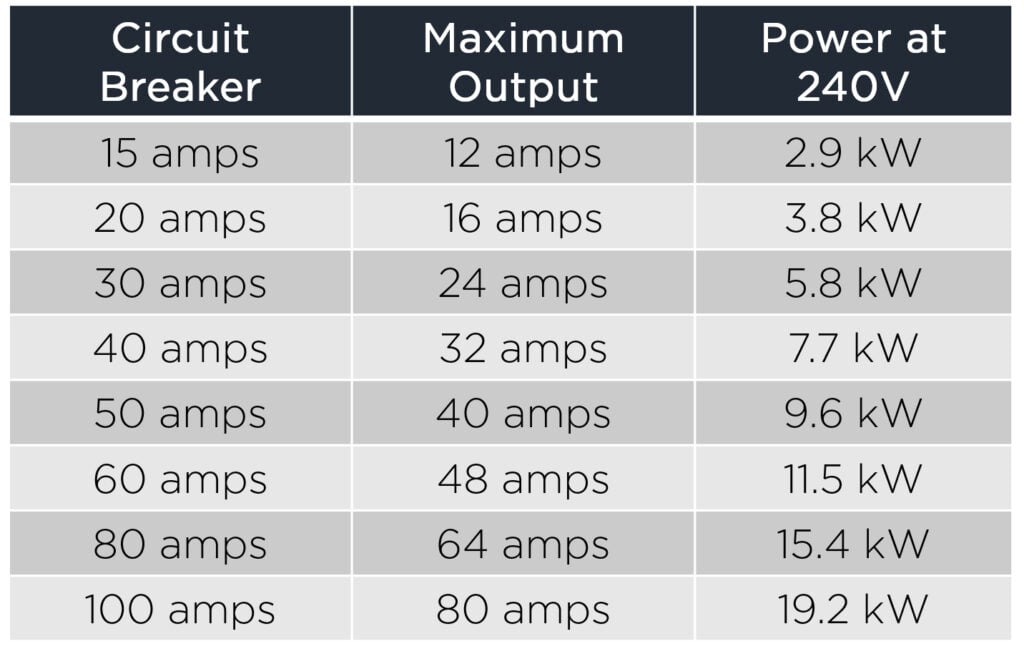
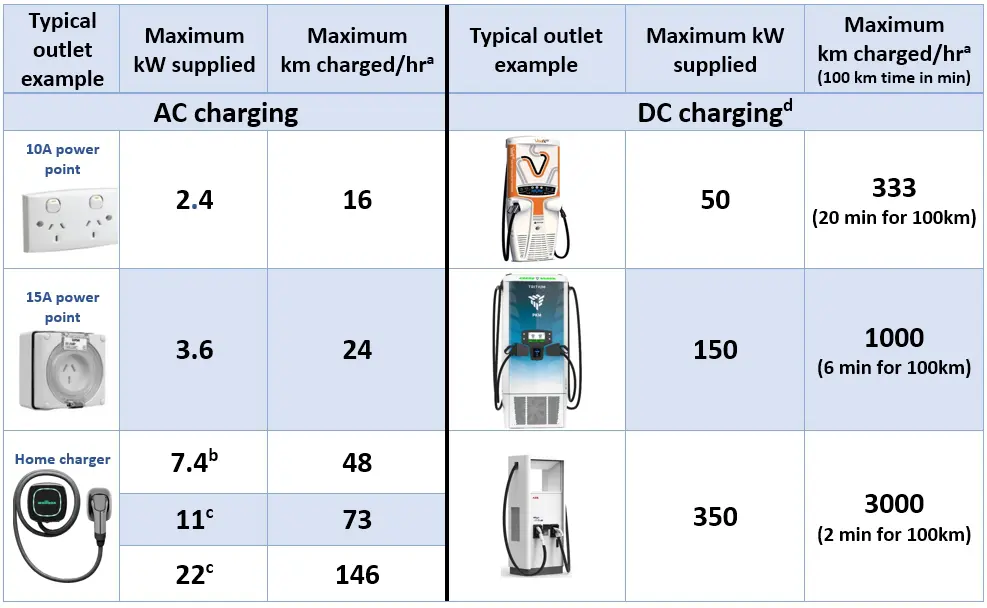
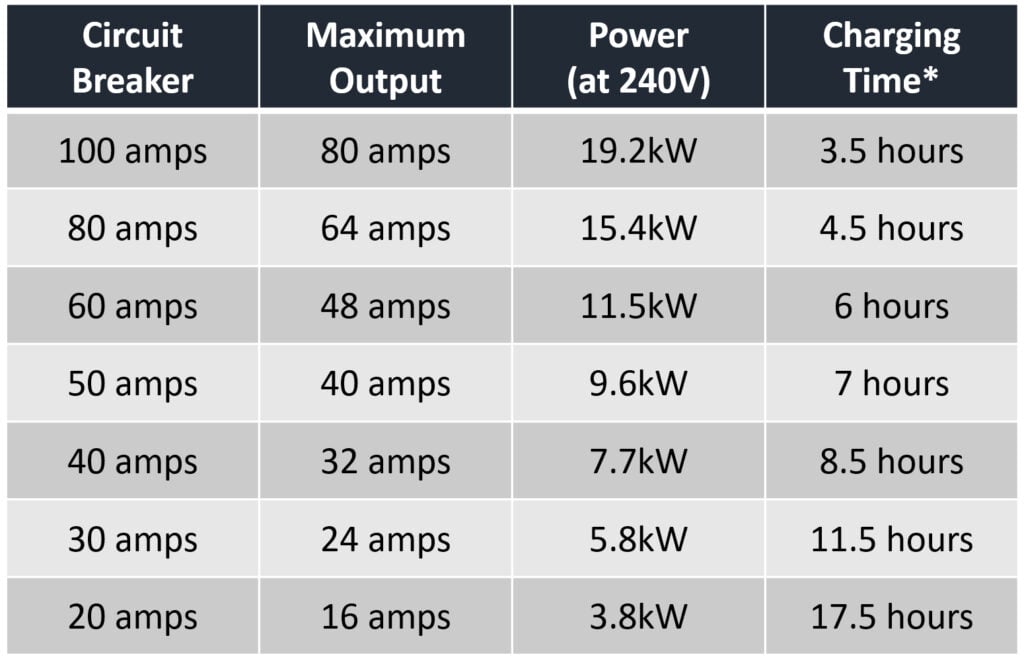
Electric vehicles are different from phones because EV charging systems handle much more electrical power. In the U.S., home Level 2 EV chargers commonly operate at current ratings such as 16, 24, 32, 40, 48, or 50 amps, depending on the charger and installation.
So, how many amps is fast charging for an EV? For home charging, 32 to 48 amps is often considered a high-power Level 2 range, but the right choice depends on the vehicle, electrical service, circuit, charger, and installation rules.
Public DC fast chargers are usually compared by kilowatts rather than amps. Their voltage can vary, so two chargers with the same current can deliver different power. This makes kilowatts a more useful number for comparing public DC charging speed.
- ✦ 16 amps
A lower Level 2 current that can still provide useful overnight charging for many EVs.
- ✦ 32 amps
A common Level 2 charging level that can provide a substantial amount of energy during an overnight stay.
- ✦ 40 amps
A higher Level 2 current that can reduce charging time when the vehicle and home electrical system support it.
- ✦ 48 to 50 amps
High-current home Level 2 charging that requires careful matching of the charger, circuit, wiring, and vehicle.
- ✦ DC fast charging
Public DC fast charging is usually described in kilowatts, such as 50 kW, 100 kW, 150 kW, or higher, rather than by amps alone.
Level 1 vs. Level 2 EV Charging
Level 1 charging uses a standard household outlet in many U.S. homes and typically delivers a much lower charging rate. It can work well for drivers with short daily trips and long parking times.
Level 2 charging uses higher voltage and can deliver much more power. A common U.S. setup uses a 240-volt circuit, which is why Level 2 can add energy much faster than Level 1.
For EV owners, the best answer to how many amps is fast charging depends on daily driving. A driver who parks overnight may not need the highest-amp charger available.
- ✦ Level 1
Lower-power charging that can be convenient when the vehicle remains parked for many hours.
- ✦ Level 2
Higher-power AC charging that is common for home charging in the United States.
- ✦ DC fast charging
High-power public charging that can add energy much faster than typical home AC charging.
Why the EV Charger Amp Rating Matters
The charger rating affects how much current the charging system can deliver. But the vehicle also has a maximum charging rate, so installing a higher-amp charger does not always make the car charge faster.
Electrical installation also matters. A high-current EV charger may require a dedicated circuit, suitable wiring, proper overcurrent protection, and compliance with applicable electrical requirements. A licensed electrician should determine what the home’s electrical system can safely support.
- ✦ Vehicle capacity
The EV’s onboard charging system sets a limit for AC charging power.
- ✦ Electrical service
The home’s panel and service capacity must support the planned charger and other household loads.
- ✦ Circuit design
The circuit, breaker, wiring, and installation method must be correctly matched to the charger.
Amps vs. Watts: Which One Tells You Charging Speed?
If your goal is to compare charging speed, watts are usually more useful than amps. Amps show current, while watts show total electrical power after voltage is included.
The formula is easy: watts = volts × amps. If a charger provides 12 volts at 2 amps, it delivers 24 watts. If another provides 24 volts at 2 amps, it delivers 48 watts.
This is the most important lesson when asking how many amps is fast charging. A higher amp rating can help, but it does not tell the full story unless you also know the voltage and the device’s charging limit.

- ✦ 15 watts
For example, 5 volts × 3 amps equals 15 watts.
- ✦ 27 watts
For example, 9 volts × 3 amps equals 27 watts.
- ✦ 65 watts
For example, 20 volts × 3.25 amps equals 65 watts.
- ✦ 100 watts
For example, 20 volts × 5 amps equals 100 watts.
A Simple Way to Compare Chargers
Start with the device’s maximum charging power. Then choose a charger that supports that power through a compatible standard. Finally, make sure the cable can safely carry the required current.
This method is more reliable than choosing a charger only because its amp number looks high. It also helps avoid paying extra for a charger that your device cannot use at its full rating.
- ✦ Step 1
Find the device’s maximum supported charging power in watts.
- ✦ Step 2
Choose a compatible charger that can meet or exceed that power.
- ✦ Step 3
Use a cable rated for the required current and power.
- ✦ Step 4
Check for heat, damaged parts, poor connections, or other signs of an unsafe setup.
What Affects Real-World Fast Charging Speed?
The number printed on a charger is a maximum rating, not a promise that the device will charge at that rate from start to finish. Real charging speed changes as the battery fills, and many devices reduce power near a high state of charge.
Heat also matters. Phones, laptops, and EV batteries can reduce charging power when temperatures rise. This protects the battery and charging hardware.
A practical lesson for anyone comparing chargers is to look beyond the largest amp number on the box. Compatibility, temperature, battery level, cable quality, and charging protocol can matter just as much.
- ✦ Battery level
Charging may slow as the battery approaches a high state of charge.
- ✦ Temperature
High or low temperatures can cause a device or EV to reduce charging power.
- ✦ Device limits
A device accepts only the power its charging system is designed to handle.
- ✦ Cable quality
The cable must support the current and power required by the charging setup.
- ✦ Charging protocol
The charger and device need a compatible charging standard to negotiate the intended power level.
- ✦ Electrical conditions
For EV charging, the available circuit capacity and installation can limit the usable charging current.
Does Higher Amperage Hurt a Battery?
Higher current does not automatically damage a battery. Modern devices use charging controls to manage current, voltage, heat, and battery condition within supported limits.
The bigger concern is using damaged, poorly made, or incompatible charging equipment. For safe charging, use equipment that meets the device maker’s requirements and replace cables or chargers that show damage or unusual heating.
- ✦ Use compatible equipment
Match the charger and cable to the device and its supported charging standard.
- ✦ Watch for heat
Unusual heat, burning smells, melted plastic, or damaged connectors are warning signs.
- ✦ Do not bypass safety limits
Never modify a charger or electrical circuit to force a device to accept more current.
How to Choose the Right Fast Charger
The best charger is not always the one with the highest amp rating. Start by checking what your phone, laptop, tablet, or EV can actually accept. Then select a charger that supports that power through the correct charging standard.
For phones and laptops, USB-C Power Delivery can be a useful option when supported by the device. For EVs, compare the vehicle’s AC charging limit, the charger’s maximum current, the home’s electrical capacity, and the type of driving you do.
If you are still wondering how many amps is fast charging, use this simple rule: choose based on supported watts first, then confirm the voltage, current, cable, and charging standard.
- ✦ Check the device
Find the maximum charging power supported by the phone, laptop, or EV.
- ✦ Check the charger
Confirm its output voltage, current, wattage, and charging standard.
- ✦ Check the cable
Make sure the cable supports the intended power and current.
- ✦ Consider your routine
A lower-power charger may be enough if you have many hours to charge overnight.
- ✦ Prioritize safety
Use reputable equipment and follow manufacturer and electrical installation guidance.
A Quick Buying Checklist
For a phone, check the maximum watts and the supported fast-charging standard. For a laptop, also check whether the charger provides enough wattage under USB-C Power Delivery.
For an EV, check the car’s AC charging limit and the home’s electrical service before choosing a high-current Level 2 charger. A qualified electrician can verify whether the planned installation is suitable.
- ✦ Phone
Compare watts, charging protocol, cable rating, and phone compatibility.
- ✦ Laptop
Check USB-C Power Delivery support and the wattage required by the computer.
- ✦ EV
Compare AC charging capacity, charger amps, circuit requirements, and daily driving needs.