Best Mobile Dc Fast Charger: Top Picks
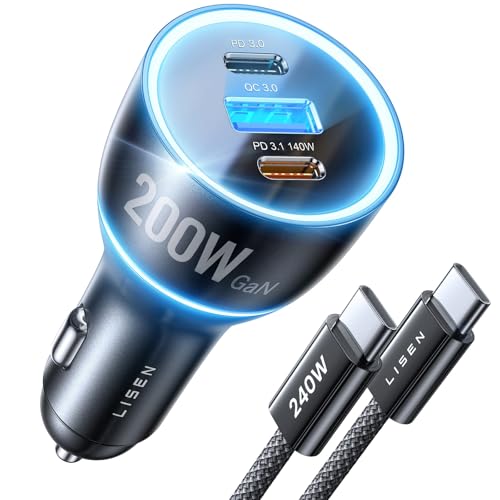
The LISEN 200W GaN car charger is my top pick for fast mobile charging on the road.
Imagine leaving home for a long US road trip with a phone at 12%, a laptop low on power, and no wall outlet nearby. You may have miles to drive before you reach a cafe or rest stop. A good mobile charger can turn your car, solar panel, or battery system into a useful power source. That is why I looked at four very different charging products in this guide. One important point comes first: these products are not all EV DC fast chargers. They are mobile chargers for phones, laptops, lithium batteries, and small devices. I use the term Best mobile dc fast charger here as a search term, while also explaining what each product can really do.
🏆 Top 3 Products
![LISEN 200W Car Charger USB C Fast Charge [GaN] PD 140W Fast Car Charger](https://m.media-amazon.com/images/I/41wsW3uC-JL._SL500_.jpg)
LISEN 200W Car Charger USB C Fast Charge [GaN] PD 140W Fast Car Charger
Its high USB-C power and GaN design make it the strongest choice for demanding road charging.

BigBlue 30W Fast Charging Solar Charger with USB-A, USB-C and DC Outputs
It gives travelers several output choices and can use sunlight when normal power is not available.

Retractable Car Charger, SUPERONE 99W Car Phone Charger with Dual Cables
Its built-in retractable cables can make daily car charging simple and tidy without carrying extra cords.
SUPERONE 99W Retractable Car Charger
The SUPERONE 99W Retractable Car Charger is made for drivers who want less cable clutter. Its main appeal is the built-in retractable cable design. Instead of carrying loose charging wires, I can pull out the cable when I need it and keep it tucked away when I am done. The 99W rating also gives this charger more power headroom than basic car chargers made only for low-power phone charging.
For daily US driving, this design can be very handy. It fits the needs of commuters, rideshare drivers, and families who charge more than one device in a car. I would still check the exact charging needs of each device before assuming it will deliver 99W to every port or cable. It is best viewed as a convenient mobile car charger rather than an EV DC fast charger.
✅ Pros
- ✔ Retractable cables help reduce cable clutter.
- ✔ Up to 99W power rating suits many mobile devices.
- ✔ Built-in cables can reduce the need to carry spare cords.
- ✔ Useful for daily commuting and road trips.
- ✔ Car-focused design makes it easy to keep in a vehicle.
- ✔ Can be convenient for passengers who need quick access to charging.
- ✔ A compact setup can save space in a center console or storage area.
⚠️ Cons
- ✖ The 99W rating does not mean every device will charge at 99W.
- ✖ Actual charging speed depends on the device, cable, and power source.
- ✖ Retractable cable parts can add mechanical wear over time.
My Recommendation
I would choose the SUPERONE when convenience matters as much as charging speed. The retractable design is the main reason to consider it. It can be a strong fit for people who spend many hours in a car and dislike loose cables. For a phone, tablet, or other compatible device, the 99W rating gives useful power headroom. However, I would not call it an EV fast charger. If your goal is charging an electric vehicle, you need a purpose-built EV DC fast charging system. For mobile device charging inside a car, this is a practical option.
| Best For | Why |
|---|---|
| Daily commuters | The retractable cable design keeps regular car charging neat. |
| Road trip drivers | The higher power rating can support several types of mobile devices. |
| Rideshare drivers | Built-in cables can make passenger charging easier. |
29.4V 2A Lithium Battery Charger

The 29.4V 2A Lithium Battery Fast Charger is very different from a normal phone or car charger. It targets compatible lithium battery packs that need a 29.4V charging output. The included 6-in-1 universal plug design may help users match the charger to different compatible devices. This makes it more useful for battery-powered equipment than for everyday smartphone charging.
I would pay close attention to battery specifications before using this charger. Voltage, battery chemistry, connector type, and charging needs must match. A charger should never be selected only because the plug fits. When used with a compatible battery system, a 2A charging rate can offer a controlled charging setup. But this product should not be confused with a mobile EV DC fast charger or a general-purpose USB-C car charger.
✅ Pros
- ✔ Designed around a 29.4V lithium battery charging output.
- ✔ 2A charging current can suit compatible battery systems.
- ✔ 6-in-1 plug design may support several compatible connector types.
- ✔ Useful for owners of compatible battery-powered equipment.
- ✔ More specialized than a basic USB charger.
- ✔ Can be useful as a replacement or backup charger when specifications match.
- ✔ Its focused design may suit users who know their battery system well.
⚠️ Cons
- ✖ It is not a general-purpose phone or laptop charger.
- ✖ Users must verify voltage, chemistry, connector, and polarity before use.
- ✖ A 2A output may be slow for some larger battery packs.
My Recommendation
I recommend this charger only for users who have a compatible 29.4V lithium battery system. The most important step is matching the charger to the battery maker’s specifications. The 6-in-1 plug setup can add flexibility, but flexibility does not remove the need for careful checking. I would not buy it as a general mobile charger for a phone or laptop. For the right battery system, though, it can be a useful dedicated charging tool.
| Best For | Why |
|---|---|
| Compatible lithium battery owners | The 29.4V output targets a specific battery charging need. |
| Replacement charger buyers | The multi-plug design may help when the connector matches. |
| DIY battery users | It can suit users who understand their battery voltage and charging limits. |
LISEN 200W GaN USB-C Car Charger
The LISEN 200W car charger is the most power-focused product in this group. It uses GaN technology and supports USB-C PD charging, with up to 140W charging on a compatible USB-C connection according to its product name. That makes it especially interesting for people who want to charge more than a phone while driving. A laptop, tablet, phone, or other USB-C device may fit the use case when its power needs match the charger’s output.
For my road-trip setup, this is the product I would look at first when high USB-C power matters. GaN chargers can pack high power into a small space, which is useful inside a car. Still, the device being charged must support the power level, and the car’s power system must also be able to supply what the charger needs. This is a mobile USB-C car charger, not a charger for an electric vehicle battery.
✅ Pros
- ✔ High 200W total power rating gives strong power capacity.
- ✔ Up to 140W USB-C PD output can suit compatible laptops.
- ✔ GaN technology supports a compact high-power design.
- ✔ Useful for phones, tablets, laptops, and other USB-C devices.
- ✔ A strong choice for long road trips.
- ✔ Can reduce the need to carry separate low-power car chargers.
- ✔ Useful for people who work from a vehicle.
⚠️ Cons
- ✖ Not every USB-C device can accept 140W.
- ✖ Actual output can vary when several devices are connected.
- ✖ High power does not make it an EV DC fast charger.
My Recommendation
For mobile device charging, the LISEN 200W GaN charger is my leading choice from this list. I like it most for people who need laptop-level charging while traveling. The high USB-C output gives it more range than a basic phone charger. It can also work well for families who need to charge several devices during a trip. Before buying, I would check the power needs of your laptop and the output limits of your vehicle. If those match, this is one of the most capable choices here.
| Best For | Why |
|---|---|
| Laptop users | The high USB-C PD output can support compatible high-power laptops. |
| Long road trips | High charging capacity helps keep several mobile devices ready. |
| Mobile workers | It can provide useful laptop power without a wall outlet. |
BigBlue 30W Solar Charger With DC Output
The BigBlue 30W solar charger takes a different approach to mobile power. Instead of relying on a car outlet, it uses sunlight and offers USB-A, USB-C, and DC outputs. That makes it interesting for camping, hiking, emergency kits, and travel where normal power may not be easy to reach. The 30W rating is modest, but the ability to generate power from sunlight adds a useful layer of freedom.
Solar charging also has limits. Sun strength, panel angle, clouds, shade, and device needs can change the real charging speed. I would treat it as a portable power source rather than expect wall-charger performance in all conditions. For outdoor use, though, it can fill a gap that a normal car charger cannot. It is also not an EV DC fast charger, despite the presence of a DC output.
✅ Pros
- ✔ Uses sunlight as a portable power source.
- ✔ Provides USB-A and USB-C outputs.
- ✔ Includes a DC output for compatible devices.
- ✔ Useful for camping and outdoor travel.
- ✔ Can help during power outages or remote trips.
- ✔ Reduces reliance on a car outlet or wall outlet.
- ✔ Multiple output types improve device compatibility.
⚠️ Cons
- ✖ Solar output changes with weather and sunlight.
- ✖ 30W is much lower than high-power USB-C car chargers.
- ✖ Charging can be slow in shade, clouds, or weak sun.
My Recommendation
I recommend the BigBlue for outdoor users who value energy independence more than raw charging speed. It is a good match for camping, emergency kits, road travel, and other situations where sunlight is available. The mix of USB-A, USB-C, and DC outputs also gives it more flexibility than a single-output solar panel. I would not pick it for fast laptop charging or as a replacement for an EV charging station. For portable solar power, its design is much more relevant.
| Best For | Why |
|---|---|
| Campers | Sunlight can provide power away from normal electrical outlets. |
| Emergency kits | It can offer a backup charging method when grid power is unavailable. |
| Outdoor travelers | USB and DC outputs can support several compatible devices. |
Final Verdict: Which Should You Buy?
For mobile device charging, I would choose the LISEN 200W GaN USB-C car charger as the strongest overall option in this group. Its high power rating and up to 140W USB-C PD output make it the most suitable choice for demanding road use, especially when I need to charge a laptop as well as phones and tablets. The SUPERONE 99W is a strong alternative for drivers who value retractable cables and simple daily use. The BigBlue stands apart for solar power, while the 29.4V charger serves a specific compatible lithium battery need.
If you are searching for the Best mobile dc fast charger, first decide what you need to charge. For phones and laptops, look for USB-C PD and the right wattage. For outdoor trips, solar power may make more sense. For EVs, choose a real DC fast charging system built for your vehicle. The right charger is the one that matches your device, power source, and travel needs.
FAQs Of Best mobile dc fast charger
Q What is the Best mobile dc fast charger for a car?
Q Is a mobile DC charger the same as an EV DC fast charger?
Q What should I check before buying a mobile charger?
Q Is higher wattage always better for fast charging?
Q Can a solar charger replace a car charger?