How Long To Charge Power Bank 10000Mah First Time: Complete 2026 Guide
A brand-new 10,000mAh power bank typically takes 3 to 5 hours to fully charge the first time, depending on your charger's wattage and the input rating of the device itself. If that range feels a little too neat to be useful, you're right — the real number swings based on a few practical things, and getting this right matters more than most people think.
Stick around, because the first charge is the one that sets the tone for your battery's long-term health. A few small habits in that first session can either buy you years of reliable top-ups or quietly shorten the lifespan before you even hit the road with it. I've been there with a dud power bank I left plugged in overnight for weeks on end, so let me walk you through what actually works.
Why the First Charge of a 10,000mAh Power Bank Matters So Much
The first time you charge a power bank isn't just about getting juice into the cells. It's a kind of handshake between the lithium-ion or lithium-polymer battery and the charging circuit that will manage it for years to come.
Modern power banks almost never arrive truly empty at the factory. They usually ship at around 30 to 50 percent, partly for safety during transport and partly because storing lithium cells at a mid-level charge is gentler on the chemistry. Still, manufacturers and seasoned users alike recommend a full initial top-up before the first real outing. Here's why that matters.
- Battery conditioning. A full charge helps calibrate the fuel gauge so the LED dots or percentage display reads accurately from day one.
- Cell balancing. Many smart power banks use the first cycle to balance the voltage across all internal cells, which improves long-term capacity.
- Longevity boost. Starting with a complete cycle establishes healthy habits and gives you a clean baseline for future performance tracking.
- Safety check. A proper first charge lets you see whether the device heats up oddly, makes weird sounds, or refuses to hold a charge, all of which are early warning signs.
Think of it like breaking in a new pair of running shoes. You don't have to do it, but doing it well saves you blisters later.
How Long to Charge Power Bank 10000mAh First Time: The Real Numbers
Let's get specific, because the answer really does depend on the charger you're holding in your hand right now.
A 10,000mAh power bank has a rated capacity of 10,000 milliamp-hours, but the actual energy stored is closer to 37 watt-hours at the typical 3.7V nominal voltage of lithium cells. Charging is never 100 percent efficient, so you lose roughly 10 to 20 percent to heat and conversion losses inside the power bank. Using that, here's how long common setups take to go from factory level to a full charge.
| Charger Type | Output Power | Estimated First Charge Time |
|---|---|---|
| 5W standard USB (5V/1A) | 5 watts | 6 to 8 hours |
| 10W USB (5V/2A) | 10 watts | 4 to 5 hours |
| 18W fast charge (9V/2A) | 18 watts | 2.5 to 3.5 hours |
| 25W+ USB-C PD | 25 watts | 2 to 3 hours |
So if you're using the tiny 5W brick that came with an old phone, expect to wait the better part of a workday. Swap that for a 10W or 18W wall charger and you'll cut that time nearly in half. Most 10,000mAh power banks from reputable brands like Anker, RAVPower, Aukey, and Mi today support at least 10W input, and many now accept 18W or even higher through USB-C Power Delivery.
One small but important tip. Use the port labeled "Input" or "In," not the output port. I know it sounds obvious, but a buddy of mine once plugged his charging cable into the wrong side and spent an entire evening wondering why nothing happened.
Step-by-Step: How to Charge Your 10,000mAh Power Bank for the First Time
Doing this right is pretty simple, and the routine you build now will likely become your go-to for every future charge. Here's a clean, no-fuss process I personally follow every time I unbox a new power bank.
- Unbox carefully and inspect. Look for any visible damage, swelling, or odd smells. A healthy power bank should look clean and feel solid.
- Check the input rating. Flip it over and find the small print. It usually says something like "Input: 5V/2A" or "Input: 9V/2A." This is the maximum the bank will accept.
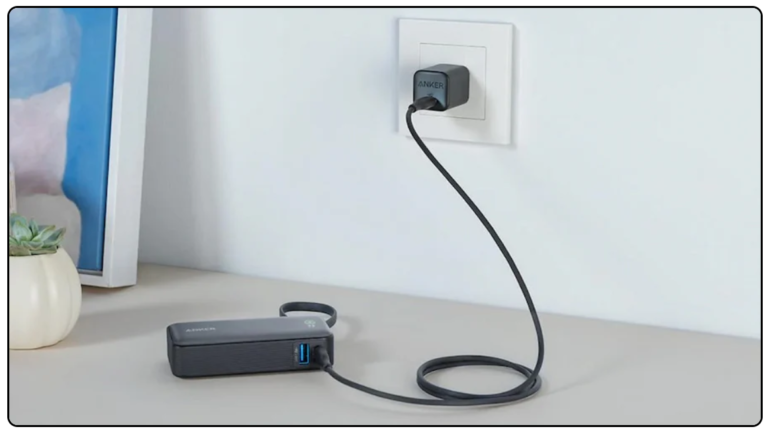
- Pick the right wall adapter. Match or exceed the input rating with a quality charger. A 10W or 18W USB wall charger is the sweet spot for most 10,000mAh models.
- Use a good cable. A short, decent-quality USB-A to Micro-USB, USB-A to USB-C, or USB-C to USB-C cable makes a real difference. Cheap cables often throttle current.
- Plug into a wall outlet. Avoid charging from a laptop or car port for the first cycle, because the current can be unstable and slow.
- Wait for the full indicator. Let it run until all LED lights stay solid or the screen reads 100 percent. Don't unplug early just because you're impatient like I usually am.
- Do a full discharge cycle. Use it to charge your phone from 100 percent down to empty. This completes the calibration and gives you a true sense of its real-world capacity.
Pro tip from a small mistake I made early on. Don't leave it plugged in for 24 hours straight "just to be safe." Once it hits 100 percent, the smart circuit should stop drawing power, but it's still a good habit to unplug once it's full. Lithium batteries prefer to live between 20 and 80 percent when they can.

Factors That Change How Long the First Charge Takes
Even with the same 10,000mAh rating, two power banks can charge at very different speeds. These are the variables that move the needle the most in real-world testing.
- Input port type. Micro-USB usually tops out at 10W, while USB-C often supports 18W or more with the right protocol.
- Supported fast-charging protocol. Power Delivery, Quick Charge 3.0 or 4.0, and PPS all raise the ceiling. A bank that supports PD will drink power much faster than a basic one.
- Wall adapter wattage. The slowest link in the chain wins. A 5W adapter will bottleneck even the fastest input-capable power bank.
- Cable quality. Long, thin, or damaged cables increase resistance and lower the actual current reaching the device.
- Ambient temperature. Lithium cells charge slower in very cold rooms and may throttle in very hot ones to protect themselves.
- Battery age and storage. A power bank that sat in a warehouse for 18 months may take slightly longer on its first cycle as the cells wake up.
If you want the fastest first charge possible, pair an 18W or higher wall adapter with a short USB-C cable and plug the bank in at room temperature. You'll usually be done in under three and a half hours.
Common Mistakes People Make on the First Charge
Over the years, I've seen a lot of new power bank owners do the same handful of things that hurt either charging speed or battery health. Avoiding these alone puts you ahead of most casual users.
- Using a 5W old phone charger because it was the only one nearby. It's not dangerous, but it adds hours of waiting.
- Charging from a laptop USB port. The output is usually under 5W, and sleep settings can interrupt the flow.
- Skipping the full first charge entirely. The bank still works, but the fuel gauge can be off for weeks.
- Leaving it in a hot car while charging. Heat is the number one killer of lithium battery longevity.
- Using a frayed or super-long cable. This quietly throttles current and can even cause overheating in extreme cases.
- Draining it to zero every time. Occasional full drains are fine, but daily zero-to-100 cycles wear cells faster than partial top-ups.
A simple rule of thumb. Treat your power bank the way you'd treat a good pair of wireless earbuds. Charge them with a decent adapter, don't cook them in the sun, and don't let them sit at zero for days on end.
How to Tell When the First Charge Is Truly Done
Most power banks give you one of three ways to know they're full. Knowing which one yours uses saves you from guessing.
- LED dot indicators. Four dots that all stay lit and stop blinking means 100 percent. Some banks blink the last dot while charging and go solid when done.
- Digital percentage display. Newer models show an exact number. Watch for it to hit 100 and hold steady for at least 10 minutes.
- Auto shutoff. Some power banks stop drawing power the moment the cells top out. The wall adapter stays cool, and the LEDs indicate full.
If you want to be extra precise, you can time it. A healthy 10,000mAh bank on a 10W charger should hit full somewhere between 4 and 5 hours from empty. On 18W, look for 2.5 to 3.5 hours. Anything significantly longer usually means the charger or cable is the weak link.
Charging Habits That Keep Your 10,000mAh Power Bank Healthy Long-Term
The first charge is just the opening chapter. What you do over the next few months has a much bigger impact on how long the bank lasts. Most quality power banks are rated for 300 to 500 full charge cycles before capacity drops noticeably. A few small habits can easily double that.
- Stay between 20 and 80 percent for daily top-ups. Save full 0 to 100 cycles for once a month or so.
- Charge at room temperature whenever possible. Avoid freezing cars in winter or hot dashboards in summer.
- Use the right protocol. If your bank supports 18W PD, use an 18W PD charger instead of a 5W one when you need speed.
- Store it half-charged. If you're not using it for a few weeks, leave it at around 50 percent and top it up once a month.
- Keep the ports clean. Pocket lint in a USB port is a more common issue than people think and can cause flaky connections.
- Update firmware if your model has an app. Some premium banks get smarter charging profiles over time.
Think of it like brushing your teeth. The two minutes a day feels small, but it's the difference between keeping your teeth at 60 and keeping them at 80.
Frequently Asked Questions
How long does it take to fully charge a 10000mAh power bank for the first time?
Most 10,000mAh power banks take between 3 and 5 hours on a 10W to 18W charger, and 6 to 8 hours on a basic 5W charger. The exact time depends on the input rating of the bank and the wattage of your wall adapter.
Should I charge my new power bank before first use?
Yes, a full first charge is a smart move even though the bank usually arrives with a partial charge. It calibrates the battery indicator, balances the cells, and gives you a clean baseline to judge future performance from.
Can I use a 20W or 30W fast charger on a 10,000mAh power bank?
You can plug it in safely, but the bank will only pull as much power as its input circuit allows. Most 10,000mAh models cap at 10W to 18W, so a 30W charger will simply deliver the maximum the bank can handle.
Is it okay to leave a power bank charging overnight?
Modern power banks have overcharge protection that stops current once the cells hit 100 percent, so overnight is generally safe. Still, unplugging once it's full is a good habit that reduces unnecessary heat and stress on the battery.
Does the first charge take longer than normal charges?
The first charge is often very similar to any other full charge, but it can feel a bit longer because the cells are waking up after shipping and storage. Once the battery is broken in, you'll usually notice slightly faster and more consistent charge times.
Final Thoughts
Charging a new 10,000mAh power bank for the first time isn't complicated, but doing it well sets the stage for everything that comes after. In most cases you're looking at 3 to 5 hours with a decent 10W or 18W charger, plus a clean cable and a room-temperature spot. Skip the 5W brick if you can, don't leave it cooking in a hot car, and let it run all the way to 100 percent that first time so the fuel gauge learns what "full" really means.
The real win is in the small habits. Use the right adapter, keep it topped up between 20 and 80 percent most days, and give it a full cycle once a month. Do that, and your power bank will easily outlive the next two phone upgrades.
If you found this helpful, feel free to drop a comment with the power bank model you just bought. I love geeking out over charging speeds and cable choices, and there's a good chance your question helps the next reader too.