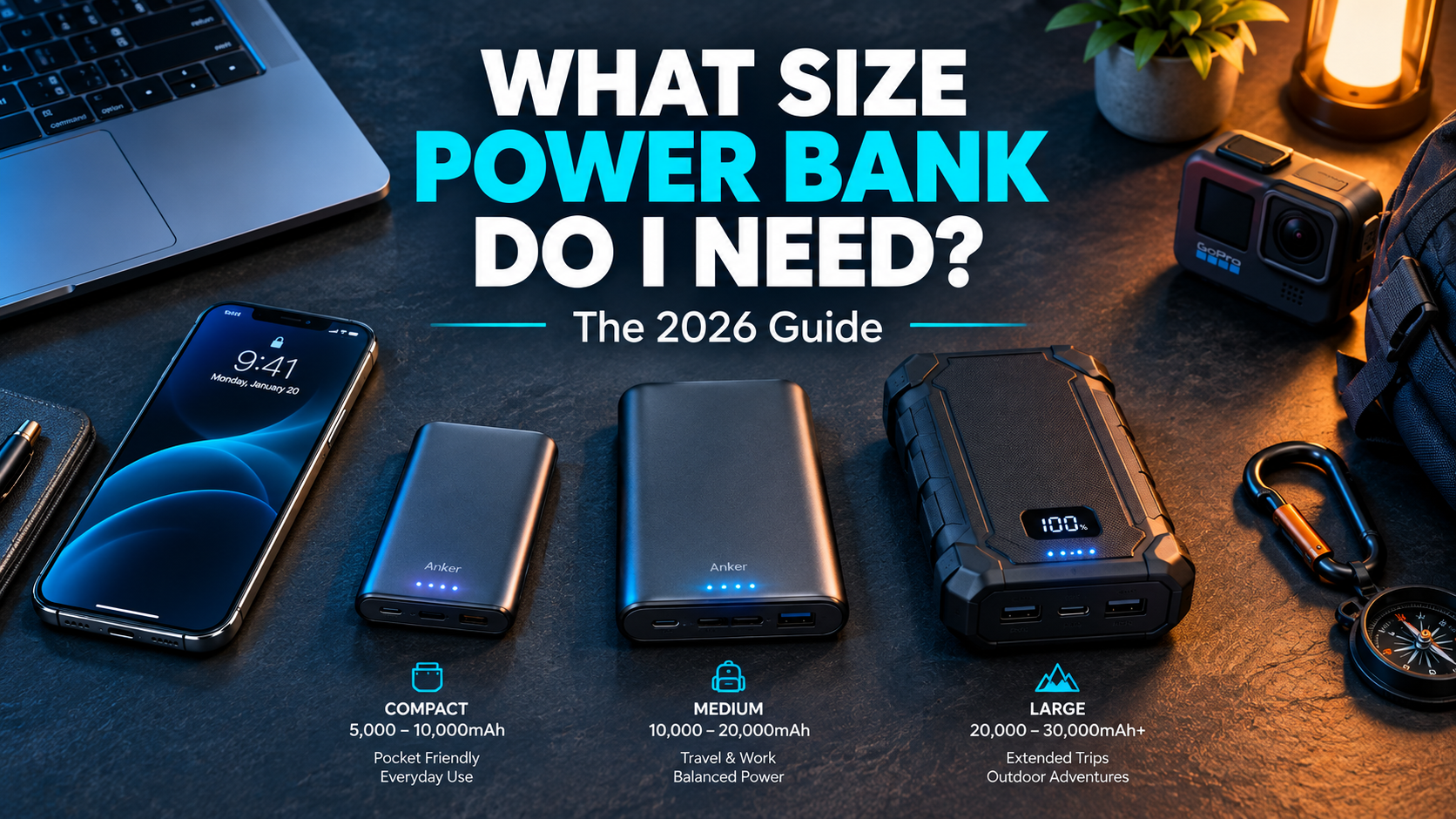
What Size Power Bank Do I Need: The 2026 Guide
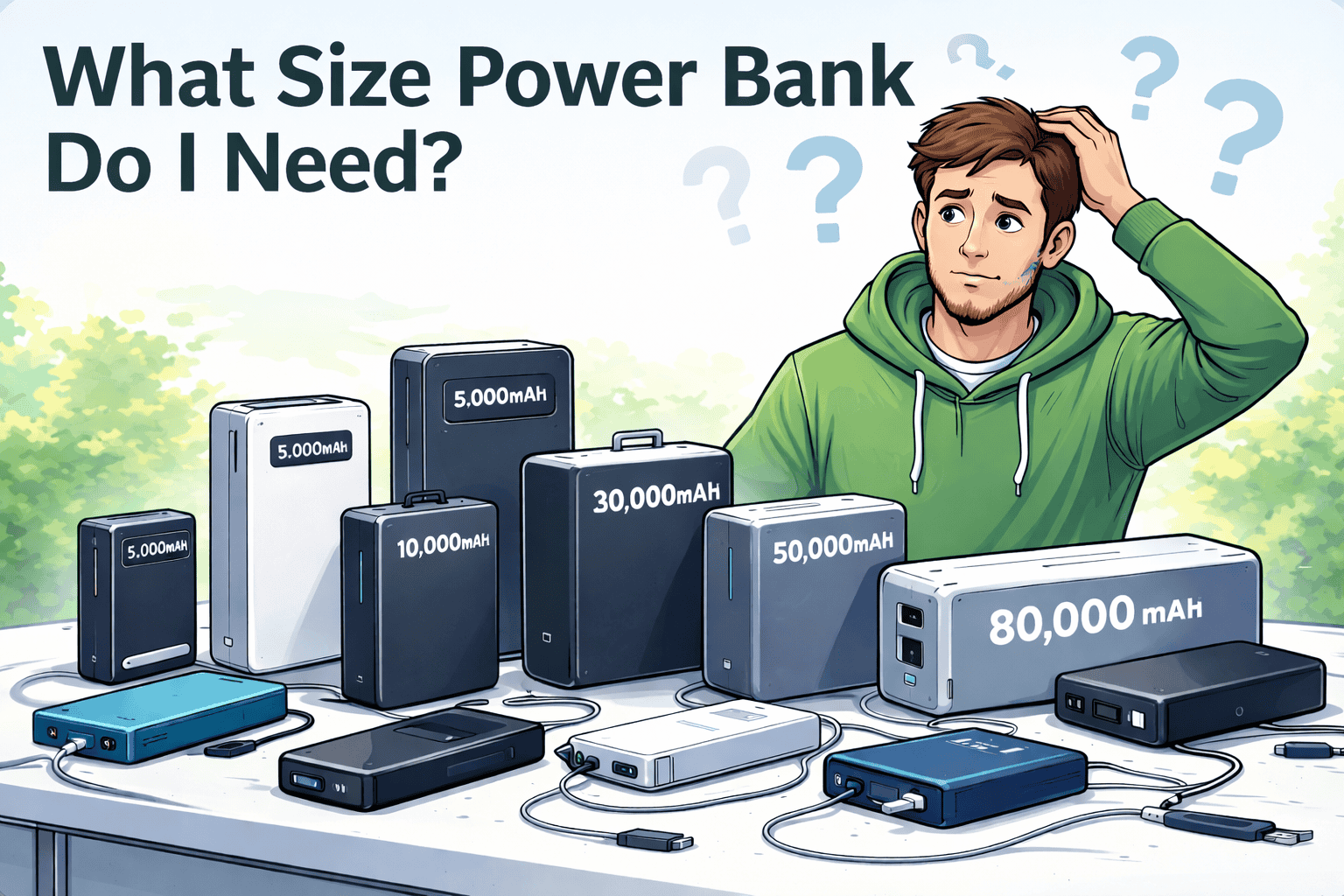
You need a 5,000–10,000 mAh power bank for daily phone top-ups, a 20,000 mAh model for laptops and long trips, and 10,000–15,000 mAh for a balance of portability and power. Choosing the right size is not just about picking the biggest battery. It is about matching your real-world needs with the right capacity, output, and features.
I have spent years testing power banks during flights, camping trips, and long workdays, and I can tell you that the wrong size can leave you stranded or weighing down your bag for no reason. This guide breaks down everything you need to know so you can pick the perfect power bank for your lifestyle.
Understanding Power Bank Capacity: What mAh Really Means
mAh stands for milliampere-hour, and it tells you how much energy a power bank can store. The higher the number, the more times you can charge your devices. But here is the catch: not all of that energy makes it to your phone. Real-world efficiency usually sits between 60% and 80% because of heat loss and voltage conversion.
Think of it like a water bottle. If you have a 20 oz bottle but spill a little while pouring, you only deliver about 16 oz. That is exactly how power banks work. A 20,000 mAh power bank might only give your phone 12,000–16,000 mAh of actual charging power.
For perspective:
- A typical smartphone has a 3,000–5,000 mAh battery.
- A tablet usually has a 7,000–10,000 mAh battery.
- A laptop can have a 40,000–70,000 mAh battery.

How to Calculate the Power Bank Size You Actually Need
Before you buy anything, take 30 seconds to do this simple math. It has saved me from buying the wrong power bank more than once.
- Check your device battery size in mAh (found in settings or the manufacturer site).
- Decide how many full charges you want.
- Multiply battery size by number of charges.
- Divide by 0.7 to account for energy loss.
For example, if you want to charge a 4,000 mAh phone twice, you need at least 11,428 mAh of capacity. So a 12,000–15,000 mAh power bank is perfect.
This formula works every time, and it is the same approach I use when recommending power banks to friends and family.

Matching Power Bank Size to Your Lifestyle
Not everyone needs the same thing. Your daily routine, travel habits, and devices all play a big role. Let me walk you through the most common scenarios I see and what works best.
Daily Commuters and Casual Users
If you just need a safety net for a busy day, a 5,000–10,000 mAh power bank is more than enough. It is small enough to fit in your pocket or purse and can fully charge most phones once or twice. I carry a 10,000 mAh model in my work bag every day, and it has saved me more times than I can count during long meetings or travel delays.
Frequent Travelers and Digital Nomads
If you are always on the move, a 20,000 mAh power bank is the sweet spot. It can charge a phone 4–5 times, a tablet 2–3 times, and even give a laptop a partial boost. I have used a 20,000 mAh power bank on week-long trips without needing to hunt for an outlet. It is the size of a small paperback and worth every ounce of weight.
Outdoor Adventurers and Campers
If you spend time off the grid, go for 25,000 mAh or more. These larger units often come with built-in flashlights, solar panels, or rugged exteriors. They are heavier, but when you are three days into a hike, that extra weight feels like insurance.
Laptop Users and Professionals
If you need to charge a USB-C laptop, look for a power bank with at least 25,000–30,000 mAh and a 45W or higher output. Smaller banks simply do not have the wattage to charge a laptop efficiently. I learned this the hard way when a 10,000 mAh bank barely moved the needle on my MacBook during a work trip.
The Hidden Factor: Output Speed and Ports
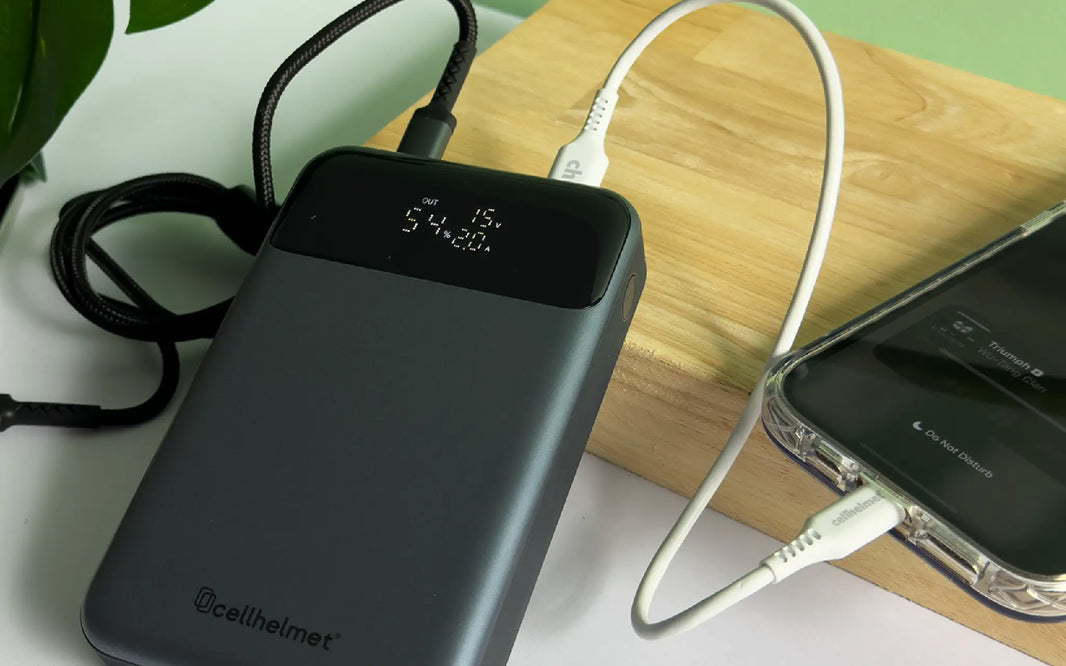
Capacity is only half the story. A 20,000 mAh power bank with a 5W output will charge your phone painfully slowly. Look for these features to get the most out of your purchase.
- Output wattage: 18W or higher is ideal for fast charging phones. 45W or higher is needed for laptops.
- Port types: USB-A is standard, but USB-C PD is a must for modern devices.
- Number of ports: If you carry multiple devices, get a power bank with at least two output ports.
- Pass-through charging: This lets you charge the power bank and your devices at the same time.
I once bought a cheap 20,000 mAh power bank that only had 5W output. It took six hours to charge my phone. Lesson learned: always check the specs, not just the capacity.
Common Mistakes to Avoid When Choosing a Power Bank Size
After testing dozens of power banks and helping others pick the right one, I have seen the same mistakes over and over. Here is what to watch out for.
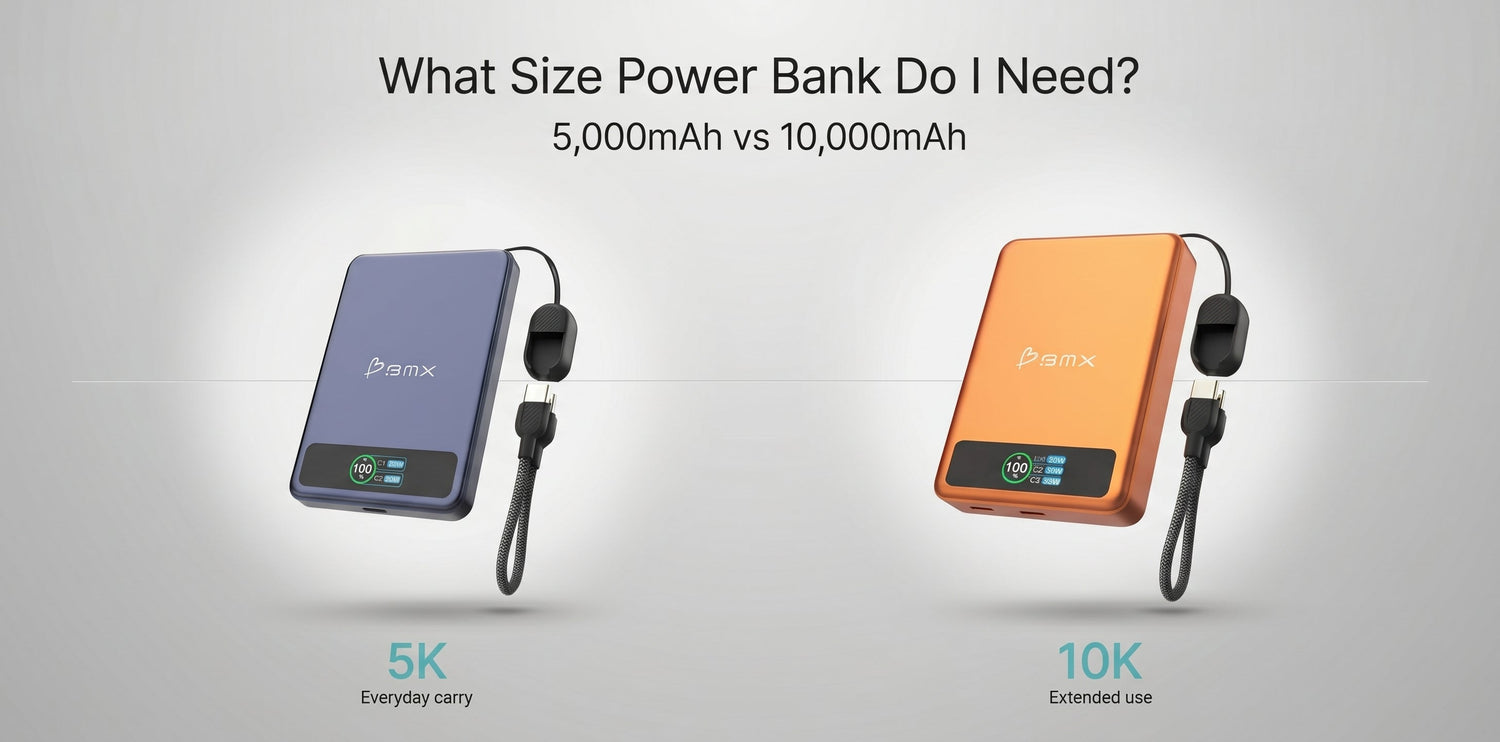
- Buying too small: A 5,000 mAh bank sounds light and compact, but it barely covers a full phone charge once you factor in energy loss.
- Buying too big: A 50,000 mAh power bank is overkill for most people and heavy to carry around.
- Ignoring airline rules: Power banks over 27,000 mAh (100Wh) are not allowed in carry-on luggage on most airlines.
- Trusting the label: Some brands inflate their mAh numbers. Stick with reputable brands and check independent reviews.
- Forgetting about weight: A 20,000 mAh power bank usually weighs 12–16 oz. If that sounds heavy, size down.
Quick Reference: Power Bank Size Recommendations
Here is a simple cheat sheet I share with anyone who asks me for advice.
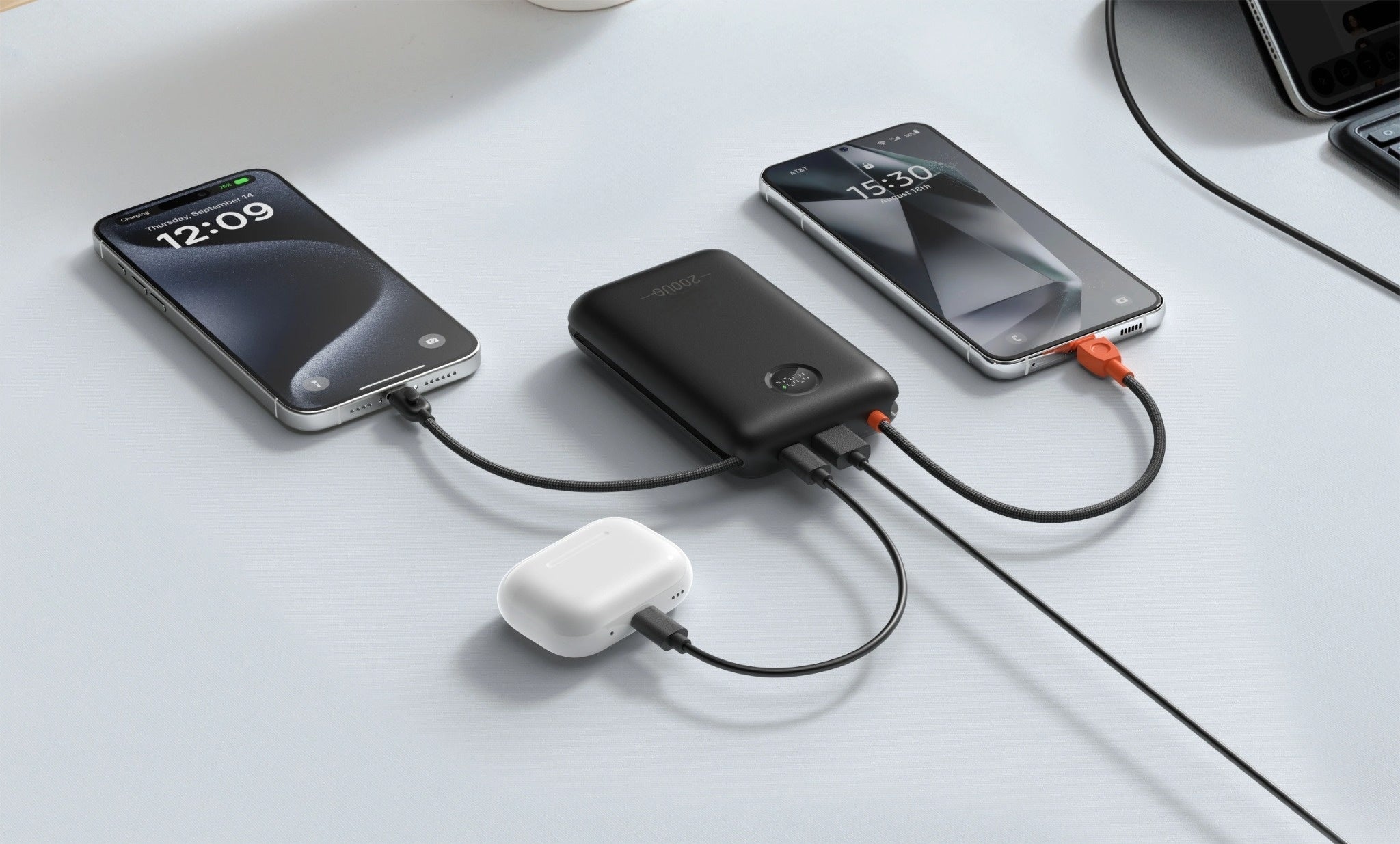
- 5,000 mAh: Emergency top-up, fits in a wallet.
- 10,000 mAh: One full phone charge, great for daily use.
- 15,000 mAh: Two to three phone charges, good for weekends.
- 20,000 mAh: Four to five phone charges, ideal for travel.
- 25,000 mAh: Charges phones, tablets, and some laptops.
- 30,000+ mAh: Heavy-duty use, multiple devices, long trips.

Personal Tips From Years of Testing
I have used power banks in airports, cafes, camping sites, and even during power outages. A few practical tips have always served me well.
- Always charge your power bank the night before a trip.
- Keep a short USB-C cable in your bag. Long cables waste energy.
- Store your power bank at room temperature. Cold and heat both damage lithium batteries.
- Do not let it drop to 0% regularly. It shortens the battery lifespan.
- Label your power bank with its capacity if you own more than one. It saves time when packing.
Final Thought Before You Buy
The right power bank size depends on how you live, not just what you carry. Think about your worst-case day. How many times do you need to charge your phone? Do you travel often? Do you work on a laptop away from an outlet? Answering these questions honestly will point you to the perfect size every single time.
Frequently Asked Questions
How many mAh is enough for a power bank?
A 10,000 mAh power bank is enough for most people who just need to charge a phone once or twice. If you travel often or carry multiple devices, go for 20,000 mAh or more.
Is a 20,000 mAh power bank too big?
Not at all. A 20,000 mAh power bank is the most popular size because it balances capacity and portability. It can charge a phone four to five times and still fits in a backpack.
Can a 10,000 mAh power bank charge a laptop?
Most 10,000 mAh power banks do not have enough output wattage to charge a laptop efficiently. You need at least 25,000 mAh and 45W output for that.
How long does a 20,000 mAh power bank last?
A good 20,000 mAh power bank can last 3–5 years with regular use. Battery health depends on charge cycles, heat exposure, and how often you let it drain completely.
What size power bank can I take on a plane?
Most airlines allow power banks up to 27,000 mAh (100Wh) in carry-on bags. Anything above 27,000 mAh requires airline approval, and over 43,000 mAh (160Wh) is banned.
Do higher mAh power banks take longer to charge?
Yes, larger power banks take longer to charge fully. A 20,000 mAh power bank usually needs 6–8 hours with a standard charger, but fast charging can cut that time in half.
How do I know if a power bank is good quality?
Look for safety certifications like CE, FCC, and RoHS. Reputable brands also list actual output wattage, port types, and battery cell type. Avoid no-name brands with vague specs.
Conclusion
Picking the right power bank size does not have to be complicated. Start with your devices, figure out how many charges you need, and add 30% to cover energy loss. A 10,000 mAh model is perfect for daily life, a 20,000 mAh bank is a travel essential, and anything above 25,000 mAh is built for serious off-grid use.
Your power bank should fit your life, not the other way around. Take a moment to think about your real needs, and you will end up with a power bank that never lets you down. If you have a favorite power bank size or a story to share, drop a comment below. I would love to hear what works for you.