What Power Bank Can I Take On A Plane: 2026 Travel Rules
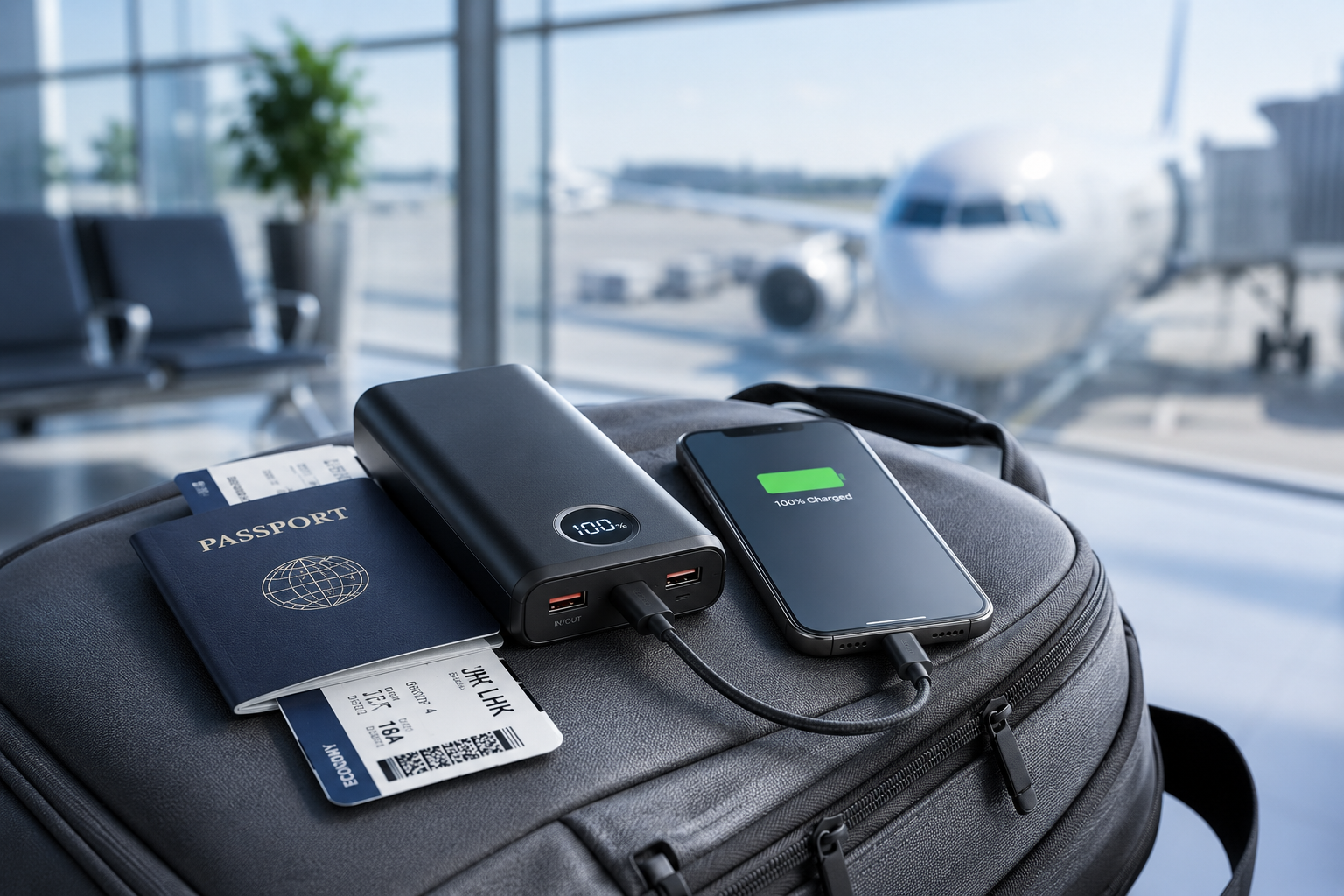
You can take power banks on a plane, but they must be in your carry-on bag, not checked luggage, and limited to 100Wh (or 160Wh with airline approval).
If you've ever stood at the security gate wondering whether your power bank will make it through, you're not alone. With more people traveling with multiple devices than ever before, understanding the rules around portable chargers has become essential. Whether you're a frequent flyer, a digital nomad, or just someone who hates the anxiety of a dying phone mid-flight, this guide will walk you through everything you need to know about what power bank you can take on a plane.
Understanding Power Bank Regulations for Air Travel
When it comes to flying with a power bank, the rules aren't just friendly suggestions. They're strict regulations backed by aviation safety standards worldwide. The key reason behind these rules is simple: lithium-ion batteries, which power most portable chargers, can pose a fire risk if damaged, overheated, or improperly stored. That's why airlines and aviation authorities have set clear limits on how much battery capacity you can bring aboard.
The most widely accepted rule, enforced by the FAA, IATA, and most major airlines, is the 100Wh rule. This means any power bank under 100 watt-hours is allowed in your carry-on luggage without special permission. If your power bank is between 100Wh and 160Wh, you can still bring it, but you'll need airline approval. Anything over 160Wh is generally prohibited from passenger aircraft altogether.
The 100Wh Rule Explained
To put it in perspective, most standard power banks you buy for everyday use, like a 10,000mAh or 20,000mAh charger, fall well under the 100Wh limit. In fact, a typical 20,000mAh power bank usually sits around 74Wh, which is perfectly safe to carry. However, high-capacity power banks designed for laptops or camping gear can easily exceed this limit, which is where travelers often run into trouble.
If you're unsure about your power bank's watt-hour rating, you can usually find it printed on the device itself or in the user manual. The formula to calculate it is simple: multiply the voltage (V) by the amp-hours (Ah). For example, a 5V, 20,000mAh (20Ah) battery equals 100Wh. Keep in mind that if your power bank only shows milliamp-hours (mAh), you can convert it by dividing by 1,000 to get Ah, then multiplying by the voltage.
Why Power Banks Must Go in Carry-On, Not Checked Luggage
You might be wondering why you can't just toss your power bank in your checked bag and forget about it. The answer lies in safety monitoring. If a lithium-ion battery malfunctions and catches fire, cabin crew can respond immediately. In the cargo hold, a fire could go undetected for longer, potentially leading to a much more dangerous situation.
That's why the rule is universal across virtually all airlines: power banks belong in your carry-on or personal item, never in checked luggage. Even small ones. I've personally seen travelers pulled aside at security for having a power bank in their checked bag, and trust me, it's not a fun experience. The TSA, for example, explicitly states that spare lithium batteries and power banks must be carried in the cabin.

Capacity Limits: What Size Power Bank Can You Bring?
Let's break down the capacity tiers so you know exactly where your power bank stands:
- Under 100Wh: Allowed in carry-on without any special permission. This covers most consumer power banks.
- 100Wh to 160Wh: Allowed only with airline approval. You may need to contact your airline before flying.
- Over 160Wh: Not allowed on passenger aircraft under any circumstances.
Some airlines also enforce stricter rules, especially for international flights. For instance, certain carriers limit power banks to 20,000mAh or less, regardless of the watt-hour calculation. It's always smart to check your specific airline's policy before you pack.
How to Find Your Power Bank's Wh Rating
If your power bank doesn't clearly show watt-hours, here's how to figure it out:
- Check the label on the device itself. Look for output voltage and capacity in mAh.
- Use the formula: Wh = (mAh × V) ÷ 1,000.
- If you can't find the voltage, assume it's 3.7V, which is standard for most lithium-ion power banks.
For example, a 26,800mAh power bank at 3.7V equals about 99Wh, which just barely makes the cut. Anything larger should raise a flag.
Special Cases: Airline Approval for Larger Power Banks
If you need to travel with a power bank between 100Wh and 160Wh, here's what you should know. First, not all airlines offer this option, so you'll need to check directly with your carrier. Some require advance notice, while others may only allow it for medical devices or specific professional equipment.
In my experience flying with a high-capacity laptop power bank, I had to call the airline 48 hours in advance and provide the exact specifications. They approved it on the spot, but the process felt a little intimidating. The key takeaway: don't assume you're approved just because you have a big charger. Always confirm in writing if possible.
Best Practices for Flying with a Power Bank
Beyond the rules, there are some smart habits that can make your travel experience smoother and safer:
- Keep your power bank in its original packaging or a protective case to prevent damage.
- Avoid exposing it to extreme temperatures, especially in checked cars or hot airplane compartments.
- Don't use damaged or swollen power banks. If it's bulging, leaking, or smells strange, leave it at home.
- Charge your power bank before you fly. Airlines sometimes check for functional batteries, and a dead one might raise questions.
- Never pack a power bank loosely with metal objects like keys or coins, as this can cause short circuits.
Packing Tips from a Frequent Traveler
After years of flying with multiple devices, here's what works best for me. I always keep my power bank in an easily accessible pocket of my backpack, so security checks go faster. I also bring a small cable organizer to keep things tidy. If I'm flying internationally, I double-check the rules of my destination country, because some places like China and India have their own quirky restrictions.
What Happens If You Violate the Rules?
Getting caught with a non-compliant power bank at the airport can range from a minor inconvenience to a serious problem. At best, security will confiscate it. At worst, you could face fines or be denied boarding. In rare cases involving damaged or hazardous batteries, authorities may involve local fire departments or hazmat teams.
I once watched a traveler lose a brand-new 30,000mAh power bank at a security checkpoint in London because it was over the 100Wh limit. The look on their face was a mix of frustration and disbelief. It's a mistake you only make once.
Power Banks and International Flights: What Changes?
If you're flying internationally, especially to or from countries with strict battery laws, the rules can get a bit more complicated. Some countries limit the number of power banks you can carry, while others restrict certain brands or types. For example, flights originating in China often enforce a maximum of two power banks per passenger, each under 100Wh.
Always check the aviation authority website of your destination country before you fly. It's a small step that can save you a lot of headaches at the gate.
Common Misconceptions About Power Banks on Planes
There are plenty of myths floating around about what you can and can't bring. Let's clear up a few:
- Myth: You can bring any power bank if it's turned off. Fact: The rules apply regardless of whether the device is on or off.
- Myth: Smaller mAh ratings are always safe. Fact: It's the watt-hour rating that matters, not the mAh alone.
- Myth: Airlines don't actually check. Fact: They do, especially at security and during international transfers.
Frequently Asked Questions
Can I bring a 20000mAh power bank on a plane?
Yes, you can bring a 20,000mAh power bank on a plane in your carry-on luggage. Most 20,000mAh power banks fall under the 100Wh limit, which is the standard threshold for air travel. Just make sure it doesn't exceed your airline's specific restrictions.
Are power banks allowed in checked baggage?
No, power banks are not allowed in checked baggage. They must be carried in your carry-on or personal item. This rule is enforced by aviation authorities worldwide due to the fire risk associated with lithium-ion batteries.
How many power banks can I carry on a flight?
Most airlines allow up to two power banks per passenger, each under 100Wh. However, some international carriers may have stricter limits, so it's best to check with your airline before flying.
Do I need to declare my power bank at the airport?
You typically don't need to declare a standard power bank under 100Wh. However, if you're carrying a power bank between 100Wh and 160Wh, you may need to inform the airline and get approval in advance.
What happens if my power bank is over 160Wh?
If your power bank exceeds 160Wh, it will not be allowed on the plane. You'll need to leave it behind or ship it separately using approved carriers for hazardous materials.
Conclusion
Flying with a power bank doesn't have to be stressful once you know the rules. Stick to the 100Wh limit, keep your charger in your carry-on, and always check your airline's specific policy before you fly. A little preparation goes a long way toward a smooth travel experience.
Now that you're armed with the right information, pack smart, charge up, and enjoy your next flight with confidence. Got a favorite travel-friendly power bank or a tip to share? Drop a comment below, I'd love to hear what's worked for you.