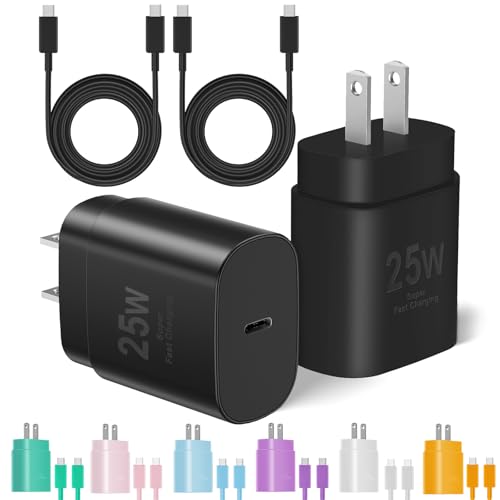
What Is Fast Charging? How It Works, Benefits, Safety, and Battery Health
If you use a smartphone in the United States, you have likely seen terms such as Fast Charging, Rapid Charging, Turbo Charging, or Super Fast Charging. These names can sound similar, but they do not all mean the same thing. In simple terms, **what is fast charging** comes down to one idea: the device accepts more power for part or all of the charging cycle than it would with a basic charger.
The important detail is that a fast charger does not force unlimited power into a phone. The charger and device communicate, check what each can support, and adjust the power level. The phone also changes its charging rate as the battery fills and as temperature changes. This is why a phone may charge very quickly from 10% to 50% but much more slowly near 100%.
From a practical consumer view, fast charging is most useful when time is limited. A short charge before a commute, work meeting, road trip, or airport visit can add useful battery life without waiting for a full charge. The best setup is not simply the charger with the highest watt number. It is a charger, cable, and device that work together safely and efficiently.
What Is Fast Charging?
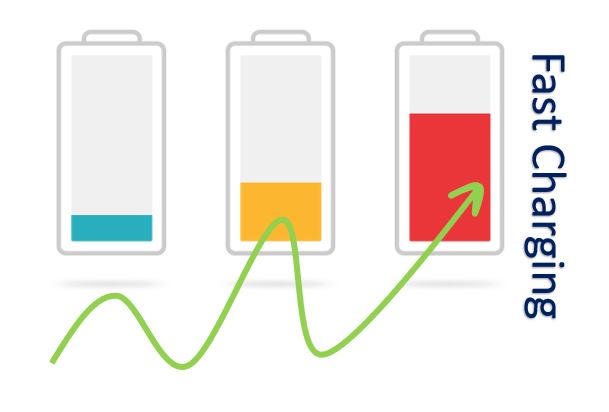
**What is fast charging?** It is a charging method that allows a compatible device to receive more electrical power than it would from a standard, lower-power charger. More power can reduce the time needed to add energy to a battery.
Power is measured in watts (W). A simple way to understand it is voltage multiplied by current. For example, 5 volts at 2 amps provides 10 watts. A charger that can safely provide 20 watts can deliver more power than a 10-watt charger, but the device must also support that higher power level.
Fast charging does not mean the battery receives the same high power from empty to full. Modern phones usually use a charging system that starts quickly, then reduces power as the battery gets fuller. This helps control heat, protect the battery, and maintain safe operating limits.
- ✦ More power
Fast charging usually uses a higher power level than older basic charging methods.
- ✦ Device limits
A phone only takes the amount of power its hardware and charging system allow.
- ✦ Changing speed
Charging speed can rise and fall during one charging session because the phone manages power based on battery level, heat, and other factors.
- ✦ Compatible equipment
The charger, cable, and device must support the required charging method for the expected speed.
Fast Charging vs. Standard Charging
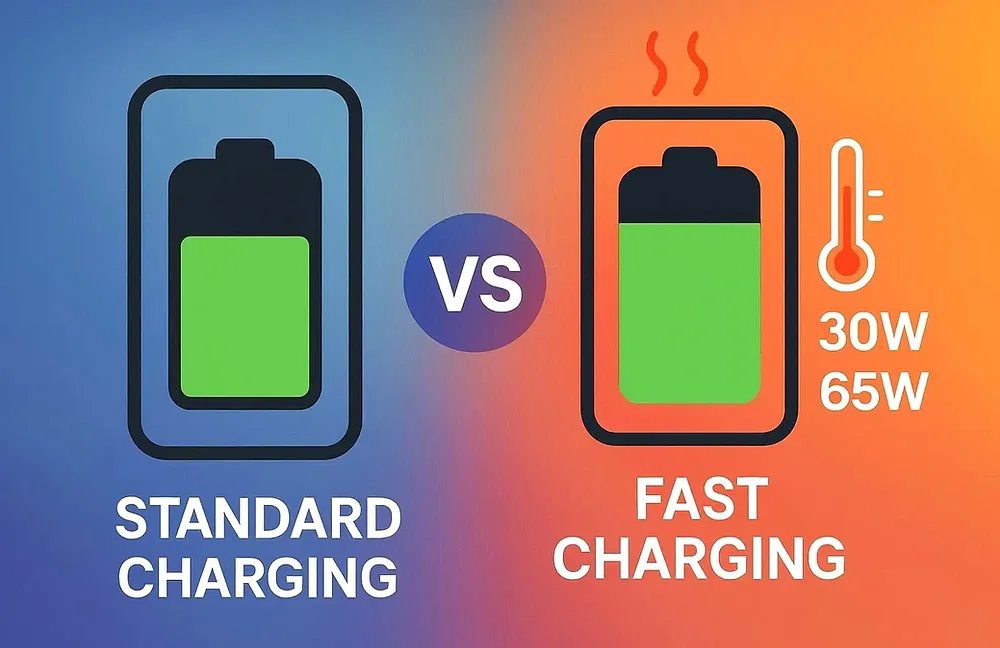
A basic charger may deliver a modest amount of power for steady charging. A fast charger can provide more power when the device supports it. The result is a shorter time to reach a useful battery level.
The difference is most noticeable when the battery is low. If your phone is already near full, the benefit of a high-power charger may be much smaller because the phone will normally reduce its charging rate.
Why Wattage Matters
Wattage tells you how much electrical power a charger can provide under the right conditions. It is useful, but it does not tell the whole story. A 100W charger does not automatically make a phone charge at 100W.
The phone may support only a lower maximum input. The charging protocol, cable, temperature, battery condition, and current battery level can also reduce the actual power used.
How Does Fast Charging Work?
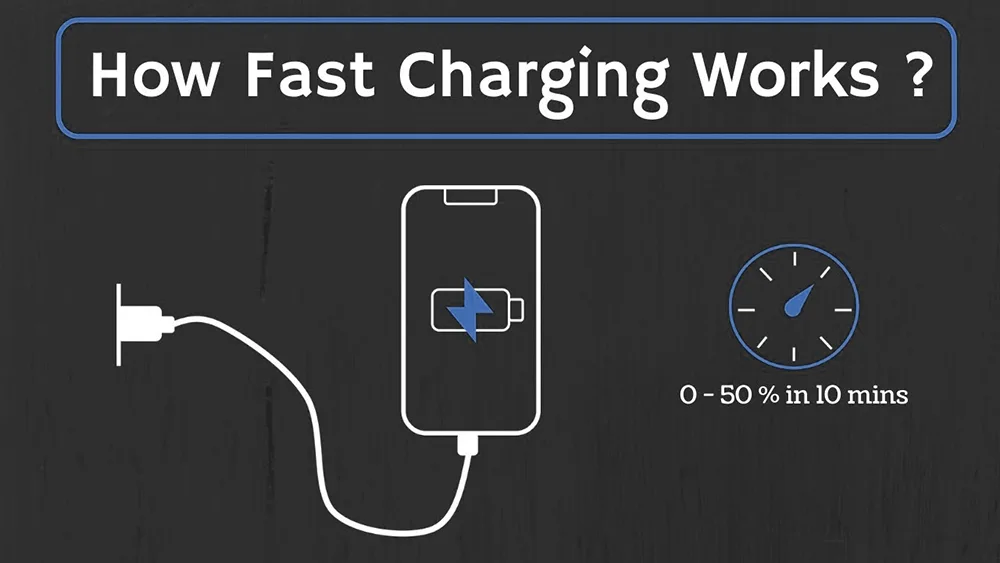
To understand **how fast charging works**, start with the charger. The charger converts electricity from the wall into a form the device can use. It can then provide a suitable voltage and current when the phone requests it.
The phone has a charging circuit that controls how much power reaches the battery. In modern systems, the phone and charger can communicate through a supported charging protocol. The phone can request a power level that fits its design instead of simply taking everything the charger could provide.
This process helps balance speed, heat, battery protection, and charger capacity. When conditions change, the phone can lower the charging rate. That is one reason the number printed on a charger should not be treated as a promise of constant charging speed.
- ✦ Step 1: Power enters the charger
The charger receives electrical power from the wall outlet and prepares it for the connected device.
- ✦ Step 2: The charger and device communicate
Supported charging systems allow the device and charger to agree on a suitable power level.
- ✦ Step 3: The phone controls input
The phone’s charging hardware manages how much power reaches the battery.
- ✦ Step 4: Power changes during charging
The phone can reduce power as the battery fills or when temperature and other conditions require it.
Voltage, Current, and Watts
Three basic terms help explain charging. Voltage is the electrical pressure. Current is the flow of electrical charge. Watts measure power, which can be understood as voltage multiplied by current.
For example, 9 volts at 2 amps equals 18 watts. A charging system can reach higher power by using more current, higher voltage, or a combination of both. The exact method depends on the charging design.
Why Charging Slows Near Full
A lithium-ion battery needs careful control as it approaches a high state of charge. The charging system normally reduces current during the later part of the cycle.
This is why a claim such as ‘0% to 100% in a short time’ can be misleading if the early and late parts of the cycle are not explained. In daily use, the faster first portion often matters more than the final few percentage points.
What Charging Standards Are Used for Fast Charging?
There is no single fast charging system used by every phone. Different manufacturers and devices may use different standards. Some systems are widely supported, while others are tied to a particular brand or product family.
USB Power Delivery, often called USB PD, is an important standard for modern USB-C charging. USB PD can support a range of power levels and is used across many phones, tablets, laptops, and other devices. Some newer systems also use programmable power control to adjust voltage more precisely.
Other fast charging systems use their own branding and may require a matching charger to reach the highest advertised speed. This is why checking the device maker’s charging specifications is more useful than buying a charger based only on its wattage.

- ✦ USB Power Delivery
USB PD is a widely used charging standard that supports negotiated power levels across many types of USB-C devices.
- ✦ Programmable power control
Some charging systems can adjust power in smaller steps to help match the device’s needs.
- ✦ Manufacturer-specific systems
Some brands use proprietary charging methods that may require specific chargers or accessories for maximum speed.
- ✦ USB-C is not the same as fast charging
USB-C describes a connector type. A USB-C connection does not automatically mean that the device supports high-speed charging.
USB-C and Fast Charging
USB-C has become common across phones, tablets, computers, and accessories. But the USB-C connector alone does not determine charging speed. The device, charger, cable, and supported power standard all matter.
Some USB-C cables support much higher power than others. A cable may work for basic charging but fail to provide the performance expected from a higher-power setup. For higher power levels, use a cable that meets the required specification.
Proprietary Fast Charging
Some phone makers build special charging systems into their devices. These systems can be very fast, but their full performance may depend on a matching charger and cable.
A third-party charger can still work if it supports a compatible standard, but the phone may fall back to a lower power level. That is normal behavior and does not necessarily mean the charger is defective.
What Determines Fast Charging Speed?
If you are asking **what is fast charging** in practical terms, the answer depends on more than the charger. The phone sets important limits, while the charger and cable must provide compatible power. Temperature, battery level, and software can also change the rate.
Two phones connected to the same charger may charge at different speeds. Even the same phone can charge at different speeds on different days if it is hot, already near full, being used heavily, or connected through an incompatible accessory.
- ✦ Phone hardware
The phone has a maximum charging input and a charging system designed to manage that power.
- ✦ Charger output
The charger must provide a power level and charging standard that the device can use.
- ✦ Cable capability
The cable can affect whether the device reaches a higher charging rate, especially at higher power levels.
- ✦ Battery level
Charging is often faster when the battery is low and slower as it approaches full.
- ✦ Temperature
A hot device may reduce charging power to control heat and protect the battery.
- ✦ Software and settings
Some devices use charging settings, battery protection modes, or adaptive charging features that can change charging behavior.
The Phone Is Usually the Main Limit
A powerful charger cannot override the phone’s charging design. If a phone supports a maximum input of 25W, connecting a 100W charger will not turn it into a 100W phone.
This is one of the most common misunderstandings about fast charging. Higher charger wattage can provide flexibility for several devices, but the connected device decides how much power it uses.
Heat Can Reduce Charging Speed
Fast charging can create more heat than low-power charging because more energy moves through the system in less time. The phone monitors temperature and can lower charging power when needed.
Using a phone heavily while charging, charging in direct sunlight, or covering the phone with insulating material can make heat control harder. A cooler charging environment can help the phone maintain its intended charging behavior.
What Are the Benefits of Fast Charging?
The main benefit of fast charging is simple: **less waiting**. You can add a useful amount of battery power during a short break instead of keeping the phone connected for a long time.
For people who travel, work away from home, or use their phone heavily, this can make daily charging much easier. A short charging session before leaving for work or while eating lunch may provide enough energy for several more hours of use.
Fast charging can also reduce the need to carry a phone charger everywhere. The real benefit is not just a higher watt number. It is the ability to regain useful battery life during the small gaps in a normal day.
- ✦ Saves time
A compatible fast charger can add battery power much faster than a basic low-power charger.
- ✦ Useful for busy schedules
Short charging sessions can be more practical for commuters, travelers, students, and people who use their phones heavily.
- ✦ Convenient for travel
A fast charger can make it easier to recover battery life at airports, hotels, offices, and other places with limited charging time.
- ✦ Supports larger devices
Higher-power charging standards can also support tablets, laptops, and other devices that need more energy than a small phone.
Why 20 Minutes Can Matter More Than a Full Charge
Many people do not need a full battery every time they plug in. If your phone is low before a meeting or trip, adding a large amount of charge in a short session can be more useful than waiting for 100%.
This is one reason modern fast charging focuses on the early part of the charging cycle. The goal is to provide useful energy quickly while still slowing down later to manage battery stress and heat.
Is Fast Charging Safe?
For a modern device with a properly designed charging system, **fast charging is generally safe when you use compatible, quality equipment**. Phones include charging controls that can adjust power and respond to temperature and battery conditions.
The bigger concern is poor-quality or damaged charging equipment. Very cheap accessories may lack the protections and build quality expected from reputable products. A damaged cable, loose connector, or damaged charger should not be used.
Safety also depends on the charging environment. Avoid charging a hot phone in direct sunlight or under bedding. If the device becomes unusually hot, swells, smells strange, or shows signs of damage, stop charging and have it checked by a qualified service provider.

- ✦ Use compatible chargers
Choose chargers that meet the device maker’s requirements and use recognized charging standards.
- ✦ Use suitable cables
For higher power, use a cable rated for the required charging level and in good condition.
- ✦ Watch temperature
Heat can affect charging behavior and battery aging, so keep the device in a cool, open area while charging.
- ✦ Replace damaged accessories
Do not keep using cables or chargers with exposed wires, damaged connectors, cracked housings, or other clear defects.
Can a Fast Charger Damage a Phone?
A charger with a higher maximum wattage does not normally force that full power into a phone. With a properly designed charging system, the phone requests and manages the power it can use.
The safer approach is to buy from reputable manufacturers and check compatibility. Avoid assuming that the highest wattage is always the best choice.
What About Cheap Chargers?
Price alone does not determine safety, but extremely low-cost chargers from unknown sources can be harder to verify. A quality charger should meet the electrical and safety requirements for the market where it is sold.
For U.S. consumers, look for clear manufacturer information and relevant safety certification or listing marks. Do not treat a printed watt number as proof of quality.
Does Fast Charging Hurt Battery Health?
This is one of the most common questions after learning **what is fast charging**. Fast charging itself does not automatically mean that a battery will fail early. However, charging at higher power can create more heat, and heat is an important factor in lithium-ion battery aging.
Modern phones use several controls to reduce this risk. They can lower charging power, monitor temperature, manage the battery near full charge, and use software features that change charging behavior based on expected use.
Battery aging is affected by many factors, not just charging speed. High temperatures, time spent at very high charge levels, frequent heavy use, and normal battery cycles all contribute. For most people, using fast charging when needed is a reasonable trade-off for convenience.

- ✦ Heat matters
Excess heat can speed up battery aging, so temperature control is a key part of modern fast charging.
- ✦ Charging slows near full
Reducing power near a high state of charge helps manage battery stress and heat.
- ✦ Battery protection features help
Many phones offer adaptive or optimized charging features designed to reduce the time the battery spends at a very high charge level.
- ✦ Normal use is expected
You do not need to avoid fast charging completely. Use it when speed matters and follow the device maker’s charging guidance.
How to Reduce Battery Wear
Keep the phone cool while charging. Remove heavy insulation if the device gets hot, avoid direct sun, and avoid demanding games or other heavy workloads during high-power charging when practical.
Use battery protection features when they fit your routine. If you charge overnight every day, an adaptive charging feature may be more useful than simply choosing the fastest possible charging mode.
- ✦ Keep it cool
Charge in a cool, open place and avoid unnecessary heat.
- ✦ Use adaptive charging
If your phone offers a battery protection or optimized charging feature, consider enabling it.
- ✦ Use fast charging when useful
Fast charging is most valuable when you need extra battery power quickly.
How to Choose a Fast Charger
Buying a fast charger is easier when you start with the device rather than the charger. Check the phone’s official specifications for its supported charging standard and maximum charging power. Then choose a charger that supports those requirements.
For people with several devices, a higher-power USB-C charger can be useful because one charger may support a phone, tablet, earbuds, or laptop. However, more wattage is not always better. The charger should match your real needs and come from a trustworthy manufacturer.
Cable choice matters too. A cable must support the required power and data or charging standard. If your phone does not reach its expected speed, checking the cable is often worthwhile before replacing the phone or charger.
- ✦ Check the phone specifications
Find the supported charging standard and maximum input before buying a charger.
- ✦ Choose enough power
Select a charger with enough output for your device and any other devices you plan to charge.
- ✦ Check cable ratings
Make sure the cable can handle the power level required by the charging system.
- ✦ Buy from reputable brands
Clear specifications, quality control, and appropriate safety information are more important than a very low price.
- ✦ Consider multiple devices
If you charge several USB-C devices, a multi-port charger can reduce the number of adapters you need.
Is a Higher-Watt Charger Better?
Not always. A higher-watt charger can be useful when you have several devices or a laptop that needs more power, but your phone may use only a fraction of that capacity.
The best charger is one that supports the right standard, has enough power for your devices, and comes from a reliable source. Maximum wattage should be only one part of the decision.
Why the Cable Matters
Charging performance depends on the complete system. A capable charger connected through an unsuitable cable may not deliver the expected power.
Some higher-power USB-C systems use electronically marked cables to identify their capabilities. When a device or charger requires such a cable, using the correct cable helps the system operate as designed.
Common Fast Charging Myths
Fast charging has become common, but several myths still cause confusion. Most come from treating charger wattage as the only factor that matters.
A better approach is to look at the complete charging system: phone, charger, cable, protocol, battery level, temperature, and software. Once those pieces are understood, many charging claims become much easier to judge.
- ✦ Myth: A 100W charger sends 100W to every phone
False. The phone controls its charging input and may accept far less power than the charger’s maximum.
- ✦ Myth: USB-C always means fast charging
False. USB-C is a connector standard, not a guarantee of a particular charging speed.
- ✦ Myth: Fast charging always ruins batteries
Too simple. Heat and other charging conditions affect battery aging, while modern devices use controls to manage charging.
- ✦ Myth: The highest wattage is always best
False. Compatibility, quality, safety, size, ports, and actual device needs matter too.
- ✦ Myth: A phone should charge at its advertised peak all the time
False. Charging power normally changes throughout the session, especially as the battery gets close to full.