Best 5 150 Kw Dc Fast Charger: Smart Picks
A 150 kw dc fast charger brings CCS1 or NACS electric vehicles up to power from NEMA 14-50 outlets at highway stops, but the charging station and your car’s battery both set the real limit. The wrong choice leaves you paying for 150 kW and getting 40 A. We separated the options below by connector type, current, voltage, and where the hardware belongs.
Our research favors the Lectron NACS CCS adapter for CCS1 cars using a NACS network, while the 50Amp model offers the strongest home-charging fit here. The Lectron NACS CCS Electric Vehicle Adapter leads the five products below on compatibility breadth, safety features, and access to high-power NACS stations.
Comparison Chart of 150 Kw Dc Fast Charger
| Product | Details | Rating | Buy |
|---|---|---|---|
Editor’s Choice  | Lectron NACS CCS Electric Vehicle Adapter | ★★★★☆4.6/5 | |
Top Pick  | LENZ CCS1 NACS Adapter | ★★★★☆4.3/5 | |
Best Budget  | MACH 3 Fast 40 Amp Level | ★★★★☆4.4/5 | |
| ★★★★☆4.3/5 | ||
| ★★★★☆4.8/5 |


List of Top 5 Best 150 Kw Dc Fast Charger
We compared manufacturer specifications, reported ratings, connector arrangements, safety listings, and practical installation requirements. The reviews below explain where each product fits, including the fact that adapters unlock high-power stations while home units provide their own charging power.
Below are the list of products:
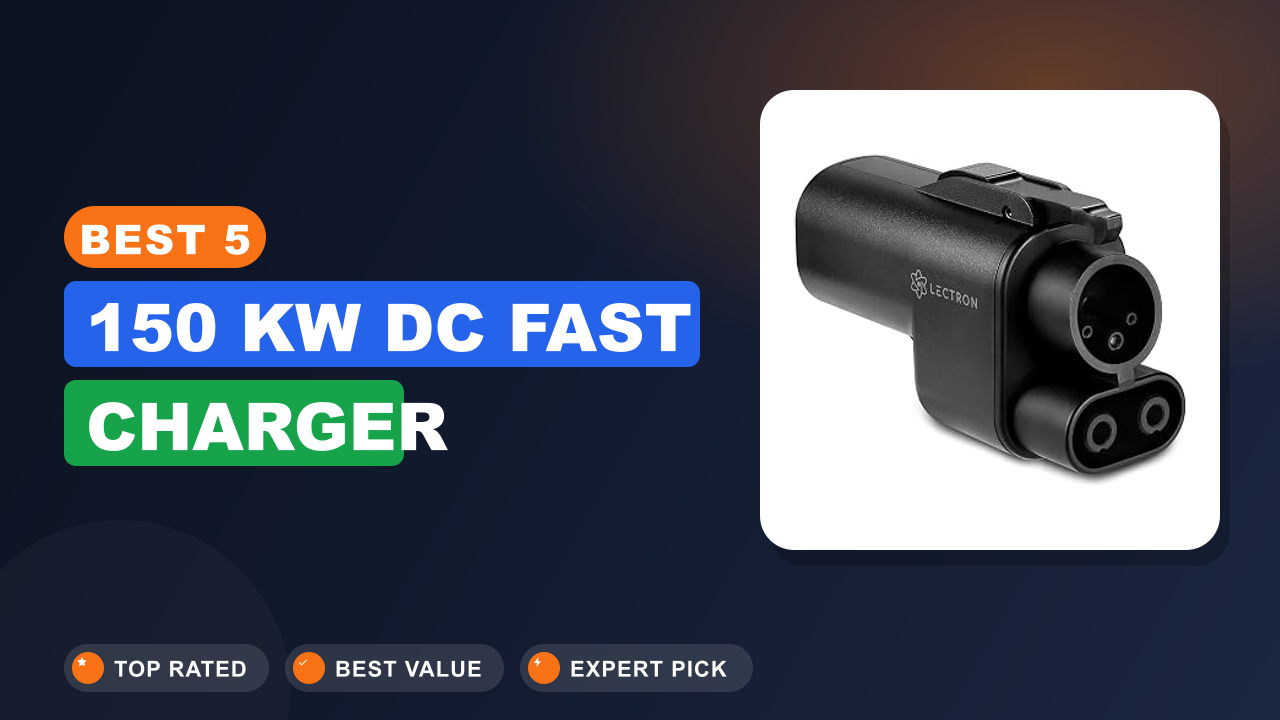
1. Lectron NACS CCS Electric Vehicle Adapter
This adapter is a connector bridge, not a wall charger, so it can negotiate the available power at compatible fast-charging sites. Its 1,000 V ceiling leaves room for NACS vehicles whose charging systems accept high-voltage direct current, while the built-in interlock adds a visible safety feature.
Why I picked it
Manufacturer specifications give this Lectron adapter a 1,000 V and 500 A rating, comfortably above the usual 400 V and 150 A operating combination at 60 kW. Its interlock and UL 2252 listing make it our strongest match when your CCS1 car needs access to NACS fast-charging equipment.
Key specs
- Adapter direction: NACS to CCS1, for a NACS-equipped charger and CCS1 car.
- Rated capacity: 500 A and 1,000 V.
- Safety: Built-in interlock and UL 2252 listing.
- Intended role: Access to compatible NACS fast-charging stations.
- Compatibility instruction: Check the car and charger manufacturers before use.
Real-world experience
Picture a road trip with a CCS1 Hyundai or Kia and a charging stop where only compatible NACS hardware is available. This adapter removes the connector mismatch, but the charger, adapter lock, car inlet, and software determine the negotiated current. The broader limits on high-power charging are explained in DC versus slower EV charging.
- 500 A and 1,000 V ratings accommodate high-current, high-voltage charging combinations.
- The interlock adds protection to the adapter’s connection arrangement.
- UL 2252 listing gives you a recognizable safety standard to check.
- It solves a real connector problem without replacing your car’s factory inlet.
- It supplies no power by itself, so you still need compatible charging equipment.
- It only works when the charger, car, and software support the connection.
- ✔ You own a CCS1 car and confirmed support for the destination NACS charger.
- ✔ You want a 1,000 V-capable accessory for road-trip flexibility.
- ✔ You understand that network approval and battery limits still apply.
- ✖ You need a charger that works independently of a charging site.
- ✖ You cannot confirm vehicle and network compatibility.
2. LENZ CCS1 NACS Adapter
Think of this LENZ unit as the inverse of the Lectron: a CCS1 car visits a CCS1 charger through a NACS inlet. The listed 500 V ceiling suits many common EV architectures, but a car that needs more than 500 V is outside the published specification.
Why I picked it
This adapter keeps the LENZ option attractive for NACS-equipped cars that need CCS1 charging access, especially when you already rely on that connector at home. The 4.3/5 reported rating trails the Lectron, while the missing published current rating leaves another detail to verify before buying.
Key specs
- Adapter direction: CCS1 charger to a NACS-equipped car.
- Voltage rating: 500 V.
- Safety listing: UL 2252.
- Intended function: DC fast-charging access for compatible NACS EVs.
- Published rating: 4.3/5 in the supplied inventory.
Real-world experience
Use this when a road-trip stop offers CCS1 and your car carries a NACS inlet. Unlike a NEMA 14-50-to-J1772 home cable, it does not turn a household outlet into a fast charger. The distinction between a connector adapter and an actual charger matters when you compare charger power and charging speed.
- UL 2252 listing provides a clear safety standard to compare.
- The 500 V rating covers many familiar EV charging architectures.
- It answers the reverse connector problem of the Lectron option.
- A portable bridge avoids modifying a vehicle’s original inlet.
- The 500 V ceiling is lower than the Lectron’s 1,000 V specification.
- No current rating appears in the supplied product data.
- You still need a compatible DC fast charger and car authorization.
- ✔ Your NACS car regularly encounters compatible CCS1 charging sites.
- ✔ Your vehicle’s charging system fits within the 500 V rating.
- ✔ You want a UL 2252-listed adapter for temporary connector changes.
- ✖ You need a self-powered charger for a home outlet.
- ✖ You require published details above 500 V.
3. MACH 3 Fast 40 Amp Level
This is where a search for 150 kW needs a reality check: a NEMA 14-50 outlet supplies at most 40 A at 240 V, so this portable EVSE cannot deliver 150 kW. Its advantage is flexibility, with Level 1 and Level 2 modes, SAE J1772 support, and a NACS mobile adapter for cars that need one.
Why I picked it
MACH 3 gives you a practical way to charge from either a 120 V household outlet or a 240 V NEMA 14-50. It ranks as our budget choice for renters and travelers, not because 40 A resembles 150 kW, but because it can replace two incompatible home-charging setups.
Key specs
- Maximum current: 40 A.
- Supply: 120 to 240 V with a NEMA 14-50 connection.
- Connector: SAE J1772, with a mobile NACS adapter included.
- Cable: 25 ft, with a cable holder.
- Use: Portable Level 1 and Level 2 EV charging.
- Reported rating: 4.4/5 in the supplied inventory.
Real-world experience
Imagine charging an overnight guest vehicle from an ordinary outlet, then using a 240 V dryer circuit at your rental for a faster top-up. The 5-15 adapter opens the first option, while the 25 ft cable gives you more reach around a driveway. More detail on connector needs appears in picking a charging cable.
- 120 to 240 V input gives you ordinary and higher-current outlet options.
- The included mobile NACS adapter broadens car compatibility.
- A 25 ft cable and holder make driveway placement easier.
- One portable unit can serve a home, rental, or road trip.
- At 40 A, it cannot provide 150 kW under any outlet arrangement.
- The included NACS cable is a mobile adapter, not a high-power DC adapter.
- Using a 240 V outlet still requires appropriate circuit and outlet protection.
- ✔ You need a portable unit for 120 V and 240 V outlets.
- ✔ You want SAE J1772 plus a mobile NACS connection option.
- ✔ A driveway-friendly 25 ft cable matters to you.
- ✖ You need rapid top-ups between highway destinations.
- ✖ You want one permanently installed charging solution.
4. Autel MaxiCharger Level 2 Electric Vehicle
Autel shifts the focus from portability to a permanently installed home circuit. The stated “up to 80 Amp” capability is a maximum charging setting, not a promise that every car, outlet, or installed circuit can handle it, and a hardwired arrangement keeps the setup focused on a dedicated EV home.
Why I picked it
The 80 A maximum gives this Autel model more overnight headroom than a 40 A portable EVSE, especially for larger batteries. Cloud integration and AI-assisted energy management make it attractive for owners who want oversight, although a permanent electrical installation raises the commitment compared with plugging into an existing outlet.
Key specs
- Charging level: Level 2 AC home charging.
- Maximum current: Up to 80 A, subject to installation and vehicle limits.
- Connector: J1772.
- Installation: Hardwired.
- Connected features: Integrated cloud with AI-assisted management.
- Placement: Suitable for indoor or outdoor charging stations.
Real-world experience
For an owner who leaves every evening, a permanently wired charger removes the need to bring a portable box outside each morning. An 80 A setup can suit a long-range EV, but the household circuit, charger settings, and vehicle intake still need to agree on the same current. The differences in daily energy use are covered in normal and accelerated charging.
- An 80 A maximum offers useful headroom for long-range EV home charging.
- Integrated cloud features help you monitor and manage charging sessions.
- A hardwired setup suits a dedicated parking space.
- Indoor and outdoor placement gives you a flexible site choice.
- Hardwiring means you cannot simply move it to a new outlet.
- The published maximum does not guarantee a faster full charge in every EV.
- The J1772 connector may need a separate NACS solution on a NACS car.
- ✔ You have a permanent parking space and can arrange an electrical circuit.
- ✔ You want up to 80 A and cloud-based session oversight.
- ✔ Your car accepts J1772 or you already have the right cable.
- ✖ You want a charger you can unpack and carry to another property.
- ✖ Your car is NACS-equipped and you do not have another connector solution.
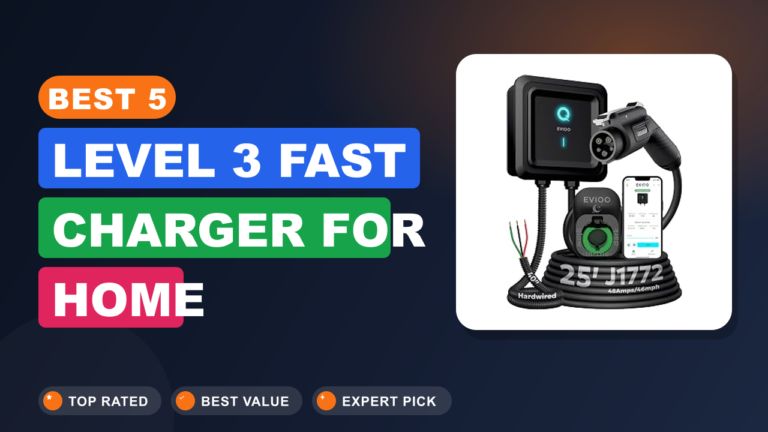
5. Level 2 Fast EV Charger 50Amp
A 50 A Level 2 charger sits closer to the 40 A option than to high-power DC, yet it gives a home circuit more breathing room. This 50Amp model pairs a 240 V NEMA 14-50P connection with a 25 ft J1772 cable, prioritizing a straightforward dedicated home setup over portability or network software.
Why I picked it
The 50 A specification makes this our strongest everyday home option on paper, with room for many vehicles without moving to Autel’s 80 A installation. It is a focused 240 V J1772 solution, so you gain a higher current setting but give up the portable dual-voltage design and a listed cloud feature.
Key specs
- Charging type: Level 2 AC EV charging.
- Maximum current: 50 A.
- Voltage: 240 V.
- Outlet connection: NEMA 14-50P.
- Cable: 25 ft with a J1772 connector.
- Reported rating: 4.8/5 in the supplied inventory.
Real-world experience
Consider a two-car household that mainly charges overnight and has no need to carry an EVSE to another address. A 25 ft cable can reach across a normal garage bay, but the 50 A circuit still has to be ready for the load. You can compare typical power levels using amp ratings across charging setups.
Why I picked it
I rank this fifth for road trips, but first among these picks for a straightforward 240 V home installation. Its 50 A maximum gives you more electrical headroom than a 40 A portable unit, without relying on the cloud features or hardwired installation associated with the Autel.
Key specs
- Charging type: Level 2 alternating current.
- Maximum current: 50 A.
- Voltage: 240 V.
- Outlet connection: NEMA 14-50P.
- Cable: 25 ft with a J1772 connector.
- Reported rating: 4.8/5 in the supplied inventory.
Real-world experience
For an overnight home setup, 240 V multiplied by 50 A gives an ideal maximum of 12.0 kW before losses. That is enough to replenish everyday driving in many households, but it doesn’t recreate a highway charging stop. Battery temperature and state of charge can also reduce the current a car accepts during a session.
- 50 A at 240 V provides a 12.0 kW ideal ceiling, which exceeds the 9.6 kW ceiling of a 40 A unit on the same voltage.
- The 25 ft cable gives useful reach around a typical parking space.
- A dedicated NEMA 14-50 arrangement avoids carrying a portable EVSE between locations.
- The 4.8/5 reported rating is the strongest among the supplied options.
- The product listing doesn’t identify a safety certification, so you should verify that information before installation.
- A NACS-equipped car needs a compatible connector solution for the J1772 cable.
- 50 A operation requires suitable electrical infrastructure, not merely a matching-shaped outlet.
- ✔ You want a fixed 240 V home setup with a 12.0 kW ideal ceiling.
- ✔ A 25 ft J1772 cable fits your parking space and vehicle.
- ✔ You prioritize straightforward overnight charging over cloud management.
- ✖ You need quick replenishment during long road trips.
- ✖ You want to move the charger easily or charge from a 120 V outlet.
How I picked
I built this comparison around whether each product fits a real charging situation, not whether its title contains an impressive number. I compared manufacturer specifications, supplied customer ratings, connector arrangements, current limits, installation methods, and the practical use each product is designed to support.
- Connector fit: I checked the direction of each adapter and whether the vehicle uses J1772 or North American Charging Standard (NACS).
- Electrical limits: I compared current and voltage, keeping the power distinction clear. A connector adapter doesn’t generate electricity, and a 240 V home charger operates on a very different scale from high-power DC infrastructure.
- Safety information: I included the supplied UL 2252 listing claims without treating them as a guarantee of vehicle compatibility or 150 kW performance.
- Ownership demands: I considered cable reach, portability, cloud features, and whether installation requires an electrician.
This is a specification-led editorial analysis, not a laboratory test report. I didn’t connect vehicles, measure charging curves, inspect internal components, or test long-term durability, so none of these products has earned a durability claim from personal use.
The value scores reflect the available specifications, reported ratings, and intended use. They’re useful for organizing tradeoffs, not predicting exact charging times. Incomplete information is also a purchasing consideration: the LENZ listing gives a 500 V rating without a current rating, and the 50Amp listing doesn’t identify a safety certification.
Buying guide: what actually matters for 150 kw dc fast charger
Do you need DC fast charging or Level 2?
A 150 kW DC fast charger is a high-power vehicle supply unit that uses direct current to add substantial road-trip range faster than ordinary household AC charging. Level 2 chargers are useful when you can leave a vehicle charging overnight, whereas DC fast charging is much more relevant when you need substantial range between longer journeys.
That doesn’t mean 150 kW is automatically better. It requires compatible high-power equipment, a supported vehicle, and an available station. A vehicle’s Battery Charging System also adjusts accepted power as battery conditions change, so a headline number doesn’t describe the whole session.
The charging process matters more than a large number on a product name.
Can a NEMA 14-50 outlet deliver 150 kW?
No. NEMA 14-50 is an outlet configuration, not a guarantee that a circuit can continuously supply 40 A or 50 A. At 240 V, 40 A gives an ideal maximum of 9.6 kW, while 50 A gives 12.0 kW before losses.
Even the Autel’s 80 A maximum at 240 V represents an ideal 19.2 kW, not 150 kW. You can’t raise a Level 2 charger into the DC fast-charging range by using a larger adapter. Check the outlet, circuit protection, charger, and vehicle together, and ask a qualified electrician when you’re unsure about electrical capacity.
Which connector does your EV need?
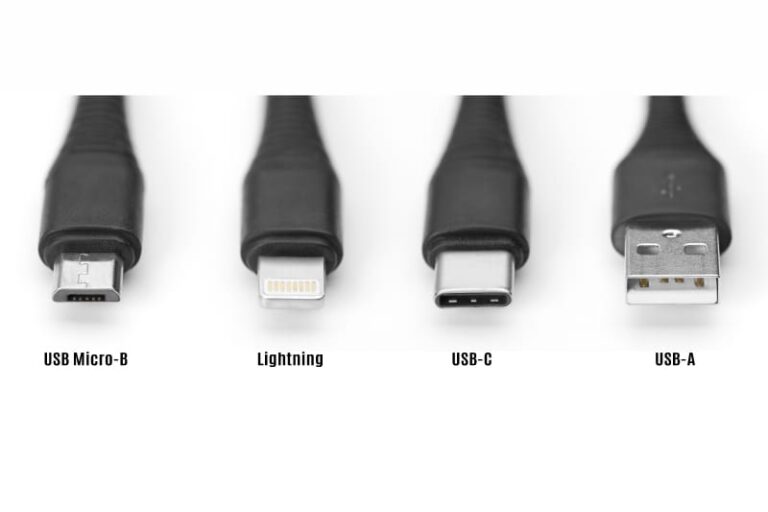
The Society of Automotive Engineers (SAE) J1772 connector is a physical charging interface, not a promise about charging speed. You’ll also see the term Combined Charging System (CCS), commonly called CCS1 when referring to the North American passenger EV connector arrangement.
The matching connector isn’t always straightforward. A CCS1 vehicle using a NACS charging plug needs a suitable adapter, while a NACS vehicle using a CCS1 charging plug needs the opposite arrangement. Check the car and charging provider’s compatibility guidance before buying; an adapter’s physical fit alone doesn’t guarantee communication or authorization.
How much home wiring does 80 A or 50 A need?
An 80 A home charger offers more current headroom than a 50 A charger, but it also requires an appropriately designed electrical installation. The Autel is hardwired, while the 50Amp model uses a NEMA 14-50P connection. Neither product’s maximum current setting tells you the correct breaker size or wire gauge for your property.
Your electrician should assess the load, grounding, protection, and local requirements under the National Electrical Code (NEC) published by the National Fire Protection Association (NFPA). A matching-shaped outlet doesn’t prove that an existing circuit is suitable. If the circuit can’t support the selected current, the answer is to adjust the charging setup, not force the charger to operate beyond its limits.
Is cloud software worth the hardwired installation?
Cloud software is worth considering if you want connected oversight, but it isn’t a reason to choose a charger that’s electrically unsuitable. The Autel listing highlights an integrated cloud with AI, which may appeal to owners who want charging information in one place. Confirm what the connected features actually do and whether any service requires a subscription before buying.
There’s a simpler trade-off. If you mostly charge in one garage and don’t care about remote monitoring, the 50Amp model’s straightforward 240 V arrangement may be more useful. If you regularly move or rent, MACH 3’s 120 V to 240 V flexibility is more valuable than a cloud dashboard.
Prioritize the connection and circuit you can actually use.
Is 150 kW worth chasing for everyday driving?
Usually, you don’t need 150 kW for ordinary daily driving when reliable overnight charging is available. A 12.0 kW Level 2 setup can replenish many commutes while you sleep, though driving patterns and available charging time still matter. The main advantage of high-power DC charging is fewer, longer stops during journeys where waiting becomes inconvenient.
Don’t assume you’ll see 150 kW for the entire stop. Higher power usually appears within a narrower operating window, especially as the battery approaches full charge. If convenience matters more than overnight parking, compare higher power and charging speed with the route, charging availability, and your vehicle’s accepted power.
Frequently Asked Questions (FAQ)
Can I get 150 kW from a NEMA 14-50 outlet?
No. A NEMA 14-50 outlet supplies 240 V AC, not high-power DC. A 40 A charging setup has an ideal maximum of 9.6 kW, and a 50 A setup reaches 12.0 kW before losses.
None of the Level 2 products in this list approaches 150 kW.
The two fast-charging adapters don’t change that equation. They connect different vehicle and station interfaces, but the charging station supplies the power and the vehicle decides what it can accept. Check the installed circuit as well as the outlet and charger rating.
Do I need an adapter for a NACS or CCS1 car?
You need an adapter when your vehicle’s inlet doesn’t physically match the charging connector. The Lectron serves a CCS1 car connecting to a NACS-equipped charger, while the LENZ covers a NACS car connecting to a CCS1 charger. Their directions are not interchangeable.
Before buying, confirm that the vehicle manufacturer supports the intended adapter, the charging operator permits its use, and the car’s software recognizes the connection. A connector that physically fits still needs compatible communication and authorization.
Is an 80 A or 50 A home charger better?
An 80 A charger is better when your vehicle accepts that current and your electrical installation can support it. At 240 V, the Autel’s ideal ceiling is 19.2 kW, compared with 12.0 kW for the 50Amp model. That extra headroom can suit larger vehicles, but it isn’t an automatic guarantee of shorter charging times.
A 50 A setup may be plenty for a smaller EV or a modest driving routine. Have a qualified electrician assess the circuit before either installation, and check the vehicle’s maximum supported charging current.
What safety information should I check before buying?
Check the manufacturer’s certification claims, applicable safety standards, electrical requirements, and written compatibility guidance. The Lectron and LENZ both carry UL 2252 listing claims in the supplied product information, which gives you a concrete standard to investigate.
A listing isn’t a blanket promise of 150 kW performance or universal vehicle compatibility. It also doesn’t tell you the warranty duration. Confirm that directly with the manufacturer, particularly for the generic 50Amp model, whose listing doesn’t identify a safety certification.
Final verdict
The Lectron NACS CCS Electric Vehicle Adapter is the strongest fit here for a CCS1 car with confirmed access to compatible NACS DC fast chargers. For home charging, the Level 2 Fast EV Charger 50Amp offers the simplest higher-current setup, while the MACH 3 serves renters and travelers better. None of the home units can deliver 150 kW.
Affiliate disclosure: This post contains affiliate links. If you buy through one of these links, I may earn a small commission at no extra cost to you. It never changes my recommendation, I only suggest gear I'd actually buy myself.