20000 Mah Power Bank Last How Long: 2026 Complete Guide
A 20,000mAh power bank typically lasts 3 to 7 days on a single charge for moderate users, and can recharge a smartphone 4 to 6 times before needing to be plugged in again.
If you've ever stared at that little LED indicator on your power bank, wondering if it'll survive your weekend trip or that long flight, you're not alone. I've been there too, frantically charging my phone at the airport gate, silently praying my power bank has enough juice left. Over the years, I've tested dozens of portable chargers, and I can tell you this: a 20,000mAh power bank is one of the sweet spots in portable charging, big enough to be useful, yet still pocket-friendly for most situations. In this guide, I'll break down exactly how long a 20,000mAh power bank really lasts, what affects its runtime, and how you can squeeze every drop of power out of it.
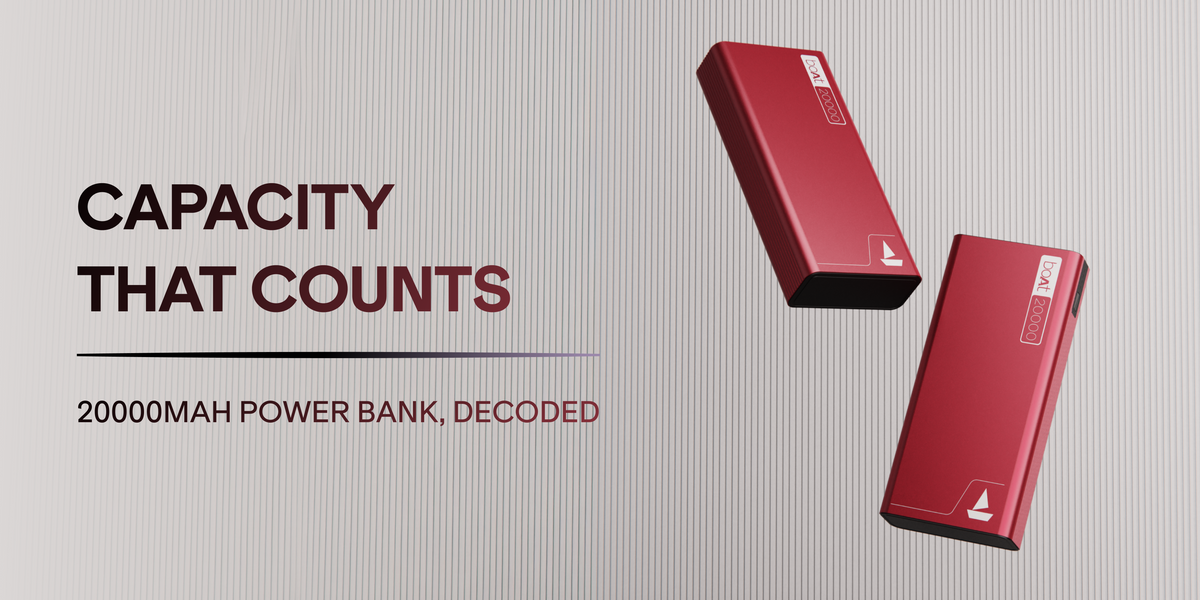
What Does 20,000mAh Actually Mean for You?
Let's start with the basics because the term "mAh" gets thrown around a lot, and honestly, it's a bit misleading if you don't know what to look for.
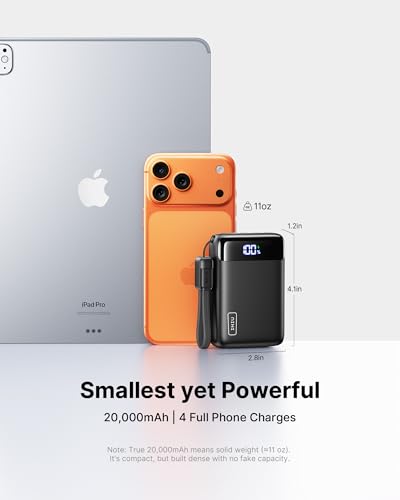
mAh stands for milliampere-hour, and it tells you how much charge a battery can hold. A 20,000mAh power bank technically holds 20,000 milliamp-hours of energy. Sounds impressive, right? But here's the catch that most people don't realize: power banks lose some energy during the conversion process. The industry-standard efficiency is around 60% to 70% for most quality power banks. So that fancy 20,000mAh rating? You're realistically going to get about 12,000 to 14,000mAh of usable charge.
Think of it like filling a glass of water from a pitcher. Some water always spills along the way. The same thing happens with electricity, and that's why a 20,000mAh power bank doesn't deliver 20,000mAh to your phone.
I learned this the hard way on a camping trip when I assumed my power bank would charge my phone seven full times. Spoiler alert: it didn't. It gave me about four and a half charges, and I was lucky to have a power bank with good efficiency.
How Many Times Can a 20,000mAh Power Bank Charge Your Phone?
This is probably the question you really want answered, so let's get into it. The number of charges depends heavily on your phone's battery size, which has grown quite a bit over the years.
Here are some real-world examples I've gathered from testing and using various devices:
- iPhone 15 (3,349mAh battery): You can expect around 4 to 5 full charges.
- iPhone 15 Pro Max (4,422mAh battery): Roughly 3 to 4 full charges.
- Samsung Galaxy S24 (4,000mAh battery): About 3 to 4 full charges.
- Google Pixel 8 (4,575mAh battery): Around 3 full charges.
- iPad Mini (5,124mAh battery): Close to 2 full charges.
- Nintendo Switch (4,310mAh battery): About 2 to 3 full charges.
The math is pretty simple when you break it down. Take the usable capacity (let's say 14,000mAh after efficiency loss) and divide it by your device's battery size. That gives you a rough estimate of how many full charges you'll get.
But here's something most people overlook: partial charges add up too. You don't always need a full 0% to 100% cycle. Sometimes you just need a quick top-up to get through the afternoon, and those small charges can extend the total number of times you can use your power bank.
What Factors Affect How Long a 20,000mAh Power Bank Lasts?
Not all 20,000mAh power banks are created equal, and several factors can make a huge difference in real-world performance. Let me walk you through the biggest ones based on my own testing experience.
Battery Quality and Cell Type
The internal cells of a power bank are the heart of the device. Premium power banks use lithium-polymer cells, which are more efficient and have lower self-discharge rates than cheaper lithium-ion alternatives. I've noticed that budget power banks tend to lose their charge faster even when sitting idle in my bag. A good lithium-polymer cell can retain about 80% to 90% of its charge after a month of no use, while cheaper cells might drop to 60% or lower.
Conversion Efficiency
This is the silent killer of power bank performance. When energy moves from the power bank to your phone, some of it gets lost as heat. Quality power banks from brands like Anker, RAVPower, and Aukey typically achieve 90% to 95% conversion efficiency, meaning less wasted energy. Generic power banks might only hit 60% to 70% efficiency, and you can really feel the difference.
Your Device's Charging Speed
Fast charging is amazing when your phone supports it, but it puts more strain on the power bank. If your device supports 18W or 20W fast charging, your power bank will drain faster than if you're using a standard 5W charge. I've tested this myself, and the difference is noticeable. A power bank might last a full week with slow charging but only 4 to 5 days with fast charging.
Temperature and Environmental Conditions
Batteries hate extreme temperatures, and this is something I learned the hard way during a summer road trip. Leaving my power bank in a hot car drained it significantly faster than normal. Cold weather isn't great either. Lithium batteries lose efficiency in freezing conditions. The sweet spot is room temperature, somewhere between 68°F and 77°F (20°C to 25°C).
Age and Battery Health
Just like your phone's battery degrades over time, so does your power bank's. A well-maintained power bank can last 2 to 3 years with regular use before you start seeing noticeable capacity loss. If you've had yours for a while and it doesn't seem to last as long, this is probably why.
How Long Will a 20,000mAh Power Bank Hold Its Charge When Not in Use?
This is a great question that often gets overlooked. You charge your power bank, throw it in your bag, and then forget about it for a few weeks. When you finally reach for it, how much charge is left?
A high-quality 20,000mAh power bank will typically retain about 80% to 90% of its charge after one month of inactivity. After three months, you might be looking at 60% to 75%. After six months, it could drop to 40% or lower, depending on the quality of the cells.
I keep a small habit of topping off my power bank once a month, especially before trips. It takes about 30 minutes to an hour to top it up, and it saves me from that panic moment when my phone dies at the worst possible time.
Practical Tips to Maximize Your 20,000mAh Power Bank's Lifespan
Over the years, I've developed a few habits that have helped me get the most out of my power banks. These are simple, practical tips that anyone can follow.
First, avoid letting your power bank drop to 0% before recharging. Lithium batteries don't like being fully depleted, and it can shorten their overall lifespan. Try to recharge when it hits around 20% to 30%.
Second, don't leave it plugged in overnight once it's fully charged. Modern power banks have overcharge protection, but it's still better to unplug once the LED indicator shows full.
Third, store it in a cool, dry place. Heat is the enemy of battery health, and direct sunlight can damage the cells over time.
Fourth, use the right cable. A high-quality cable with proper gauge wiring can make a noticeable difference in charging speed and efficiency. I learned this after using a cheap cable that took twice as long to charge my phone.
Fifth, keep the charging ports clean. Dust and debris can interfere with the connection, leading to slower charging and more energy loss as heat.
Common Mistakes People Make With 20,000mAh Power Banks
Let me share some mistakes I've made (and seen others make) that can ruin your power bank experience.
One of the biggest mistakes is buying the cheapest option available. I get it, budget matters, but a $10 power bank that claims 20,000mAh is almost certainly lying about its capacity. Real capacity might be closer to 8,000mAh or even less. Invest in a reputable brand, and you'll save money in the long run.
Another common mistake is using your power bank while it's charging. This creates heat and puts extra stress on the cells. If you need to charge your phone and your power bank at the same time, it's better to charge the power bank first and then use it.
Some people also forget to check the output amperage. If your phone supports 2.4A charging but your power bank only outputs 1A, you're going to have a bad time. Always check the specs before buying.
Is a 20,000mAh Power Bank Worth It for Travel?
Absolutely, yes. A 20,000mAh power bank hits that perfect balance between capacity and portability. It's enough to keep your phone, tablet, and maybe even your wireless earbuds charged for a weekend trip, but it's not so big that it weighs you down.
Most 20,000mAh power banks weigh between 12 and 16 ounces (around 350 to 450 grams), which is roughly the weight of a small water bottle. They fit easily in a backpack, purse, or even a large jacket pocket.
For international travel, just make sure your power bank is under 100Wh (watt-hours), which is the FAA and most airlines' limit for carry-on batteries. A 20,000mAh power bank at 3.7V equals 74Wh, so you're well within the safe range for flights.
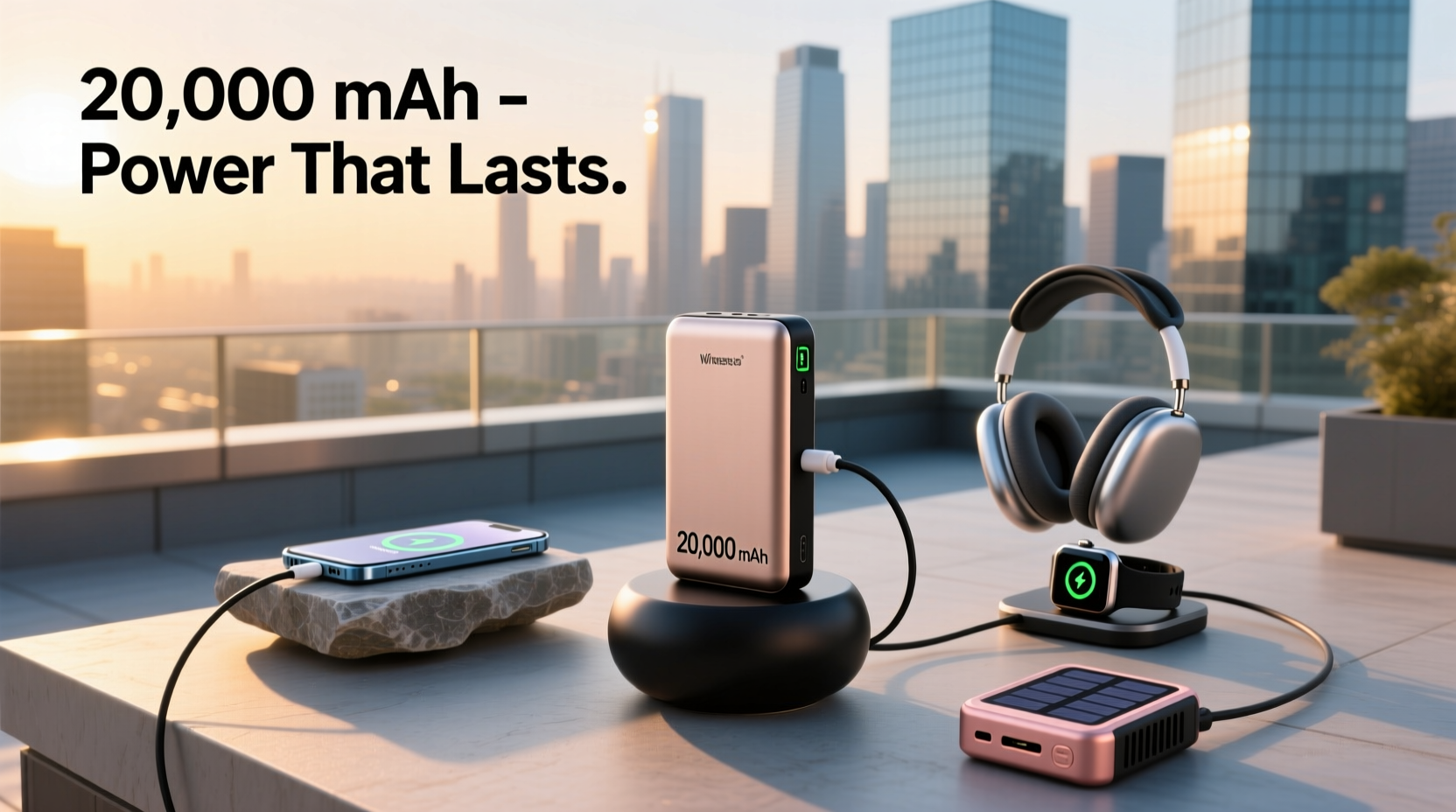
How Long Does It Take to Fully Recharge a 20,000mAh Power Bank?
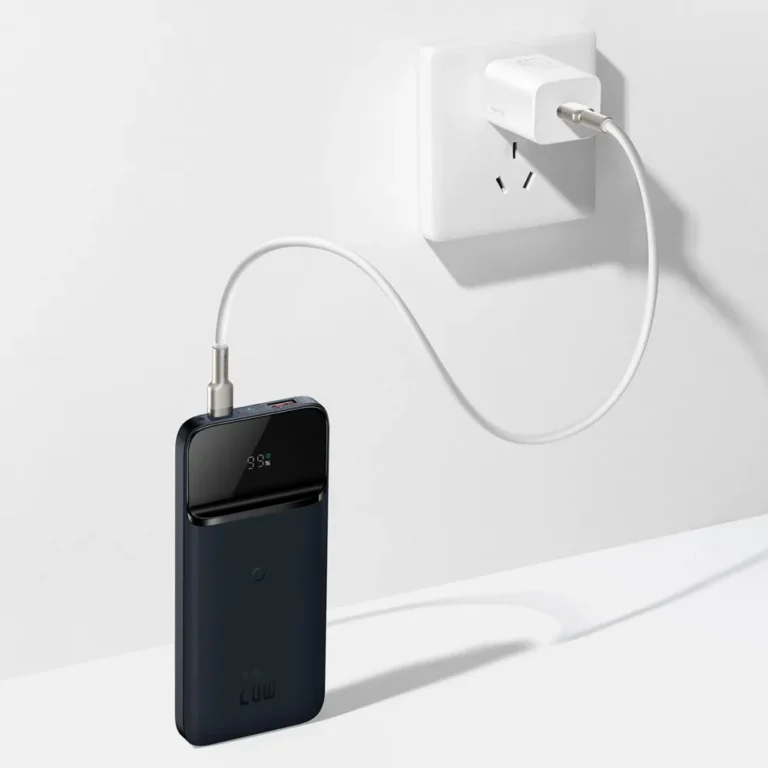
Recharging time depends on the input charging speed and the charger you use. A standard 5W charger (5V/1A) will take around 10 to 12 hours to fully recharge a depleted 20,000mAh power bank. That feels like forever, I know.
A faster 18W charger can cut that time down to about 6 to 8 hours. And if your power bank supports USB-C Power Delivery (PD) input at 30W or higher, you might be looking at just 4 to 5 hours for a full recharge.
I always recommend investing in a good wall charger, especially if you travel frequently. The time savings add up quickly, and you'll thank yourself during those early morning airport rushes.
Comparing 20,000mAh Power Banks: What Specs Matter Most?
When shopping for a 20,000mAh power bank, here are the key specs to pay attention to:
- Capacity: Look for actual rated capacity, not just advertised numbers. Reputable brands list both.
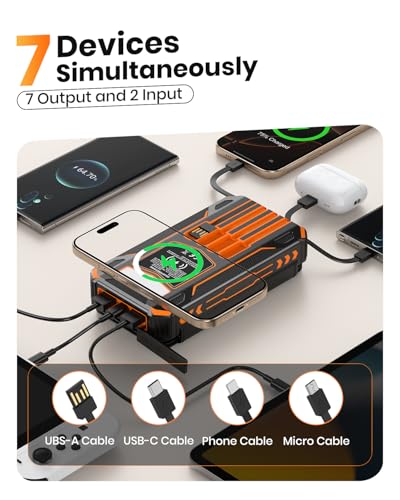
- Output ports: Multiple USB-A and USB-C ports let you charge multiple devices at once.
- Fast charging support: Look for Power Delivery (PD) or Quick Charge (QC) compatibility.
- Weight and size: Check the dimensions to make sure it fits your bag or pocket.
- Build quality: Aluminum or high-quality plastic bodies last longer than cheap alternatives.
- Safety features: Overcharge, overcurrent, and short circuit protection are essential.
Real-World Scenarios: How Long Will Your Power Bank Last?
Let me paint a few pictures based on different usage patterns.
For a light user who just needs a top-up here and there, maybe 20% to 30% extra charge on their phone during the day, a 20,000mAh power bank can easily last a full week or even longer.
For a moderate user who charges their phone once a day from about 20% to full, expect 3 to 5 days of use before needing to recharge the power bank.
For a heavy user who constantly uses their phone for navigation, streaming, and gaming, and needs multiple charges throughout the day, you're looking at 1 to 2 days before the power bank needs a refill.
I fall somewhere in the moderate to heavy category, and I typically recharge my power bank every 4 to 5 days. That includes charging my phone, my wireless earbuds, and occasionally my Kindle.
Battery Safety Tips You Should Know
I want to touch on this because safety matters, and there have been some scary news stories about power banks catching fire.
First, never use a power bank that shows signs of physical damage, like bulging, leaking, or strange smells. These are warning signs of a failing battery.
Second, avoid leaving your power bank in direct sunlight or in a hot car. Lithium batteries can experience thermal runaway at high temperatures, which is not something you want to mess with.
Third, don't charge your power bank on flammable surfaces like beds, couches, or under pillows. Always charge on a hard, flat surface.
Fourth, if your power bank gets unusually hot during use or charging, unplug it immediately and let it cool down. Some warmth is normal, but excessive heat is not.
How to Tell When It's Time to Replace Your Power Bank
Power banks don't last forever, and there are some telltale signs that it's time for a replacement.
If you notice that your power bank is swelling, has a strange smell, or is getting excessively hot, replace it immediately. These are safety hazards, not just performance issues.
If your power bank used to charge your phone 5 times but now only manages 2, it's probably time for an upgrade. Battery degradation is normal, but once capacity drops below 60% to 70% of the original rating, you'll want to start shopping for a new one.
If the charging ports are loose or damaged, that's also a sign. Poor connections can lead to arcing and other safety issues.
Frequently Asked Questions
How long does a 20,000mAh power bank last on a single charge?
A 20,000mAh power bank typically lasts 3 to 7 days for moderate users. The exact duration depends on your device's battery size, how often you charge, and the power bank's efficiency. Heavy users might need to recharge the power bank every 1 to 2 days, while light users can stretch it to a full week or more.
Can a 20,000mAh power bank charge a laptop?
Some 20,000mAh power banks with USB-C Power Delivery (PD) at 45W or 60W can charge compatible laptops like the MacBook Air or Dell XPS. However, they won't fully charge most laptops, and they'll drain much faster than when charging a phone. Expect maybe 30% to 50% charge on a typical laptop.
How many phone charges is 20,000mAh equivalent to?
A 20,000mAh power bank can charge most smartphones 4 to 6 times, depending on the phone's battery capacity. For example, an iPhone 15 with a 3,349mAh battery can be charged about 4 to 5 times, while a Samsung Galaxy S24 with a 4,000mAh battery will get around 3 to 4 full charges.
Is 20,000mAh enough for a weekend trip?
Yes, 20,000mAh is more than enough for a weekend trip for most people. It can charge a smartphone 4 to 6 times, which easily covers 2 to 3 days of moderate use. If you're also charging a tablet, smartwatch, or wireless earbuds, you'll still have plenty of power left over.
How do I know if my power bank is still good?
Check the actual capacity by timing how long it takes to charge your devices. If it's significantly less than when you first bought it, the battery is degrading. Also, watch for physical signs like swelling, unusual heat, or strange smells, which indicate it's time to replace the power bank.
Can I take a 20,000mAh power bank on a plane?
Yes, you can bring a 20,000mAh power bank in your carry-on luggage on flights. The FAA and most airlines allow batteries up to 100Wh, and a 20,000mAh power bank at 3.7V equals 74Wh, which is well within the limit. Just make sure it's in your carry-on, not checked luggage.
Wrapping It All Up
A 20,000mAh power bank is a fantastic companion for anyone who relies on their devices throughout the day. With realistic expectations, you can expect 3 to 7 days of use for moderate charging needs, 4 to 6 full smartphone charges, and reliable performance for weekend trips or long commutes.
The key to maximizing your power bank's lifespan comes down to three things: choosing a quality product from a reputable brand, taking care of the battery by avoiding extreme temperatures and deep discharges, and understanding that the advertised capacity is not the same as the usable capacity.
After years of testing different power banks, I've learned that investing a little more upfront pays off in the long run. A good 20,000mAh power bank will serve you well for 2 to 3 years, maybe even longer with proper care. So go ahead, pick one that fits your needs, and never worry about a dead phone battery again. If you have any questions or want to share your own power bank experiences, drop a comment below. I'd love to hear from you!