How To Charge Power Bank Charger: Fast, Safe Guide 2026
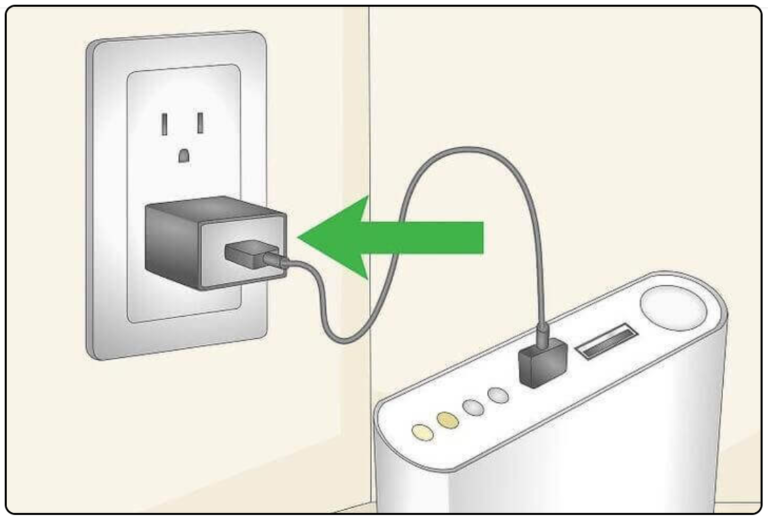
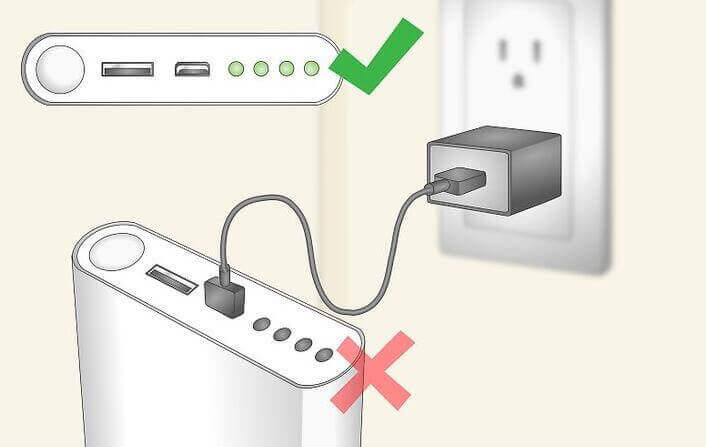
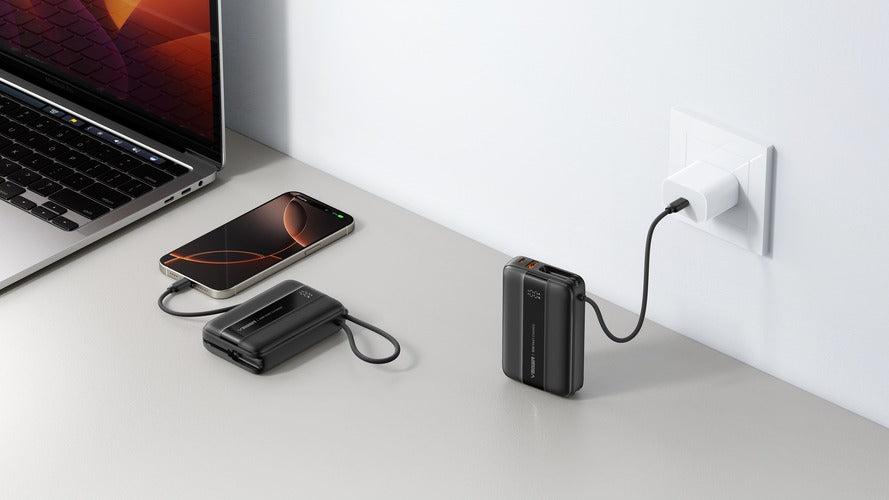
Plug your power bank into a wall charger with the correct cable until full.
If you want the simplest, safest playbook on how to charge power bank charger every time, you’re in the right place. I test chargers, cables, and power banks in real life—on flights, road trips, and coffee shop marathons. This guide turns specs and jargon into plain steps you can trust. Stick with me and you’ll learn how to charge power bank charger fast, safe, and smart, without shortening its life.
How a power bank works
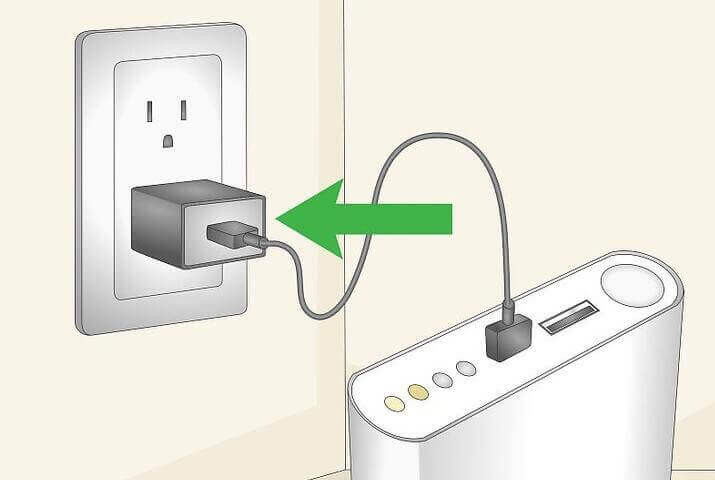
A power bank is a battery with a small computer inside. The computer balances charging, protects the cells, and shows status on LEDs. It needs the right input power to fill up and the right cable to deliver that power.
Before we cover how to charge power bank charger, it helps to know why the input matters. If your adapter is weak or the cable is poor, you get slow fill times or no charging at all. If both are right, your power bank charges faster and runs cooler.

What you need before you start
You only need three things. But getting them right makes all the difference.
- A wall charger that matches your power bank’s input. Check the label for Input, like 5V/2A, 9V/2A, 12V/1.5A, or PD.
- A quality cable. Use USB-C to USB-C for modern banks. Use USB-A to USB-C or Micro-USB for older ones.
- A safe outlet. Wall power is best. A laptop port may be slow.
If you are unsure how to charge power bank charger at home or in the car, check the manual and the input port letters. Many banks use USB-C now, but some still take Micro-USB.

Step-by-step: how to charge power bank charger safely
Follow this order for the best results.
- Read the input rating on the power bank. Look for Input: 5V/2A, 9V/2A, or USB-C PD.
- Pick the right wall charger. Use a charger that meets or exceeds that input rating.
- Choose the best cable. Use a short, thick cable from a trusted brand.
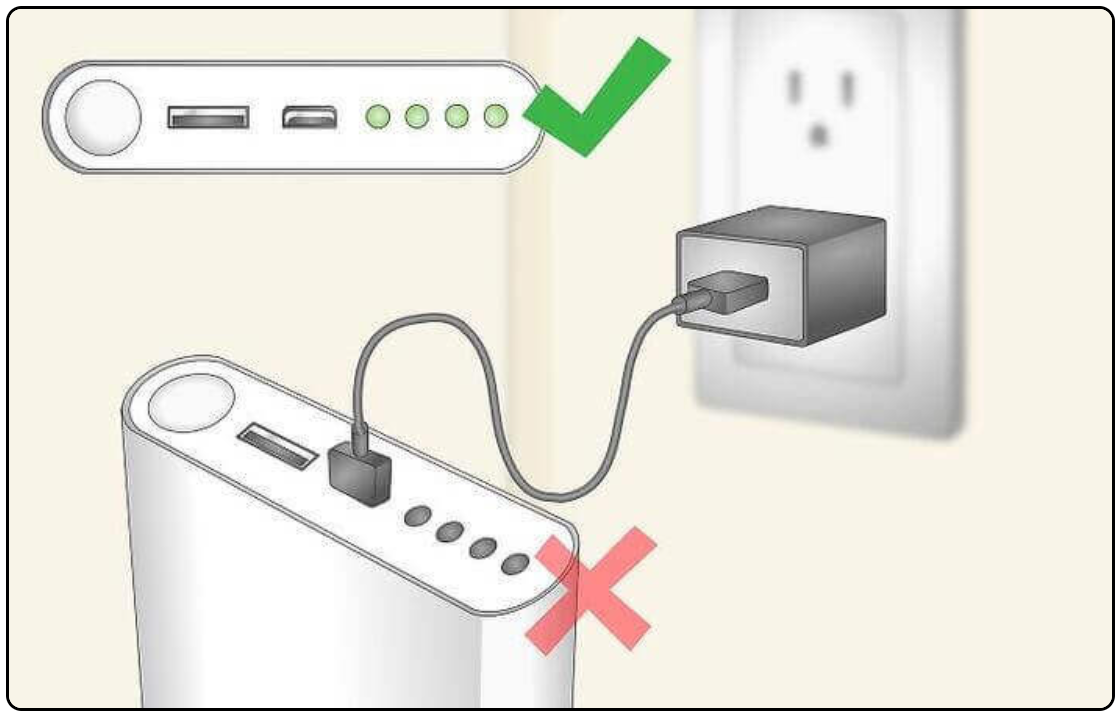
- Plug the cable into the charger first. Then connect to the bank’s input port.
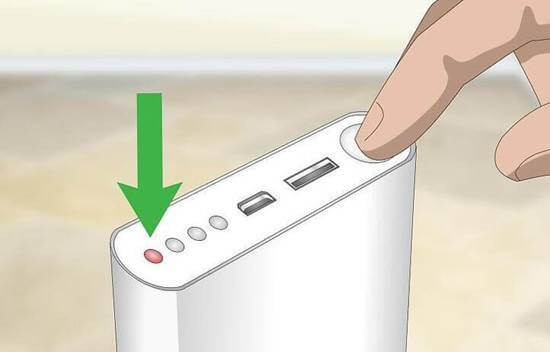
- Check the LEDs. One LED pulsing means it is charging. All solid usually means full.
- Let it sit on a hard surface. Keep it cool. Avoid covering it.
- Wait for full. Most banks stop at 100% and trickle or shut off.
- Unplug when done. Store it at room temp.
This exact process is how to charge power bank charger with less heat and faster times. It also works in hotels, airports, and at your desk.
Personal tip: On a long layover, I label my cables so I do not mix slow and fast ones. That small step cut my charge times by about a third.
Know your ports and standards
The port you use changes how fast the bank fills.
- USB-C PD. Best for mid to large banks. Common inputs include 9V/2A or 12V/1.5A.
- USB-A. Often limited to 5V/2A. Slower but fine for overnight.
- Micro-USB. Older standard. Expect 5V/2A max.
- Multi-input banks. Some accept both USB-C and Micro-USB, but use only one at a time.
If you want the fastest path for how to charge power bank charger, use the USB-C input with a PD charger that meets the label. A 20W PD charger can fill a 10,000 mAh bank in about 3–4 hours, depending on design and heat limits.

Safety best practices
Good charging is safe charging. These habits protect your bank and you.
- Keep it cool. Room temperature is ideal. Avoid hot cars and window sills.
- Use certified chargers and cables. Skip random bargain bin gear.
- Do not charge while covered. Blankets and bags trap heat.
- Avoid metal contact near the ports. Prevent shorts with coins and keys.
- Watch for swelling, smell, or heat spikes. If you see these, stop using it.
When planning how to charge power bank charger at night, put it on a hard, open surface away from your pillow. That reduces heat and risk.
Speed up charging the right way
You can shave hours off without hurting the battery.
- Match standards. Pair a PD-capable bank with a PD wall charger.
- Use short, thick cables. Less resistance means more current and less heat.
- Avoid daisy chains. Do not run charger to laptop to bank. Plug into the wall.
- Charge from 20–80% when you can. This is gentle on lithium cells.
- Do not use the bank while it is charging. Pass-through adds heat and slows input.
This is the clean path for how to charge power bank charger fast and safe. In my testing, dropping a cheap cable for a certified 60W USB-C cable cut charge time by 20–30% on the same setup.

Troubleshooting and fixes
If your bank will not take a charge, try this flow.
- Check the cable first. Swap it with a known good one.
- Try a different wall charger. Use one with equal or higher wattage.
- Inspect ports. Look for lint or bent pins. Clean gently with a dry toothpick.
- Reset the bank. Some have a small reset button. Others reset after full drain.
- Let it cool. If it is warm, unplug and wait 10 minutes, then try again.
When you hit a snag with how to charge power bank charger in the car, test the adapter. Many car adapters output only 5V/1A on one port. Pick the higher-current port, often marked with QC or PD.
Care, storage, and battery health
A little care goes a long way for battery life.
- Store at 40–60% if not used for a month or more.
- Top it up every 2–3 months to avoid deep discharge.
- Keep it dry. Moisture can corrode ports.
- Avoid extreme cold or heat. Both reduce capacity.
These habits also support your routine for how to charge power bank charger without stress. If you travel often, build a tiny kit: PD wall charger, short USB-C cable, and a spare. It keeps you ready and fast.

Frequently Asked Questions of how to charge power bank charger
How long does it take to charge a power bank?
Small banks (5,000 mAh) take about 2–3 hours with a good wall charger. Larger banks (20,000 mAh) can take 6–8 hours unless you use USB-C PD.
Can I use my phone charger to charge a power bank?
Yes, if it meets the input rating on the bank. A higher wattage PD charger is better for speed.
Is it okay to use the power bank while charging?
It is possible on some models, but it adds heat and slows charging. For best battery health, avoid pass-through when you can.
Why do my LEDs keep blinking and never go solid?
The bank may be sipping power due to a weak adapter or bad cable. Try a stronger wall charger and a short, thick cable.
Will fast charging damage my power bank?
Quality banks manage fast input safely. Use a certified PD or Quick Charge adapter that matches the label.
How do I know if my power bank is fully charged?
Most show all LEDs solid or a 100% indicator. Some switch to a slow blinking top LED to show maintenance mode.
Conclusion
You now know how to charge power bank charger the easy, safe, and fast way. Match the input rating, use a solid wall charger, pick a good cable, and keep it cool. Watch the LEDs, unplug when full, and store it right.
Make one upgrade today—swap to a PD wall charger and a certified USB-C cable—and cut your waiting time. Try these tips this week, then share your results. Want more guides like this? Subscribe and drop your questions in the comments.