Slow Charging vs Fast Charging: Which Is Better?


Is Fast Charging Good?
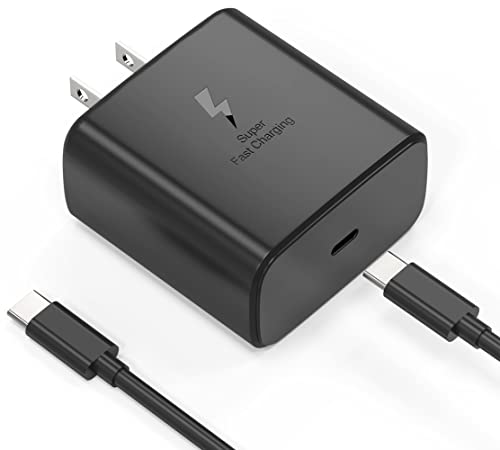
Yes, for people who often need power in a hurry. Fast charging can put a useful amount of battery into a phone during a short break. That matters when I am heading out the door and my phone is almost dead. It also helps during travel, long workdays, and road trips. Modern phones control charging power, so a compatible fast charger does not simply push full power into the battery all the time.
My main lesson from using fast charging is simple: speed is most useful when I need it. I often notice the biggest gain when the battery is low. The phone may charge very quickly at first, then slow down as the battery gets fuller. That is normal. In the slow charging vs fast charging debate, fast charging is the clear choice when lost time matters more than charging speed during the entire session.
What Makes It Stand Out / Key Features
- High Power OutputFast charging uses higher power than basic charging when the device and charger support the same charging standard.
- Shorter Charging TimeIt can cut the time needed to reach a useful battery level, especially when the battery starts low.
- Smart Power ControlCompatible phones and chargers can adjust power as charging conditions change.
- Best For Quick BoostsA short charging break can add a useful amount of power before work, travel, or a night out.
- Wide Modern SupportMany current phones support some form of fast charging, although the exact speed depends on the device, charger, cable, and standard.
- More Heat PotentialHigher charging power can create more heat, so good thermal control matters.
My Recommendation
Consider fast charging if you often leave home with a low battery or need quick power during work, travel, or commuting.
| Best For | Why |
|---|---|
| Busy commuters | Quick charging can add useful battery power during a short break. |
| Travelers | It helps when outlets and free time are limited. |
| Heavy phone users | Frequent use can drain the battery faster, making quick top-ups useful. |
Is Slow Charging Good?
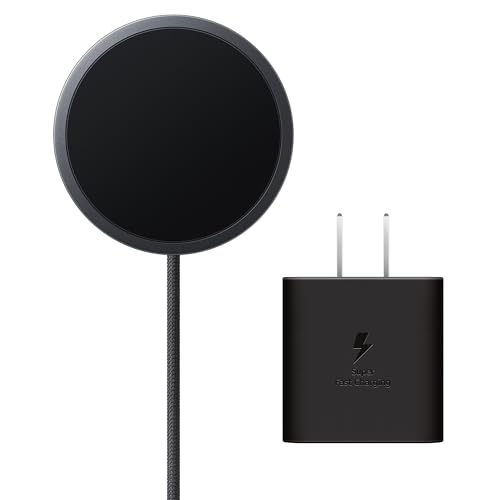
Yes, when you have time. Slow charging works well when a device can stay connected for several hours. I find it especially practical at home overnight or during a long desk session. There is no need to race the battery when I know the phone will remain plugged in until morning.
In my slow charging vs fast charging tests, the biggest benefit of slow charging was not a dramatic battery health boost. It was the calm, simple routine. Lower charging power can reduce heat compared with high power charging, but battery health depends on many factors. Battery age, temperature, charge level, and charging habits all matter. So slow charging is useful, but it is not a magic battery cure.
What Makes It Stand Out / Key Features
- Lower Charging PowerSlow charging uses less power than high speed charging, depending on the charger and device.
- Long Charging SessionsIt suits situations where the device can remain connected for hours.
- Less Heat PotentialLower charging power can produce less heat under similar conditions.
- Simple Daily RoutineIt works well for overnight charging and long periods at a desk.
- Lower Power DemandA lower power charger may be enough when charging speed is not important.
- Gentle Practical UseIt avoids the need to use high charging power when the device has plenty of time to charge.
My Recommendation
Choose slow charging when your device can stay plugged in for hours and you do not need a fast battery boost.
| Best For | Why |
|---|---|
| Overnight charging | The device has many hours to reach the needed charge level. |
| Desk users | A long work session gives the battery plenty of charging time. |
| Low urgency charging | There is little benefit in using high power when time is not a concern. |
slow charging vs fast charging: Side-by-Side Test
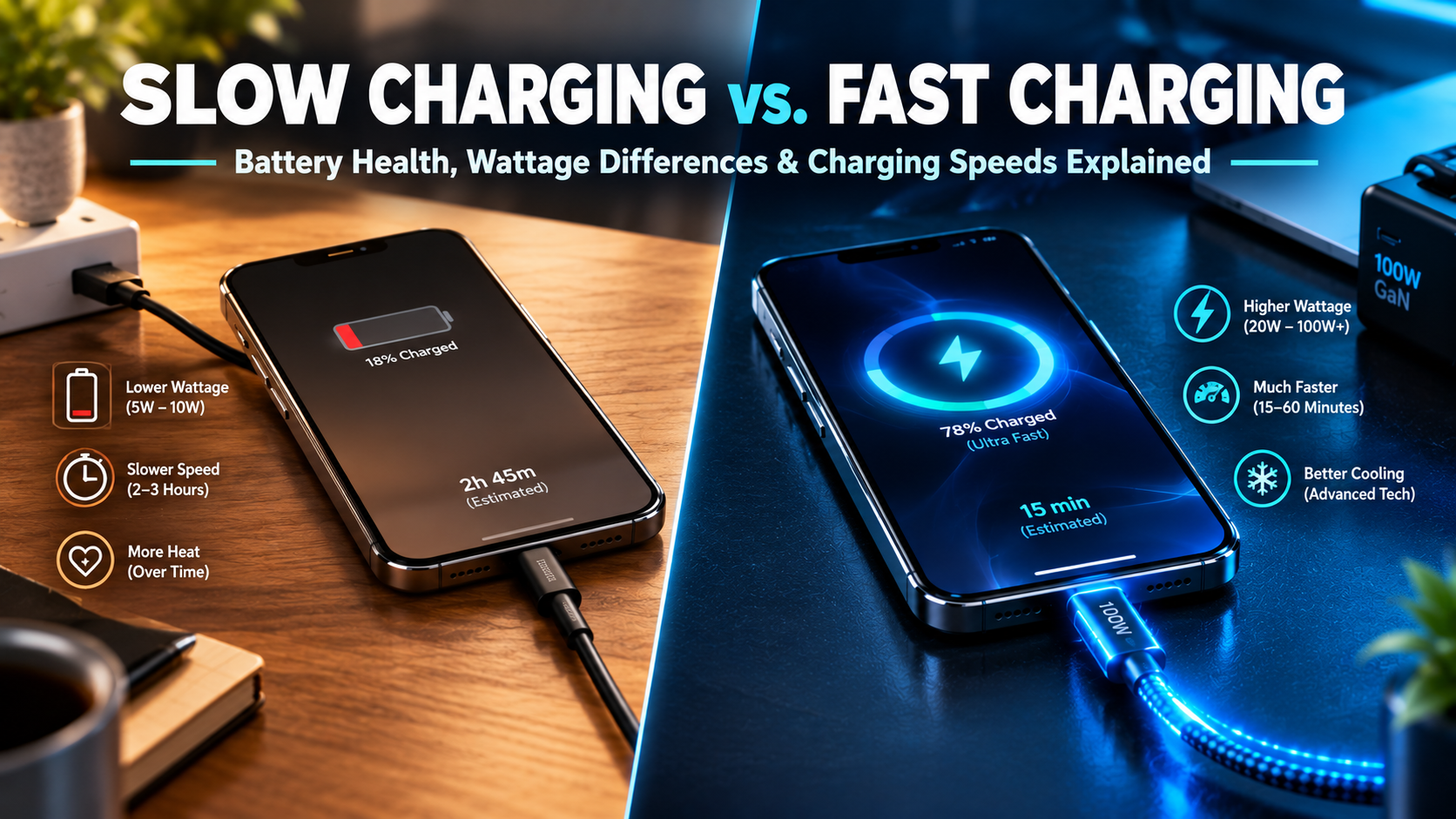
The best choice depends on the moment. Slow charging is like a steady walk. Fast charging is like taking an express train. Both can reach the same destination, but they suit different schedules.
When comparing slow charging vs fast charging, I look beyond the headline speed. Heat, battery behavior, cost, convenience, and the charger setup all matter.
Charging Speed: Which Is Faster?
Speed is the main difference, and fast charging clearly targets users who need power quickly.
| Feature | Product 1 | Product 2 |
|---|---|---|
| Power level | Higher power | Lower power |
| Typical goal | Quick battery boost | Steady charging |
| Best situation | Short breaks | Long charging sessions |
| Time to useful charge | Usually shorter | Usually longer |
⭐ Fast Charging – 10/10 | Slow Charging – 6/10
Fast charging has the edge when charging time is the main concern.
Heat: Which Runs Cooler?
Heat matters because high temperatures can add stress to rechargeable batteries over time.
| Feature | Product 1 | Product 2 |
|---|---|---|
| Charging power | Higher | Lower |
| Heat potential | Higher under similar conditions | Lower under similar conditions |
| Thermal control | Important | Still important |
| Hot environments | Needs more care | Generally easier to manage |
⭐ Fast Charging – 7/10 | Slow Charging – 9/10
Slow charging has the edge for a lower power routine, especially when heat is a concern.
Battery Health: Which Is Gentler?
Battery health is more complex than charging speed. Heat, charge level, age, and use all play a role.
| Feature | Product 1 | Product 2 |
|---|---|---|
| Heat potential | Higher | Lower |
| Long overnight use | Not needed for speed | Well suited |
| Battery protection | Depends on device controls | Depends on device controls |
| Main health factor | Avoid excess heat and stress | Avoid excess heat and stress |
⭐ Fast Charging – 8/10 | Slow Charging – 9/10
Slow charging has a small practical edge when it helps keep charging cool, but speed alone does not decide battery health.
Convenience: Which Fits Daily Life?
Convenience changes with your schedule. A rushed morning and a relaxed night need different tools.
| Feature | Product 1 | Product 2 |
|---|---|---|
| Morning rush | Excellent | Poor |
| Overnight charging | Useful but often unnecessary | Excellent |
| Travel | Excellent | Less useful |
| Desk charging | Excellent | Excellent |
⭐ Fast Charging – 10/10 | Slow Charging – 8/10
Fast charging has the edge for flexible daily use because it handles both short and longer charging windows.
Cost: Which Is More Affordable?
Charging cost depends on power use, charging time, electricity rates, and the device. Charger price also matters.
| Feature | Product 1 | Product 2 |
|---|---|---|
| Charger cost | Can be higher | Often lower |
| Power level | Higher | Lower |
| Electricity cost | Usually small for phones | Usually small for phones |
| Value for urgent charging | High | Lower |
⭐ Fast Charging – 8/10 | Slow Charging – 9/10
Slow charging has the edge for simple low power use, while the actual electricity savings for a phone may be modest.
Safety: Which Is Safer?
Both can be safe when you use compatible equipment and follow the device maker’s charging guidance.
| Feature | Product 1 | Product 2 |
|---|---|---|
| Compatible charger needed | Yes | Yes |
| Heat management | More important | Still important |
| Cable quality | Important for supported power | Important |
| Device controls | Important | Important |
⭐ Fast Charging – 9/10 | Slow Charging – 9/10
Neither method is automatically unsafe; compatible hardware and good thermal control matter most.
Travel: Which One Wins?
Travel can turn a low battery into a real problem. Fast charging gives you more options when time is short.
| Feature | Product 1 | Product 2 |
|---|---|---|
| Airport breaks | Excellent | Limited |
| Road trips | Excellent | Good when parked for long periods |
| Quick hotel top-up | Excellent | Good |
| Emergency charge | Excellent | Poor |
⭐ Fast Charging – 10/10 | Slow Charging – 6/10
Fast charging has the edge for travel because every spare minute can matter.
Final Verdict: Which Should You Buy?
The slow charging vs fast charging choice comes down to time and routine. Fast charging is better when you need a quick boost before work, travel, or a busy day. Slow charging makes more sense when the device can charge for hours, such as overnight or during a long desk session.
If I had to keep one option for a busy U.S. lifestyle, I would choose fast charging for flexibility. But I would not use maximum charging speed just because it exists. When I have plenty of time, slower charging is a simple choice. The smart approach is to use fast charging when time is short and slower charging when time is not.