What To Look For In Power Bank Specs: 2026 Buying Guide
Look for capacity (mAh), output wattage, port types, charging speed, battery cell quality, safety features, size, and weight to find the best power bank for your needs.
Picking the right power bank can feel like guessing in the dark if you do not know what the specs really mean. Over the past few years, I have tested dozens of portable chargers while traveling, camping, and working remotely. I have learned that a shiny box with a huge capacity number does not always deliver real-world performance. Some power banks die after a year, while others keep going strong for five years or more. The difference comes down to the details buried in the specs list. Once you understand what each spec means and how it affects your daily use, you can stop wasting money on the wrong charger and start carrying one that truly fits your life.
Understanding Power Bank Capacity (mAh) and Real-World Output
The first number you see on any power bank box is the capacity, measured in milliamp hours or mAh. This number tells you how much electrical charge the battery can hold. A 10,000 mAh power bank sounds like it can charge your phone forever, but the truth is more complicated. Power banks lose some energy to heat, voltage conversion, and circuit resistance. In real life, a 10,000 mAh power bank usually delivers around 6,000 to 7,000 mAh to your phone. This is called the real or rated output.
When I bought my first power bank, I thought 20,000 mAh would charge my phone six times. It only charged it four times. I felt cheated until I learned about conversion loss. The average conversion efficiency of a good power bank sits between 85% and 90%. Cheap ones drop to 70% or lower. Always look for the rated output in the specs, not just the cell capacity. Some brands list both numbers, which is a good sign of transparency.
To match capacity to your needs, think about your phone battery size. Most modern phones have batteries between 4,000 and 5,000 mAh. A 10,000 mAh power bank can fill a dead phone about once and a half. A 20,000 mAh bank can fill it about three times. If you travel for a weekend, 10,000 mAh is usually enough. For a full week off the grid, go for 20,000 mAh or more.

Output Wattage, Amperage, and Fast Charging Standards
Capacity tells you how much energy a power bank holds, but output wattage tells you how fast it can deliver that energy. Wattage is calculated by multiplying voltage by amperage. Most phones charge fastest between 18W and 45W. Laptops need 60W to 100W. If you plug a 100W laptop into a 10W power bank, it will charge painfully slow or not at all.
Fast charging standards add another layer to the puzzle. The most common standards are USB Power Delivery (PD), Quick Charge (QC), and proprietary standards from brands like Samsung, Apple, and OnePlus. USB PD is the universal standard that works with most modern devices, including iPhones, iPads, MacBooks, and Android phones. Quick Charge is common on older Android devices. If you own an iPhone, look for PD support. If you own a Samsung Galaxy, look for both PD and QC support.
I learned this the hard way when I bought a power bank that only supported 5W output. It took six hours to charge my phone. The next one I bought supported 20W PD, and my phone went from zero to fifty percent in thirty minutes. The difference in daily convenience was massive.
Look for the following output specs in the power bank description:
- Total output wattage
- Wattage per port
- Supported fast charging protocols (PD 3.0, QC 4.0, PPS, AFC)
- Voltage and amperage ranges (like 5V/3A, 9V/2A, 12V/1.5A)

Port Types, Number of Ports, and Cable Compatibility
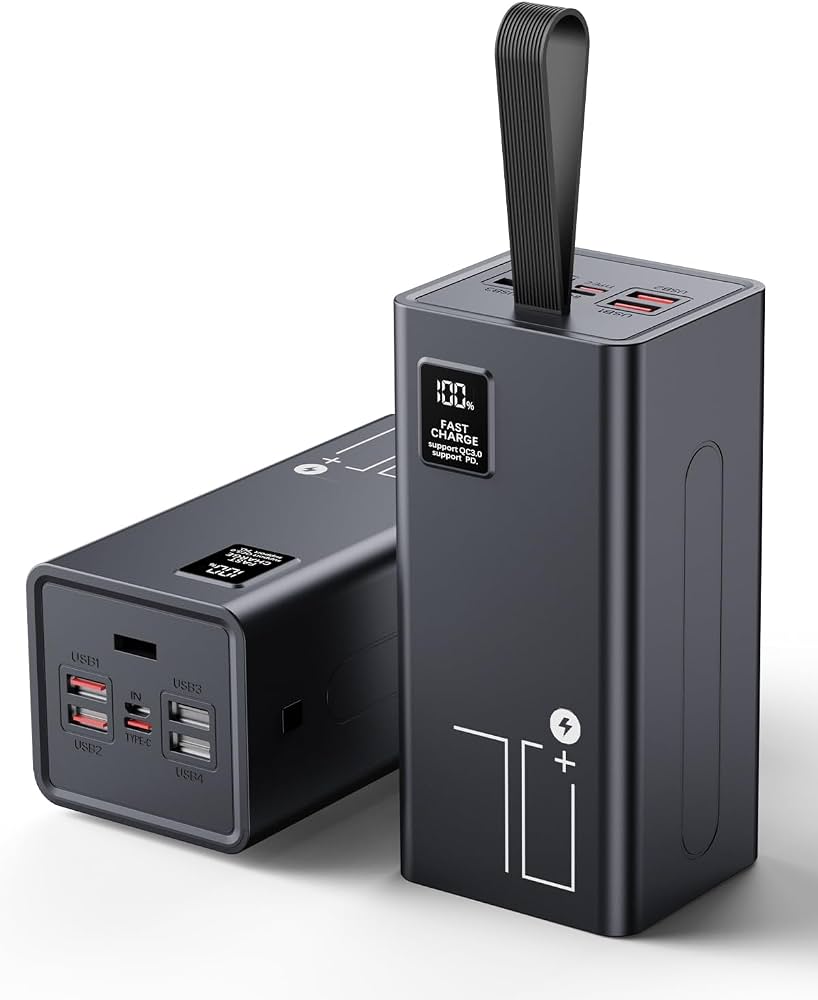
A power bank can have amazing capacity and wattage, but it is useless if the ports do not match your cables. Most modern power banks use USB-C as the main output and input port. USB-C supports higher wattage and faster data transfer. Older power banks rely on USB-A ports, which max out at around 18W and use the older rectangular connector.
If you own a recent iPhone, MacBook, or Android phone, USB-C is a must. If you still use older devices, you may need at least one USB-A port. Some power banks include a built-in Lightning cable for iPhone users or a built-in USB-C cable for Android users. These built-in cables are great for travel because you do not have to carry extra wires.
The number of ports matters if you travel with friends or carry multiple devices. A dual-port power bank lets you charge your phone and earbuds at the same time. A triple-port bank can handle a phone, tablet, and laptop. Keep in mind that the total wattage is shared across ports when you use multiple outputs at once. A 30W power bank with two ports may only deliver 15W per port when both are in use.
Battery Cell Type, Lifespan, and Long-Term Durability
The battery cell inside a power bank is its heart. Most quality power banks use lithium-polymer or lithium-ion cells. Lithium-polymer cells are lighter, thinner, and more resistant to swelling. Lithium-ion cells are cheaper, more energy-dense, and have a longer cycle life. Both types can last for years if you treat them well.
Cycle life is the number of full charge and discharge cycles a battery can handle before its capacity drops to 80% of the original. A good power bank should last at least 500 cycles. Premium models can handle 1,000 cycles or more. If you charge your power bank twice a week, 500 cycles will last about five years.
I once owned a cheap power bank that swelled up after a year of use. The battery cell expanded and pushed the casing open. It was a fire hazard. I learned to always check the brand reputation and the safety certifications. Reputable brands use high-quality cells from makers like LG, Samsung, or CATL. Avoid no-name brands that do not list their cell suppliers.

Safety Features, Certifications, and Build Quality
A power bank is a portable battery, and portable batteries can catch fire if they are poorly made. Safety features are not optional. They are the difference between a reliable tool and a pocket-sized fire risk. Look for the following safety features in the specs:
- Overcharge protection
- Over-discharge protection
- Short circuit protection
- Overcurrent protection
- Temperature control
- Surge protection
Certifications prove that an independent lab has tested the power bank for safety. The most common safety marks are UL, CE, FCC, and RoHS. UL certification is the gold standard in the United States. CE and FCC marks are common in Europe and North America. RoHS means the product is free of hazardous materials like lead and mercury.
Build quality goes beyond safety. A good power bank should have a solid outer shell made of fire-resistant plastic or aluminum. The ports should feel firm, not loose. The buttons should click cleanly. If a power bank feels cheap in your hand, it probably is cheap on the inside.

Size, Weight, and Portability Considerations
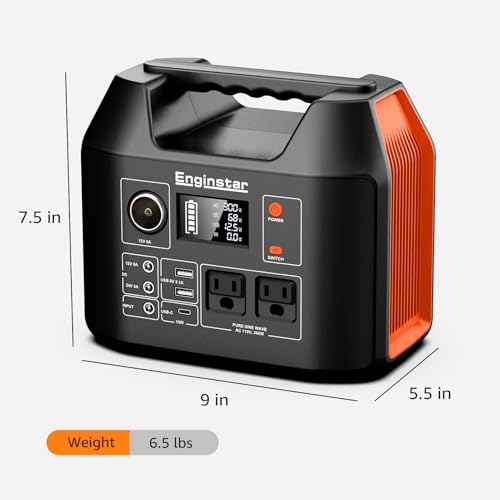
A power bank can have the best specs in the world, but if it weighs as much as a brick, you will leave it at home. Size and weight matter more than most people think. The best power bank is the one you actually carry with you.
For daily commutes and small bags, look for a power bank under 200 grams and under 10,000 mAh. These pocket-sized models fit in a jacket pocket or a small purse. For travel and outdoor use, you can go bigger. A 20,000 mAh power bank usually weighs between 350 and 500 grams. Some high-capacity models hit 30,000 mAh but weigh over 600 grams.
Think about your carrying style. If you backpack, weight matters less. If you carry a small sling bag, every gram counts. I always keep a slim 10,000 mAh model in my daily bag and a larger 20,000 mAh model in my travel pack. This split setup gives me the best of both worlds.

Pass-Through Charging, Wireless Charging, and Extra Features
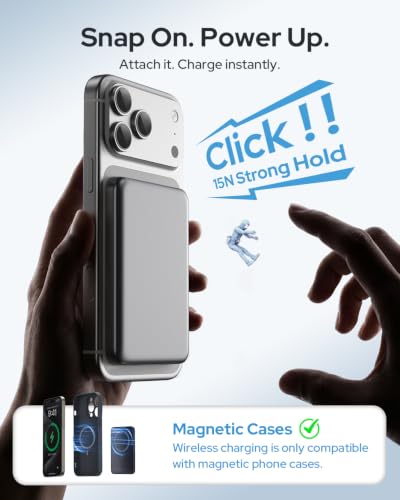
Some power banks offer features that go beyond the basics. Pass-through charging lets you charge the power bank and a connected device at the same time. This is great for hotel rooms with a single wall outlet. Wireless charging pads built into the power bank let you drop your phone on top and charge without a cable. Solar panels on the back of outdoor power banks can top up the battery using sunlight, though the charging speed is usually slow.
Some models include a tiny LCD screen that shows the exact percentage of battery left. Others use simple LED dots. I prefer the percentage display because it removes guesswork. A built-in flashlight is handy for camping and power outages. Some power banks even double as a hand warmer for cold-weather trips.
These extra features add cost and weight. Only pick them if you will actually use them. A wireless charging pad is useless if your phone case is too thick. A solar panel is useless if you spend most of your time indoors.

Brand Reputation, Warranty, and Customer Support
Specs tell you what a power bank can do, but brand reputation tells you if it will still do it in two years. Stick with brands that have a long track record in the battery and charging space. Companies like Anker, RAVPower, Aukey, Belkin, and Mophie have built their names on reliable power products. Newer brands can offer great value, but always check independent reviews before buying.
Warranty length is a good proxy for brand confidence. Most quality power banks come with an 18-month or 24-month warranty. Some premium models offer three years. A short or missing warranty is a red flag.
Customer support matters when something goes wrong. I have had two power banks fail over the years. One was a no-name brand that vanished when I emailed support. The other was an Anker model that got replaced within a week. The second experience saved my faith in portable charging.

Price vs. Value: How to Spot a Good Deal
Price is not the same as value. A cheap power bank can cost you more in the long run if it breaks early or damages your phone. A expensive power bank can be a great deal if it lasts for years and charges your devices quickly.
To find the best value, divide the capacity by the price. A good 10,000 mAh power bank should cost between $20 and $30. A good 20,000 mAh model should cost between $35 and $50. Prices above this range usually mean premium build quality, faster charging, or extra features. Prices below this range usually mean cut corners on cells or safety.
I follow a simple rule: if a deal looks too good to be true, it usually is. A 50,000 mAh power bank for $15 is almost certainly a lie about capacity. The real capacity may be 10,000 mAh with a fake label. Always buy from authorized sellers to avoid counterfeits.
How to Match a Power Bank to Your Lifestyle
The best way to pick a power bank is to start with your daily routine. Ask yourself these questions:
- How many devices do I charge every day?
- Do I need fast charging or just basic top-ups?
- How much space do I have in my bag?
- Do I travel often or stay close to home?
If you are a student or office worker, a slim 10,000 mAh USB-C model with PD support is the sweet spot. If you travel for work, a 20,000 mAh model with 65W PD output can charge your laptop on a plane. If you camp or hike, a rugged 30,000 mAh model with a built-in flashlight and solar panel is a better fit.
I have tested all these styles over the years, and the lesson is simple: the right power bank disappears into your routine. You forget it is there until your battery hits 10% and you smile because you have a backup in your pocket.
Frequently Asked Questions About Power Bank Specs
What does mAh mean on a power bank?
mAh stands for milliamp hours and measures how much charge a power bank can hold. A higher mAh number means more charges for your phone, but the real output is usually 10% to 30% lower due to energy loss during conversion.
Is higher wattage always better in a power bank?
Higher wattage means faster charging, but only if your device supports that speed. A 100W power bank will not damage a 20W phone, but it will not charge it faster than 20W. Match the wattage to your device for the best balance of speed and battery health.
How long does a power bank take to recharge?
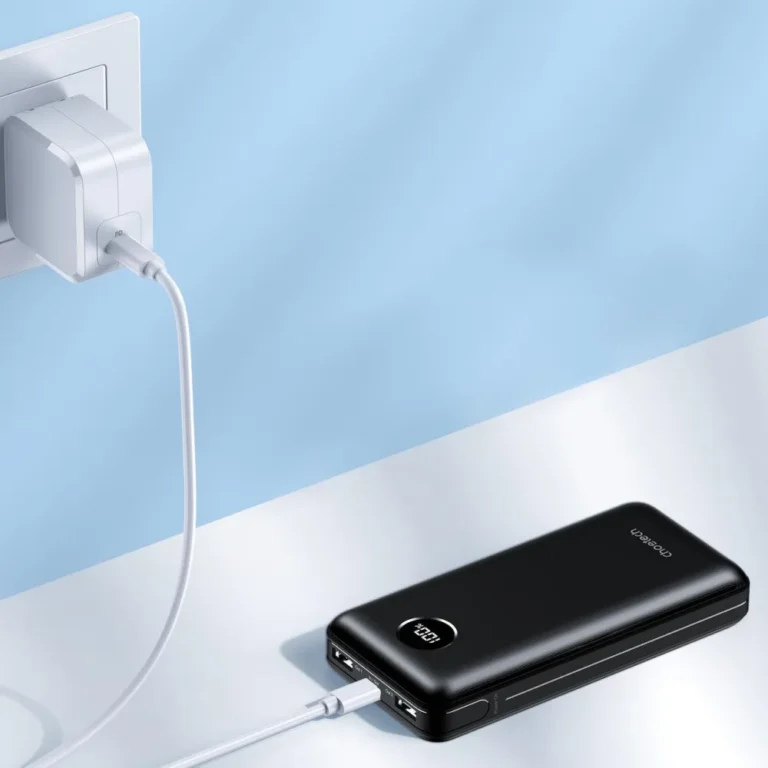
Recharge time depends on the input wattage and the charger you use. A 10,000 mAh power bank with 18W input takes about 3 hours to fill. A 20,000 mAh model with 30W input takes about 4 hours. Using a slow 5W charger can double these times.
Can I take a power bank on a plane?
Yes, but with limits. Most airlines allow power banks under 100Wh in carry-on bags. Power banks between 100Wh and 160Wh need airline approval. Anything over 160Wh is banned. A 20,000 mAh power bank at 3.7V equals 74Wh, so it is allowed everywhere.
How do I know if a power bank is safe?
Look for safety certifications like UL, CE, or FCC on the box. Read reviews from trusted tech sites. Stick with brands that have a long history in the battery market. Avoid power banks with no listed safety features or extremely low prices.
Conclusion
Choosing the right power bank is about more than picking the biggest capacity or the lowest price. It is about understanding how capacity, wattage, ports, battery cells, and safety features work together to fit your daily life. Start with the capacity that matches your phone battery and your travel habits. Look for USB-C PD support if you own modern devices. Check the safety certifications and the brand reputation. Think about the size and weight you are willing to carry every day. A great power bank is one that you always have with you, ready to save you when your battery dies at the worst possible moment. Take the time to compare specs side by side, read real user reviews, and invest in a model that will last for years. Your future self will thank you the next time your phone hits 1% in the middle of a long day.