What Is MAh For Power Bank: Complete 2026 Guide
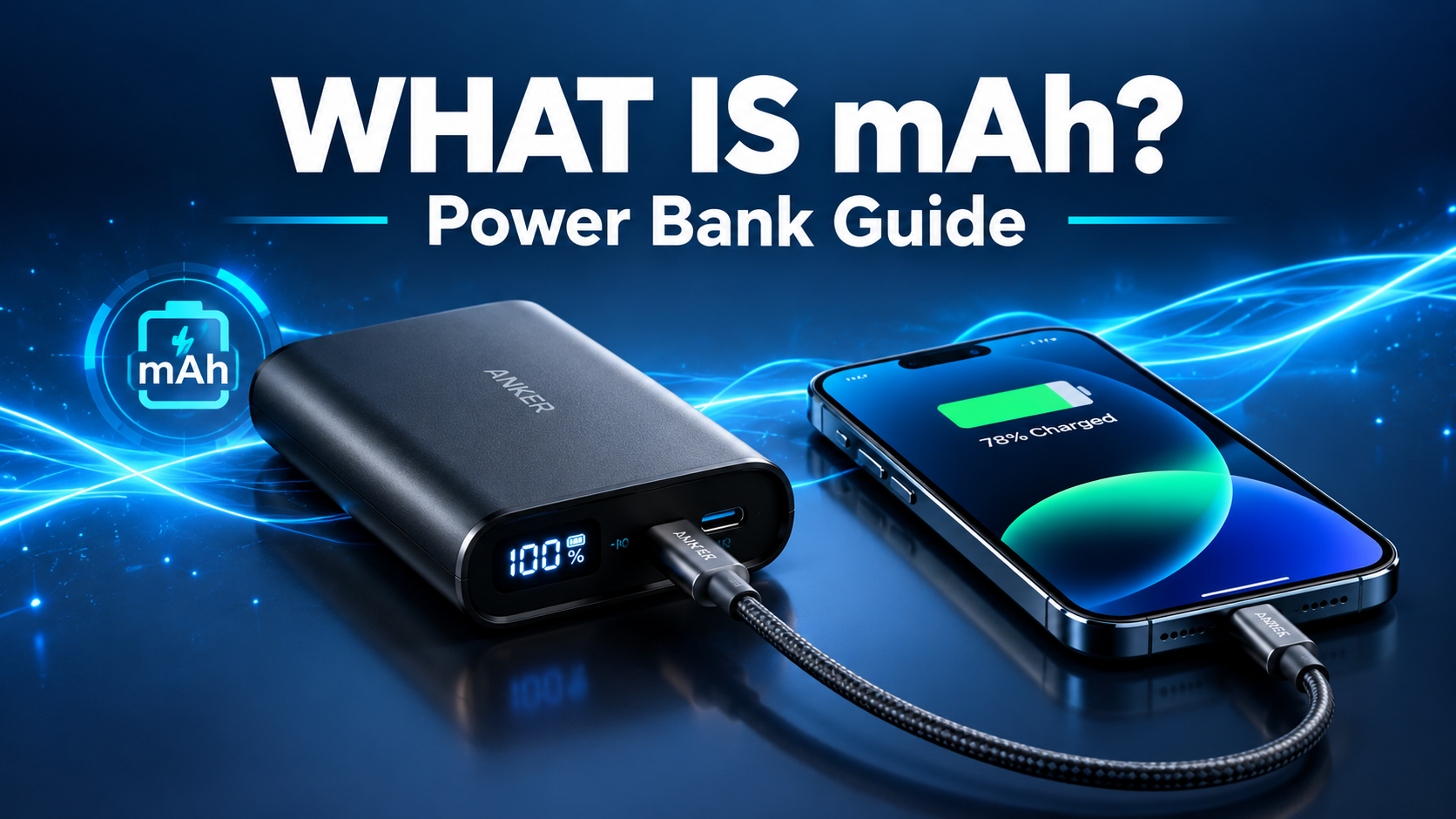
mAh, short for milliampere-hour, is the unit that measures how much electrical charge a power bank can store, and higher mAh means more charging capacity for your devices. Understanding mAh is the key to picking a power bank that actually keeps your phone, tablet, or earbuds alive when you need it most. In this guide, I'll walk you through exactly what mAh means, how it translates to real-world charging, and how to choose the right capacity for your lifestyle, so you never get stuck with a dead battery again.

What Does mAh Actually Mean for a Power Bank
At its core, mAh stands for milliampere-hour, a unit that tells you how much current a battery can deliver over one hour. When you see a power bank rated at 10,000 mAh, it means the battery can theoretically supply 10,000 milliamps for one hour, or 1,000 milliamps for ten hours, before it runs out of juice.
Think of mAh like the size of a water tank. A bigger tank holds more water, just like a higher mAh rating holds more electrical energy. If your phone battery is a small cup, a 5,000 mAh power bank is a medium pitcher, and a 20,000 mAh power bank is a full barrel. The bigger the barrel, the more times you can refill that cup.
In practical terms, mAh directly affects three things:
- How many full charges you get for your device
- How long the power bank itself takes to recharge
- How heavy and bulky the power bank will be in your bag
How mAh Translates to Real Device Charges
The relationship between a power bank's mAh and how many times it can charge your phone isn't one-to-one, and this surprises a lot of people. Most power banks operate at 3.7 volts internally, but they output 5 volts through USB. This voltage conversion causes energy loss, typically around 10 to 30 percent.
Here's a rough idea of what common mAh ratings can do for a standard 4,000 mAh smartphone battery:
- 5,000 mAh power bank: about one full charge
- 10,000 mAh power bank: about one and a half to two full charges
- 20,000 mAh power bank: about four to five full charges
- 26,800 mAh power bank: about six to seven full charges
The exact number depends on your phone's battery size, the charging cable quality, and whether you're using the device while it charges. I've personally tested a 10,000 mAh power bank on a long flight and got roughly 1.8 charges out of it for my iPhone, which lined up with what the math predicted.
Why Higher mAh Isn't Always Better
It's tempting to think that buying the highest mAh power bank is always the smartest move, but that's not necessarily true. Bigger capacity comes with real trade-offs that affect your daily experience.
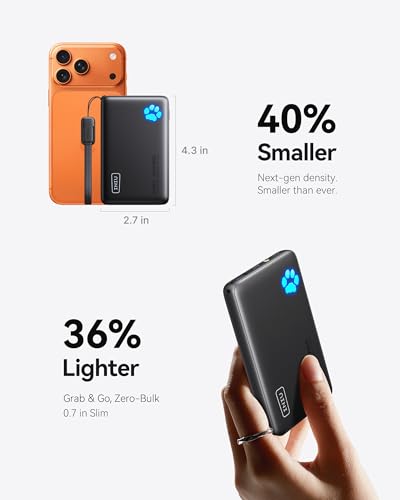
First, there's the size and weight factor. A 5,000 mAh power bank is slim enough to slip into a jeans pocket, while a 30,000 mAh brick feels like carrying a small paperback book. If you only need emergency top-ups during a commute, a pocket-sized option is far more practical.
Second, airline regulations cap power banks at 100 watt-hours, which works out to roughly 27,000 mAh at 3.7 volts. Anything above that can't fly with you, no matter how much capacity it has.
Third, larger power banks take much longer to recharge. A 20,000 mAh unit can take 8 to 12 hours to fill back up, while a 5,000 mAh one is ready in under 3 hours. If you're always on the go, that downtime matters.
Key Factors That Affect Real-World mAh Performance
The advertised mAh on the box is a theoretical maximum. What you actually get depends on several real-world conditions that manufacturers don't always highlight.
Battery health and age play a big role. Lithium-ion batteries slowly lose capacity over time, so a power bank you've owned for two years won't hold as much as a brand-new one. I learned this the hard way when my trusty 10,000 mAh bank started giving me only one charge instead of two after about 18 months of daily use.
Temperature also matters a lot. Cold weather drains lithium batteries faster, so if you're skiing or hiking in winter, expect noticeably less performance. Heat is just as bad for long-term battery health, so avoid leaving your power bank in a hot car.
Charging speed and efficiency come down to the quality of the internal circuitry. Cheaper power banks often lose more energy during the voltage conversion step, meaning their actual usable capacity is lower than the label suggests. Look for units with high-quality lithium-polymer cells and smart charging chips for the best results.
How to Calculate the Right mAh for Your Needs
Choosing the perfect power bank capacity is really about matching your typical charging needs with your lifestyle. Here's a simple method I've used for years when recommending options to friends.
Start by checking your phone's battery size. Most modern phones fall between 3,500 and 5,000 mAh. Add up the battery sizes of any other devices you carry, like wireless earbuds (usually 30 to 100 mAh per charge case) or a smartwatch (around 300 to 500 mAh).
Next, think about how often you're away from a wall outlet. A daily commuter needs far less than someone going on a weekend camping trip. Be honest with yourself about your real usage rather than planning for extreme scenarios.
Finally, multiply your total daily need by the number of days you want to cover without recharging the power bank. Add a 20 to 30 percent buffer for conversion losses, and you've got your ideal mAh range.
For example, if your phone is 4,000 mAh and you want two full charges plus some extra for earbuds, you're looking at around 10,000 to 12,000 mAh of actual capacity, which means a 15,000 mAh power bank handles it comfortably.
Common mAh Mistakes Shoppers Make
One of the biggest mistakes I see is people confusing the power bank's mAh with the output charging speed, which is measured in watts or amps. A high mAh power bank can still charge your phone slowly if it doesn't support fast-charging protocols like Power Delivery or Quick Charge.
Another common trap is trusting the label without checking the rated capacity versus the actual capacity. Some budget brands inflate their numbers, and independent tests have shown certain power banks delivering only 60 to 70 percent of what's printed on the box. Stick with reputable brands that provide clear, honest specifications.
People also forget that charging multiple devices at once drains the bank faster and reduces efficiency. Splitting output across two ports means more conversion loss, so the total usable energy drops compared to charging a single device.

mAh vs Other Battery Specifications You Should Know
While mAh tells you the storage capacity, a few other numbers on the spec sheet matter just as much for everyday use.
Voltage, usually listed as 3.7V or 5V, tells you the electrical potential. To compare batteries fairly, you actually want to look at watt-hours, which multiply voltage by mAh and give you the true energy content. This is why airline rules use watt-hours rather than mAh.
Output amperage, shown in amps, determines how fast the power bank can charge your device. A 1A output is slow, 2.1A is standard, and 3A or higher with PD support enables fast charging for modern phones and laptops.
Charging input rating matters for how quickly the power bank itself refills. A 5V/2A input refills twice as fast as a 5V/1A input, and USB-C PD input can cut recharge times dramatically for large capacity banks.
The Future of Power Bank Capacity and mAh
Battery technology keeps evolving, and the next few years will bring meaningful improvements to how we think about power bank capacity. Silicon-anode batteries are already starting to appear in premium power banks, offering 20 to 40 percent higher energy density than traditional lithium-ion cells.
This means a 10,000 mAh power bank in 2025 will likely be the same size as a 7,000 mAh unit from just a few years ago. Graphene-based batteries promise even faster charging, with some prototypes reaching full capacity in under 15 minutes.
Gallium nitride, or GaN, chargers are also shrinking the wall adapters needed to refill these banks, making high-capacity power banks more travel-friendly than ever. If you haven't upgraded your power bank in three or four years, the difference in size, weight, and efficiency is genuinely impressive.
Tips to Maximize Your Power Bank's mAh Over Time
Taking care of your power bank helps it hold its rated mAh for as long as possible. A few simple habits make a real difference based on my own experience using and replacing power banks over the years.
Avoid draining it to zero every time. Lithium batteries last longer when you keep them between 20 and 80 percent charge. I used to fully empty my old power bank before recharging, and it noticeably degraded faster than my current one, which I top up regularly.
Store it at room temperature and at about 50 percent charge if you're not using it for a while. Heat is the number one enemy of battery longevity, so never leave it in a parked car on a sunny day.
Use the right cable and charger for refilling the power bank itself. Pairing a high-capacity bank with a weak 5W phone charger means painfully slow recharge times and can even stress the battery over time.
Frequently Asked Questions About mAh for Power Banks
Is a higher mAh power bank better than a lower one?
A higher mAh power bank stores more energy and can charge your devices more times, but it's not always better. Larger capacity means more weight, longer recharge times, and higher cost. The best choice depends on your actual charging needs and how portable you need the power bank to be.
How many times can a 10,000 mAh power bank charge a phone?
A 10,000 mAh power bank typically charges a standard 4,000 mAh smartphone about 1.5 to 2 full times, accounting for energy lost during voltage conversion. The exact number varies based on your phone's battery size, cable quality, and whether you use the phone while it charges.
Can I bring a 20,000 mAh power bank on a plane?
Yes, power banks up to 100 watt-hours are allowed in carry-on luggage on most airlines, which covers anything up to about 27,000 mAh at 3.7 volts. A 20,000 mAh power bank falls well within this limit, but it must go in your carry-on bag, not checked luggage.
Does fast charging reduce power bank mAh?
Fast charging itself doesn't reduce the power bank's total mAh capacity, but using high-wattage output does drain the bank faster because more energy flows per minute. The total energy delivered stays roughly the same, but the bank empties in less time when charging at 18W versus 10W.
How long does a 10,000 mAh power bank last on a single charge?
A 10,000 mAh power bank typically lasts 2 to 4 days of regular use before needing a recharge, depending on how many devices you charge and how often. Heavy users who charge multiple devices daily may drain it in a single day, while light users can stretch it across a week.
Wrapping Up the mAh Conversation
Understanding what mAh means for a power bank is really about understanding your own habits and needs. A 5,000 mAh bank is perfect for daily top-ups, a 10,000 mAh unit covers most weekend trips, and anything above 20,000 mAh is built for serious off-grid use or multi-device households.
The smartest approach is to match capacity to your real-world routine rather than chasing the biggest number on the shelf. Pay attention to actual quality, charging protocols, and brand reputation, and your power bank will serve you reliably for years.
Now that you know exactly how mAh works, take a fresh look at the power bank in your bag right now. Does its capacity really fit your lifestyle, or is it time for an upgrade? Drop a comment below with your favorite power bank capacity and what you use it for, I'd love to hear what works for you.